Soft-luxury living

Category: Travel

Dreamy destinations and travel escapes.

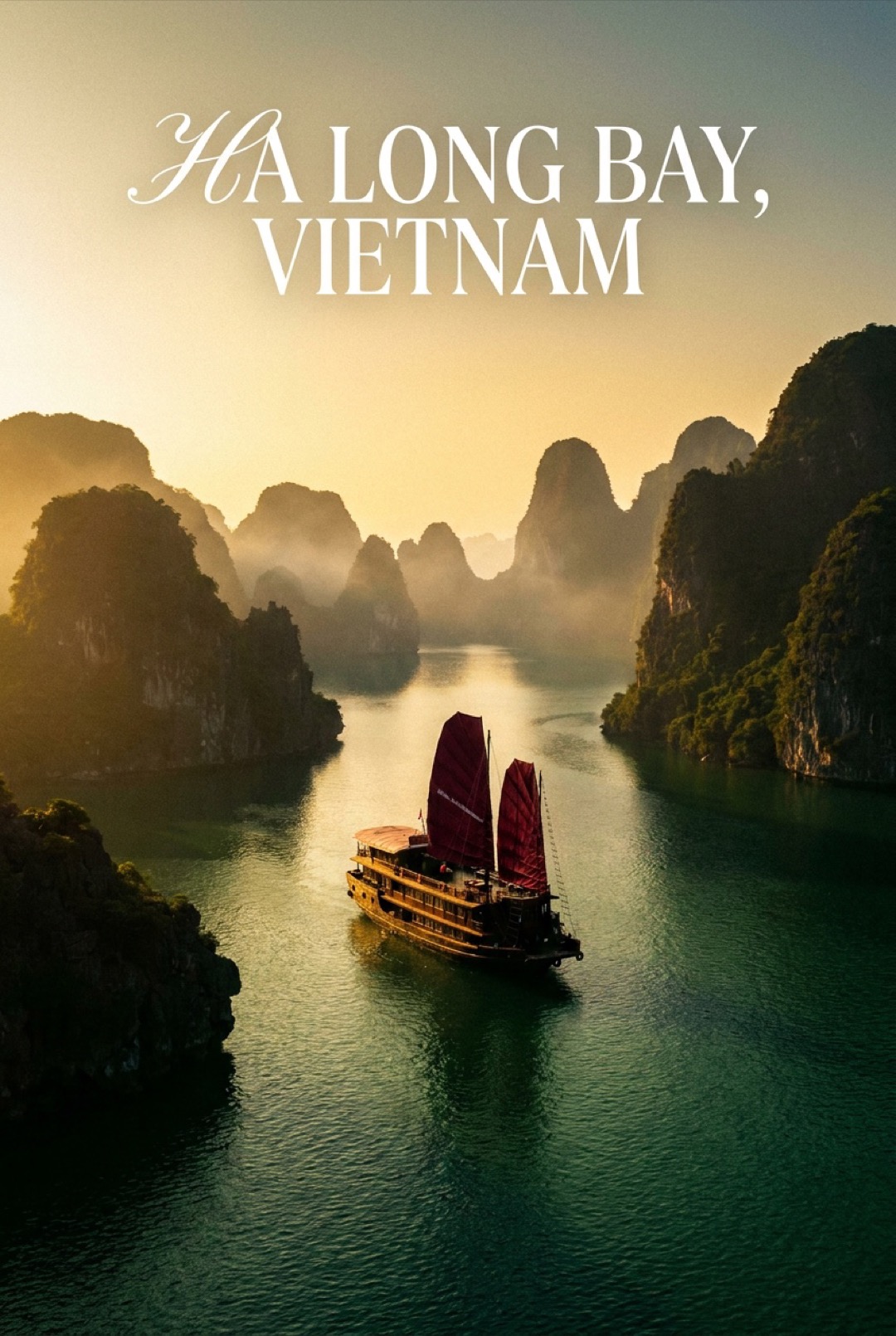
  • Ha Long Bay, Vietnam: Sailing the Emerald Karsts

    Ha Long Bay, Vietnam: Sailing the Emerald Karsts

    Ha Long Bay is geology showing off: nearly two thousand limestone towers rising sheer from jade-green water, wrapped in mist at dawn and gilded at dusk. Legend says a dragon’s tail carved the bay, and from a boat deck at sunrise, no better explanation presents itself.

    Cruising it right

    • Overnight beats day-trip: the bay empties at 4pm and dawn belongs to sleepers-aboard
    • Two nights beats one: day two reaches the far, empty corners day-trippers never see
    • Choose routes over boats: itineraries through Lan Ha or Bai Tu Long trade crowds for quiet

    On and in the water

    • Kayaking through sea-arches into hidden lagoons ringed by cliffs
    • Sung Sot (Surprise) Cave’s cathedral chambers
    • Ti Top island’s viewpoint stairs for the classic panorama
    • Floating fishing villages where houses ride the tide

    The Lan Ha secret

    Immediately south of the famous bay, Lan Ha offers the same karst drama with white-sand coves and a fraction of the traffic, accessed via Cat Ba island. Many of the best mid-range cruises now sail here exclusively. If your priority is quiet water and swimmable beaches over the iconic name, Lan Ha wins outright.

    Season and logistics

    October to April brings cool, clear sailing weather: summer adds heat, downpours and occasional typhoon reshuffles, always with dramatic skies. Hanoi is 2.5 hours away by highway: cruises include transfers. Book cabins with a private balcony if the budget stretches: morning coffee alone above that water is the whole postcard.

    Save this emerald escape, and cruise through more travel guides on Plumeo. Daily inspiration at @Plumeoblog.
  • Portofino Travel Guide: Italy’s Prettiest Harbor

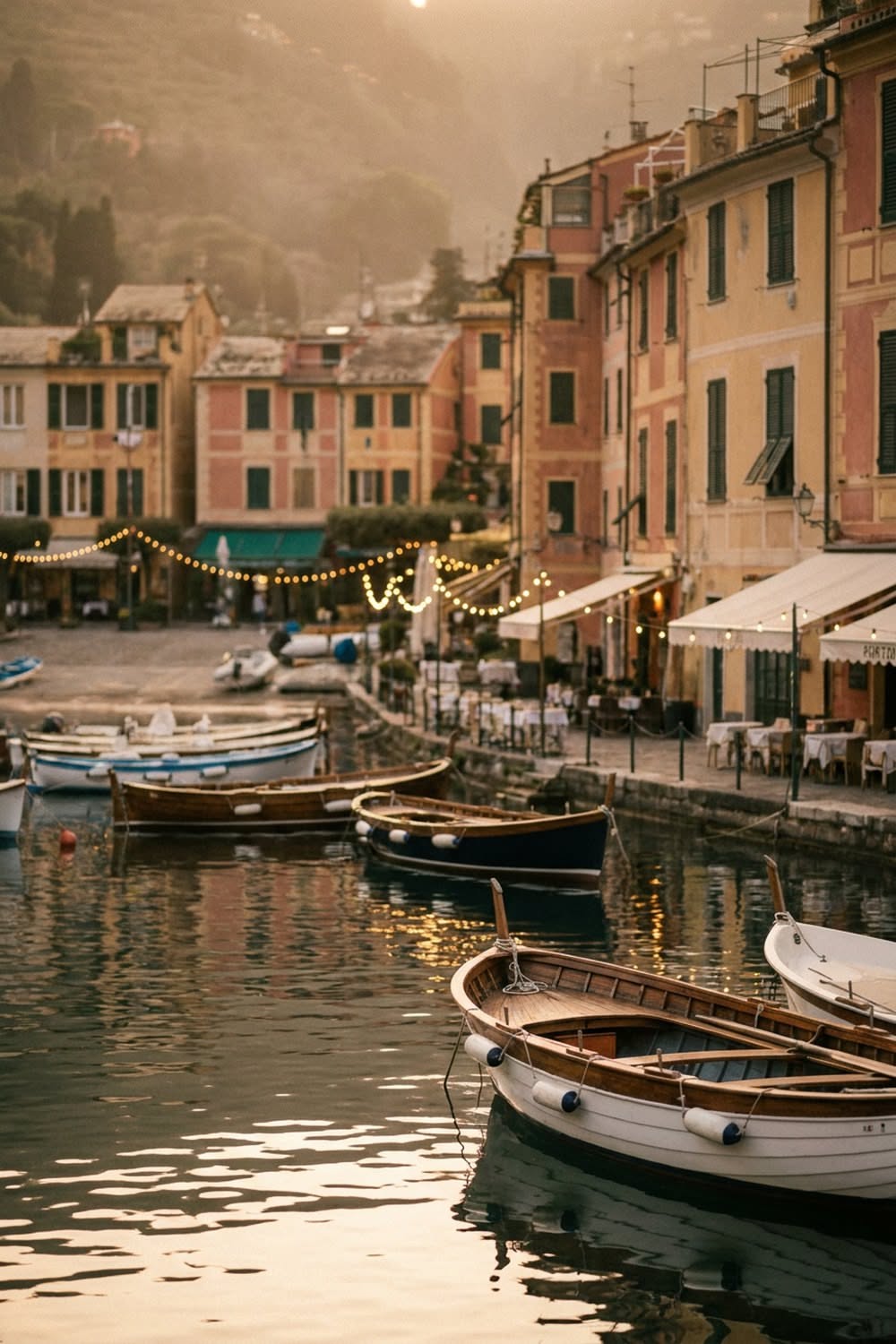
    Portofino Travel Guide: Italy’s Prettiest Harbor

    Portofino is barely a town at all: one tiny piazza, one crescent of pastel houses, a harbor the size of a swimming pool holding yachts worth more than the buildings. It is the Italian Riviera compressed into a jewel box, and while it has been famous since the fifties, it still delivers the exact postcard, especially if you know when to arrive and where to climb.

    The piazzetta and the harbor

    Everything radiates from the Piazzetta, the small cobbled square that opens onto the water. The moves are simple: an aperitivo at one of the harbor cafes (you are paying for the front-row seat, and it is worth doing once), a slow lap of the quay to admire the ochre and terracotta facades, and people-watching that ranges from fishermen to film stars. Morning and evening the light turns the whole crescent to honey; midday belongs to the day-trippers.

    Climb to Castello Brown and the lighthouse

    The best of Portofino is above it. A shaded path climbs from the harbor past the church of San Giorgio to Castello Brown, a sixteenth-century fortress turned villa whose garden terrace serves the classic view: the harbor below, cypress in the frame, the Ligurian sea going turquoise at the edges. Continue another fifteen minutes to Punta del Capo lighthouse at the very tip of the peninsula, a small bar sits by the light, and an evening spritz there, with open sea on three sides, is the trip’s quiet highlight.

    Walk or sail the coastline

    Portofino sits inside a protected natural park laced with trails. The best short outing: the coastal path to Paraggi bay, where a wedge of green-blue water and a small beach hide between the pines, then on to Santa Margherita Ligure through olive terraces (about an hour total, endlessly photogenic). By water, the ferry to San Fruttuoso reaches a thousand-year-old abbey sitting on a beach accessible only by boat or trail, one of Italy’s most improbable sights.

    Eat like the Riviera

    • Trofie al pesto: Liguria invented pesto and takes attendance.
    • Focaccia di Recco: paper-thin and molten with cheese: worth the pilgrimage alone.
    • Anchovies and whatever the boats landed, dressed with lemon and restraint.
    • Gelato on the quay: the mandatory closing ceremony.

    The practical part

    Stay in Santa Margherita Ligure for sane prices and take the ten-minute bus, ferry or gorgeous coastal walk in. Cars are pointless (parking is scarce and heroic in price). May, June and September give you the golden weather without the August crush, and staying for evening, after the tour boats leave, shows you the fishing village Portofino still secretly is.

    Pin this for your Riviera dreaming, and sail through more travel guides on Plumeo. Daily wanderlust at @Plumeoblog.

  • Sailing Milos: Sea Caves and Freddo Espresso in Greece

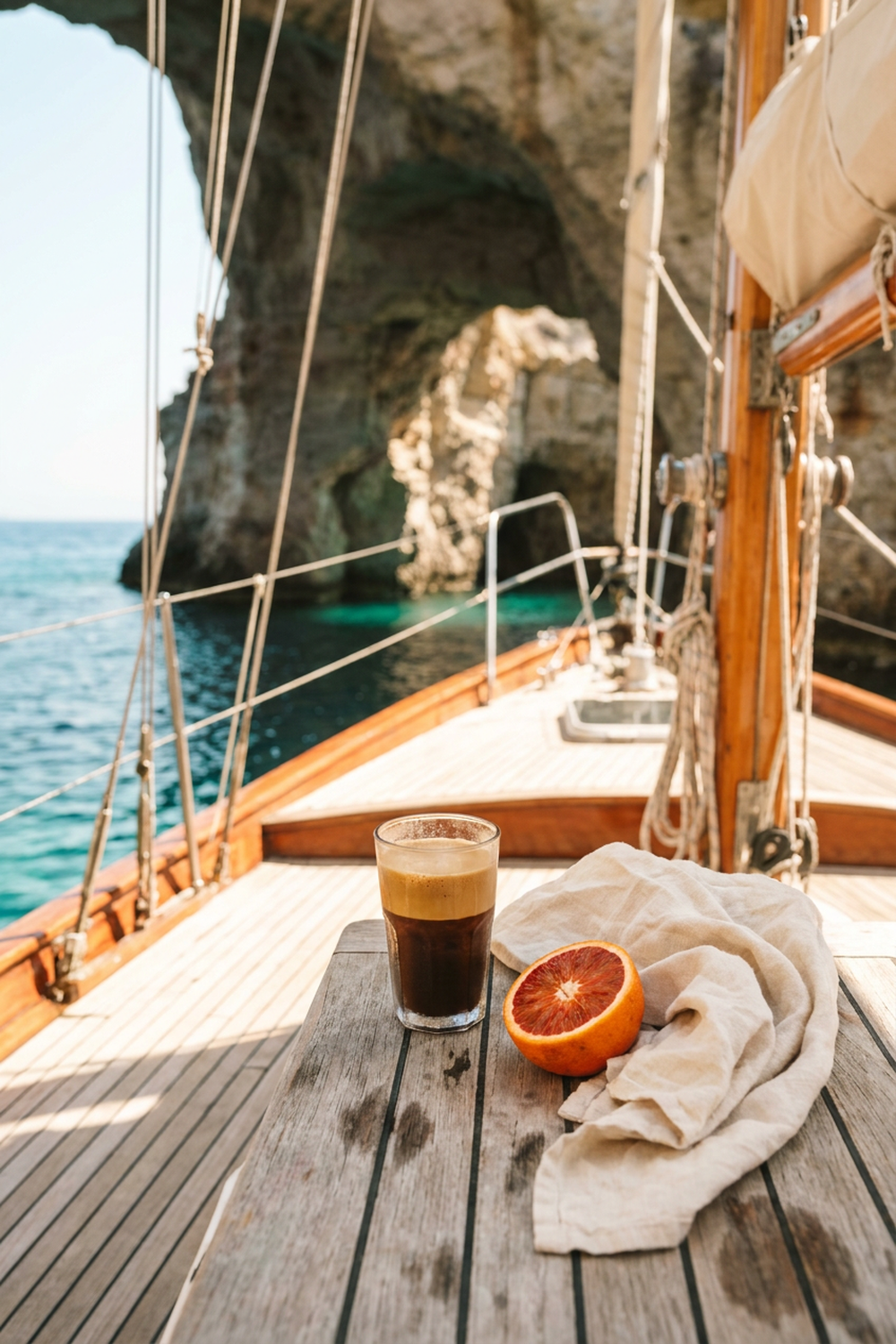
    Sailing Milos: Sea Caves and Freddo Espresso in Greece

    Santorini gets the sunsets and Mykonos gets the parties, but ask people who know the Cyclades well and a quieter name keeps coming up: Milos. A volcanic island of white cliffs, seventy-something beaches and water in shades of blue that look colour-graded, it is the Greece of slow mornings and salt-dried hair.

    Why you sail Milos instead of just visiting it

    The island’s most extraordinary places face the sea and hide from the road. A day-long boat trip around the coastline, whether a small group sail or a chartered caique, is the single best thing to do on Milos. You will glide past Kleftiko, the pirate-cove of white rock arches, swim into sea caves lit turquoise from below, and anchor in bays that cannot be reached any other way. Book the full-island circumnavigation if the sea is calm.

    The beaches that do not look real

    • Sarakiniko: the famous lunar landscape, smooth white volcanic rock against deep blue. Go at 7am or for the full moon, it is busy midday.
    • Kleftiko: reachable by boat only, the postcard of Milos.
    • Tsigrado: a tiny cove entered by ladder and rope through a rock cleft, an adventure in itself.
    • Firiplaka: long, cliff-backed, gently shelving, the easy afternoon choice.

    The freddo espresso ritual

    Greece runs on cold coffee in summer, and the freddo espresso, shaken over ice, slightly foamy, ideally drunk very slowly, is the island’s unofficial timepiece. Order one in Adamas harbour while the boats come in, or up in Plaka, the hilltop capital, where the lanes turn gold an hour before sunset. One freddo can honourably last ninety minutes. Nobody minds.

    Villages worth the wander

    Plaka for sunset from the kastro at the top of town. Klima for the syrmata, the old fishermen’s boathouses painted in bright doors right at the waterline, the island’s most photographed street. Pollonia in the northeast for a slow taverna dinner with your feet nearly in the water: try the local specialities, watermelon pie and anything with octopus.

    Planning notes

    June and September are the dream months: warm sea, soft light, fewer people. Milos is reached by ferry from Athens (roughly 3 to 4 hours on the fast boats) or a short domestic flight. Rent a small car or ATV for the beaches, book boat trips a day or two ahead in high season, and build in one afternoon with no plan at all. That afternoon is usually the one you remember.

    Pin this island guide for summer dreaming, and drift through more dreamy travel escapes on Plumeo. Daily blue-and-white inspiration at @Plumeoblog.

  • Lisbon, Portugal: Trams, Tiles and Golden Light

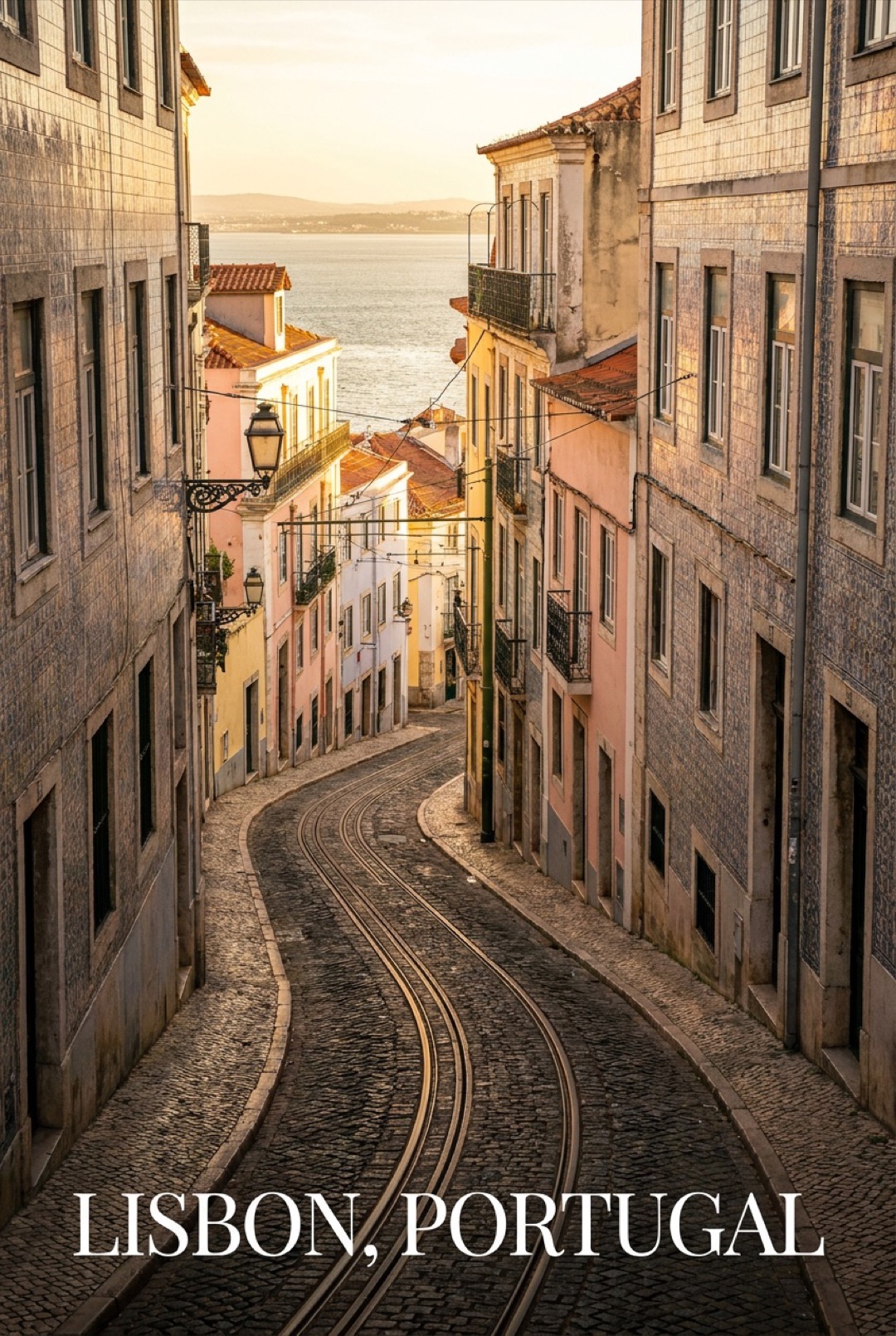
    Lisbon, Portugal: Trams, Tiles and Golden Light

    Lisbon is Europe’s golden-hour city: seven hills of pastel houses and azulejo tiles tumbling toward the Tagus, yellow trams grinding up impossible gradients, and light that photographers chase for careers. It is beautiful, affordable and slightly weathered in exactly the right way.

    The neighbourhoods

    • Alfama: the Moorish old quarter of laundry lines, fado bars and staircase lanes
    • Baixa and Chiado: grand squares, historic cafés and the Santa Justa lift
    • Bairro Alto: quiet by day, Lisbon’s bar-crawl by night
    • Belém: the tower, the monastery and the original pastel de nata shrine

    Miradouro hopping

    Lisbon’s viewpoints, miradouros, are its living rooms: Senhora do Monte for the full sweep, Portas do Sol for Alfama’s rooftops, Santa Catarina for sunset with guitars. Build evenings around them: a drink kiosk, a wall to sit on, the city going gold below. It is the cheapest luxury in Europe.

    Tram 28, played smart

    The famous yellow tram is genuinely the best city tour going, if you board at the Martim Moniz terminus before 9am or ride after dinner: midday queues are brutal and pickpockets work the crush. Alternatively walk the route downhill through Graça and Alfama, catching the trams as photo subjects instead of transport.

    Eat, listen, day-trip

    Eat grilled sardines in Alfama, bacalhau everywhere, and warm pasteis de nata dusted with cinnamon, Belém’s original versus Manteigaria is a delicious argument. Book a small fado house for one goosebump evening. Then give a full day to Sintra’s fairytale palaces in the hills: it is twenty-five minutes and another world away.

    Save this golden city, and ride through more travel guides on Plumeo. Daily inspiration at @Plumeoblog.
  • Plitvice Lakes: Croatia’s Waterfall Wonderland

    Plitvice Lakes: Croatia’s Waterfall Wonderland

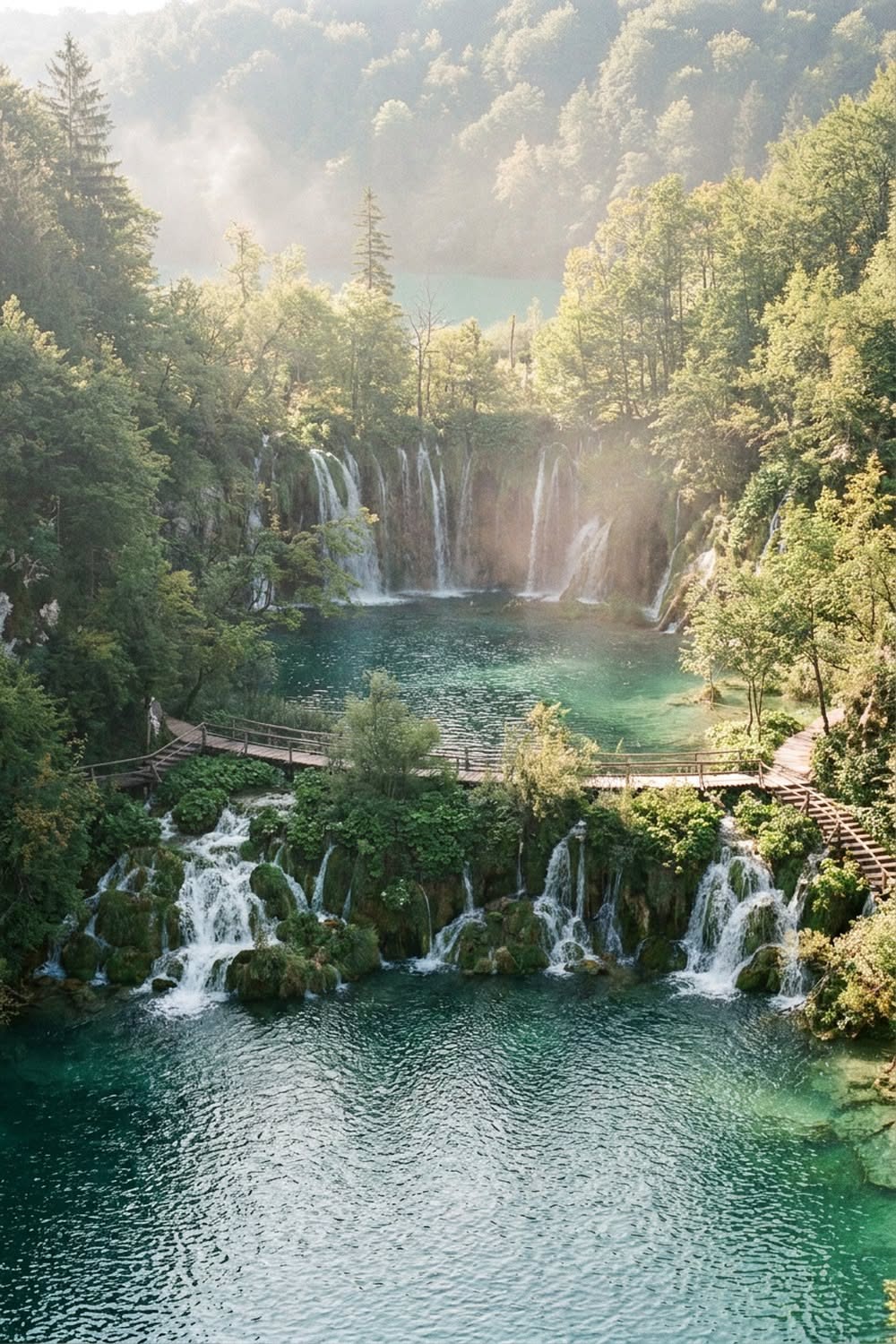
    Plitvice Lakes looks generated: sixteen terraced lakes in impossible shades of turquoise, stitched together by hundreds of waterfalls, crossed by wooden boardwalks that run directly over the water. It is Croatia’s oldest and most famous national park, a UNESCO site since 1979, and no photograph has ever quite prepared a visitor for the color.

    Why the water looks like that

    The lakes sit on travertine, limestone deposited by the water itself, which continuously builds the natural dams separating each lake. The mineral content and depth shift the color from emerald to azure to almost white-turquoise depending on light and season: the same lake can wear three colors in one afternoon. The barriers are alive and growing, which is why swimming is forbidden and the boardwalks exist: you are walking through a landscape that is still under construction.

    Upper lakes, lower lakes, and the one big fall

    The Lower Lakes run through a dramatic canyon and host Veliki Slap, the park’s 78-metre grand waterfall: this section owns the postcard views and, consequently, the crowds. The Upper Lakes are gentler and greener, a maze of cascades spilling through forest, where the boardwalks thread between falls close enough to feel. The classic route (program C, about 4 to 6 hours) links both via a panoramic boat ride across Lake Kozjak: the full loop is one of Europe’s great day walks.

    Beating the crowds

    • Book timed-entry tickets online ahead: summer slots genuinely sell out.
    • Enter at opening (7 to 8 am): the first two hours are a different, quieter park.
    • Go against the flow: starting from Entrance 2 and doing the Upper Lakes first dodges the tour-bus wave.
    • Stay overnight nearby: village guesthouses put you at the gate before the day-trippers arrive from the coast.

    Season and logistics

    June and September are the sweet spot: full water, warm light, manageable paths. Spring snowmelt makes the falls thunder: autumn wraps the lakes in gold and halves the crowds: winter is a frozen fairy tale with limited routes. The park sits two hours from Zagreb and about the same from Zadar, making it the natural bridge on any Croatia road trip. Wear real shoes (boardwalks get slick), carry water, and budget more time than the route says: the color keeps stopping people mid-stride.

    Pin this natural wonder, and flow through more travel guides on Plumeo. Daily wanderlust at @Plumeoblog.

  • Cappadocia, Turkey: Sunrise Above the Fairy Chimneys

    Cappadocia, Turkey: Sunrise Above the Fairy Chimneys

    Cappadocia looks invented: valleys of honey-coloured rock spires, houses and churches carved straight into cliffs, and every clear dawn, a hundred hot air balloons drifting over it all in the pink light. It is Turkey’s dreamscape, and it earns every photograph.

    The balloon morning

    • Book a reputable operator for your first morning, weather cancellations are common, so leave backup days
    • Flights launch pre-dawn and last about an hour over Love Valley and Göreme
    • Not flying: watch from Sunset Point in Göreme or a cave-hotel terrace with tea in hand, it is nearly as magical

    Beyond the balloons

    • Göreme Open-Air Museum: Byzantine cave churches with thousand-year frescoes
    • Derinkuyu: an underground city plunging eight storeys into the rock
    • Rose and Red Valleys: the classic sunset hike between pink spires
    • Uçhisar Castle: the region’s highest point, honeycombed with tunnels

    Sleep in a cave

    The cave hotels are half the reason to come: rooms carved into the rock with stone arches, kilim rugs and terraces built for balloon-watching. Göreme puts you in the centre of everything: Uçhisar and Ürgüp trade a little convenience for quieter luxury. Book terraces east-facing: that is where the show happens.

    Timing it right

    April to June and September to October bring the most flyable mornings and walkable afternoons. Winter dusts the chimneys with snow, brutally photogenic and far quieter, though more flights cancel. Three nights is the sweet spot: one for the balloons, one spare for weather, one because you will not want to leave.

    Save this dreamscape for your bucket list, and float through more travel guides on Plumeo. Daily inspiration at @Plumeoblog.
  • Santorini Travel Guide: Beyond the Blue Domes

    Santorini Travel Guide: Beyond the Blue Domes

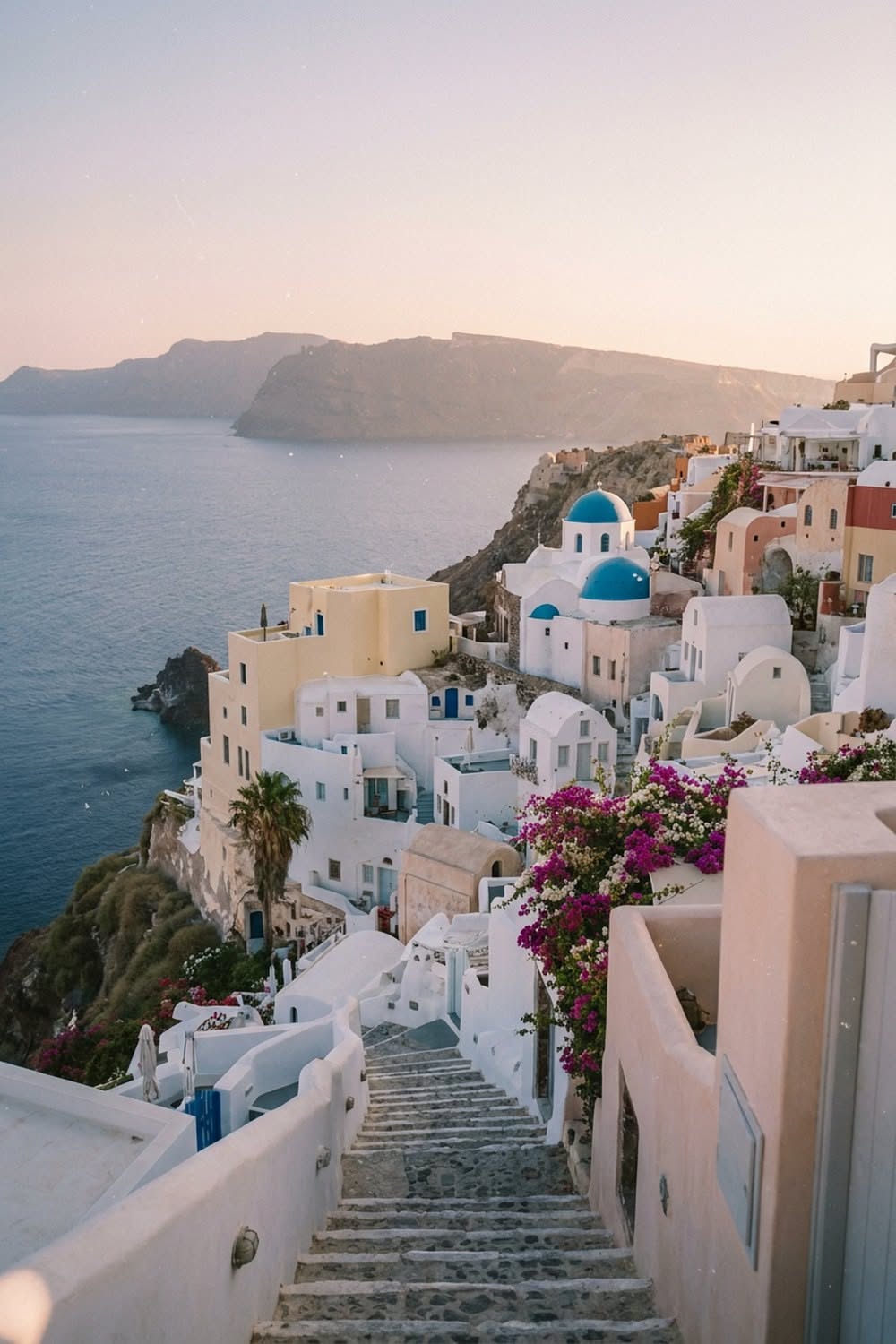
    Santorini is what happens when a volcano collapses into the sea and civilization decides to balance on the rim: white villages frosted along a 300-metre cliff, blue domes against a flooded caldera, sunsets that draw applause. It is the most famous island in Greece for honest reasons, and it hides a quieter, stranger island behind the postcard for travelers willing to walk ten minutes from the crowd.

    The caldera villages

    Oia is the icon: the blue domes, the windmills, the sunset that packs its marble lanes nightly (more on beating that below). Fira, the capital, brings energy and the cable car down to the old port: Imerovigli, between them, is the connoisseur’s base: the highest point on the rim, the same views, a fraction of the foot traffic, and hotel terraces that hang directly over the void. Wherever you stay, the caldera-facing terrace is the entire point of the splurge: budget accordingly, even for one night of it.

    The Fira-to-Oia hike

    The best free thing on the island: a 10 km cliff-edge path linking Fira, Firostefani, Imerovigli and Oia, roughly three hours of continuous caldera views, whitewashed chapels and volcanic ridge. Walk it north toward Oia in the late afternoon and arrive as the sunset builds, or go at first light and have the rim nearly to yourself. Real shoes, water, and a hat: shade is a rumor up there.

    The stranger Santorini

    • Red Beach and the black sands of Perissa and Kamari: the volcano’s beach portfolio, umbrella-lined and warm into October.
    • Akrotiri: a Bronze Age city preserved in ash, Greece’s Pompeii, 1,700 years older.
    • Pyrgos village: the inland hilltop town the crowds forgot: blue doors, quiet lanes, the island’s best panoramic lunch.
    • The volcano boat trip: hike the still-steaming crater islet and swim at the hot springs in the caldera’s heart.

    Wine from the ash

    Santorini’s vineyards grow in volcanic ash without irrigation, the vines coiled into ground-hugging baskets against the wind: the resulting Assyrtiko is one of the world’s great mineral whites. The wineries along the southern ridge, Santo Wines’ sunset terrace most famously, pour flights over caldera views: taste vinsanto, the island’s ancient sweet wine, before leaving. It is the rare tourist activity that is also the genuinely local one.

    Crowd strategy and timing

    The sunset move: skip Oia’s castle scrum and watch from the Fira-Imerovigli path, a wine terrace, or a catamaran on the water, same sun, no elbows. Visit in May, early June, September or October: summer brings cruise-ship midday surges that the shoulder months halve. Mornings before 9 am return Oia to the cats and the bakers, and that hour, pink light on white walls, no one on the marble, is the Santorini worth crossing the world for.

    Pin this island dream, and sail through more travel guides on Plumeo. Daily wanderlust at @Plumeoblog.

  • Cherry Blossom Season: Where to See Spring at Its Best

    Cherry Blossom Season: Where to See Spring at Its Best

    For a few fleeting weeks each spring, entire cities turn pink and the world briefly agrees to stop and look up. Cherry blossom season is travel’s great timed event: spectacular, brief and slightly unpredictable, which is exactly why it inspires pilgrimages. Here is where to chase the bloom, and how to time it.

    Japan: the homeland of hanami

    Japan invented the art of blossom-viewing, hanami, and does it like nowhere else: picnics under the trees, lanterns at night, an entire national mood shift. Kyoto is the dream: the Philosopher’s Path, a canal-side walk beneath hundreds of trees, and Maruyama Park’s weeping cherry lit up after dark. Tokyo answers with Ueno Park’s thousand trees and boats drifting the Meguro River under pink canopies. Peak bloom sweeps south to north from late March through mid-April: track the official forecast, book a window rather than exact dates, and build in flexibility: the trees do not consult itineraries.

    Beyond Japan: the global bloom map

    • Washington, DC: 3,000 trees ringing the Tidal Basin, a 1912 gift from Tokyo: late March to early April, monuments floating in pink.
    • Paris: the giant blossoms at Parc de Sceaux and the Eiffel Tower framed in bloom at Trocadéro: early April.
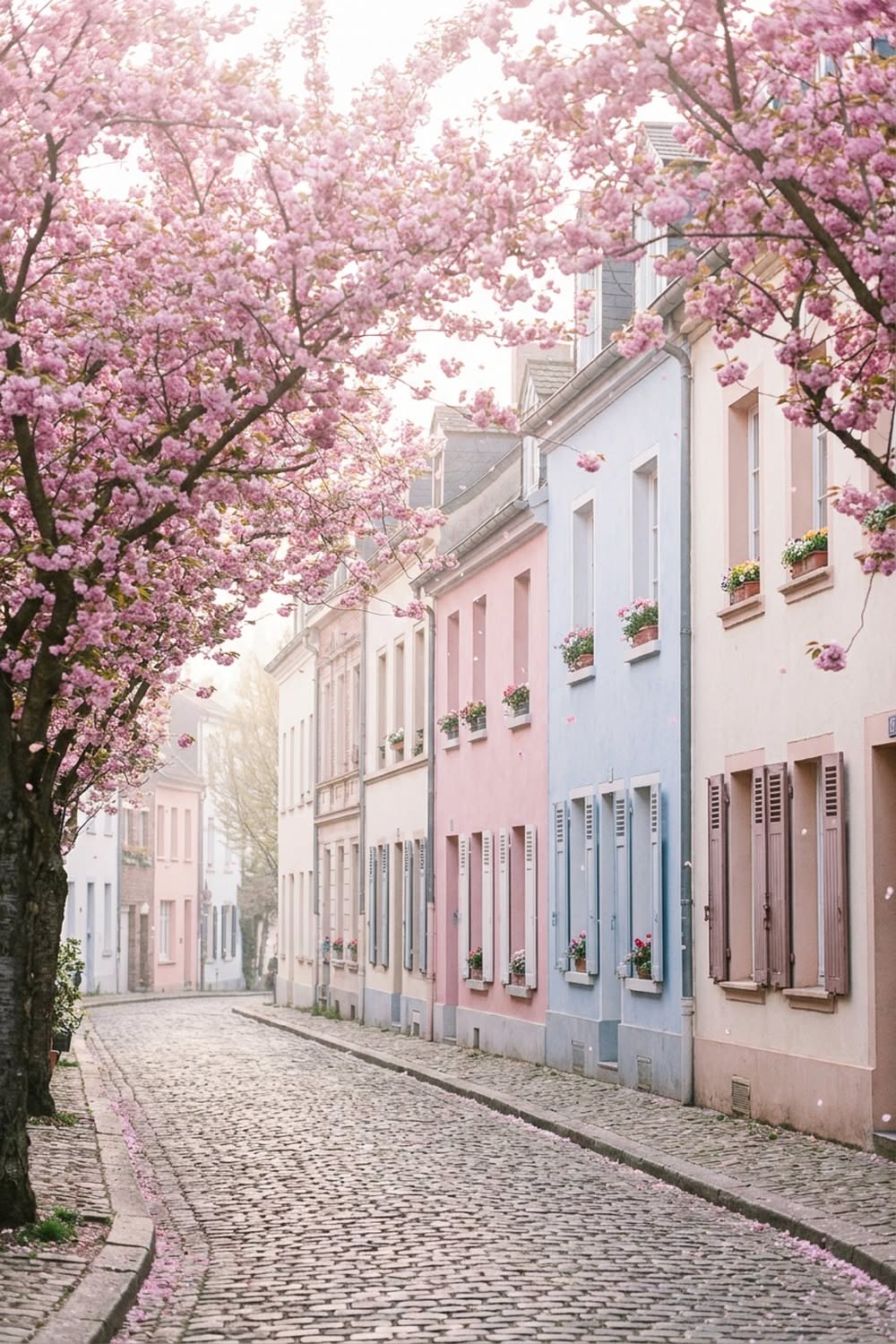
    • Bonn, Germany: the famous Heerstrasse, a residential street turned pink tunnel: mid-April.
    • Seoul: Yeouido’s blossom festival along the Han River, with spring street food attached.
    • Vancouver: 40,000 street trees blooming through entire neighborhoods, March into April.

    Timing the untimeable

    Every destination publishes bloom forecasts from February onward: peak bloom lasts roughly one week, weather permitting, with the days just after peak delivering the famous petal-snow. The strategy: travel in the historical window, follow the forecast in the final month, and keep the itinerary loose enough to chase the best trees when you land. Rain is the season’s only villain: build one spare day into any blossom trip.

    How to hanami properly

    Go at sunrise for empty paths and the softest light, or at dusk where night illuminations exist: both beat midday crowds by miles. Bring a blanket and snacks and actually sit: the point of hanami is lingering, not photographing. And take the lesson the blossoms teach every year, that the beautiful thing is beautiful because it is brief, as part of the souvenir.

    Pin this for spring dreaming, and bloom through more travel guides on Plumeo. Daily wanderlust at @Plumeoblog.

  • Marrakech, Morocco: Riads, Souks and Sensory Overload

    Marrakech, Morocco: Riads, Souks and Sensory Overload

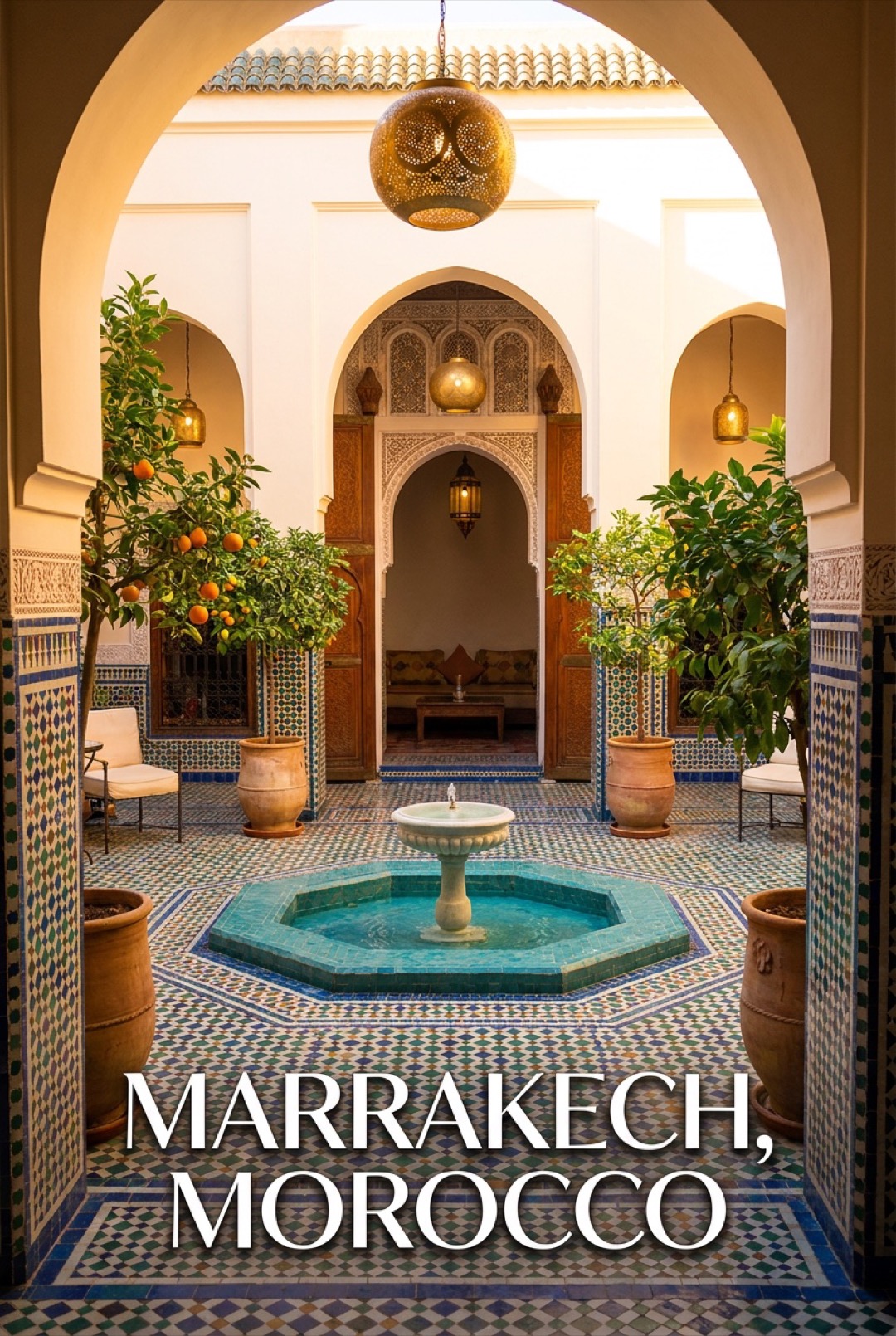
    Marrakech is travel with the saturation turned up: rose-pink walls, spice pyramids, call to prayer over drumming in the square, then a riad door closes and you are in a courtyard of orange trees and trickling water. The whiplash between chaos and calm is the whole point, and it is glorious.

    The medina must-dos

    • Jemaa el-Fnaa: the great square at dusk, when the food stalls and storytellers ignite
    • The souks: leather, lanterns, rugs and spices in a glorious labyrinth, get lost on purpose
    • Bahia Palace and Ben Youssef Madrasa: zellige and carved cedar at their peak
    • Jardin Majorelle: the cobalt-blue garden, book the first slot online
    • A hammam: steam, black soap and the best scrub of your life

    Stay in a riad

    Skip the chain hotels: riads, courtyard houses turned guesthouses, are Marrakech’s magic trick. Breakfast on the roof, mint tea on arrival, a plunge pool between sightseeing rounds. Book inside the medina for atmosphere, and let the staff arrange airport pickup: your driver walking you through the lanes beats any map app.

    Haggling, kindly

    Bargaining is expected sport, not conflict: counter around half the opening price, keep it smiling, and walk away if the number will not land, it often follows you. Fixed-price ensemble stores help you learn real values before souk diving. And carry small cash: cards are for carpets, dirhams are for everything else.

    When to come

    March to May and October to November are the golden windows: warm days, cool riad evenings. Summer bakes past 40°C, plan pools and late nights if you brave it. Add two nights in the Agafay desert or over the Atlas in Aït Benhaddou and the trip gains a whole second act.

    Save this sensory feast, and wander more travel guides on Plumeo. Daily inspiration at @Plumeoblog.

  • A Northern Lights Cabin Trip: Chasing the Aurora in Comfort

    A Northern Lights Cabin Trip: Chasing the Aurora in Comfort

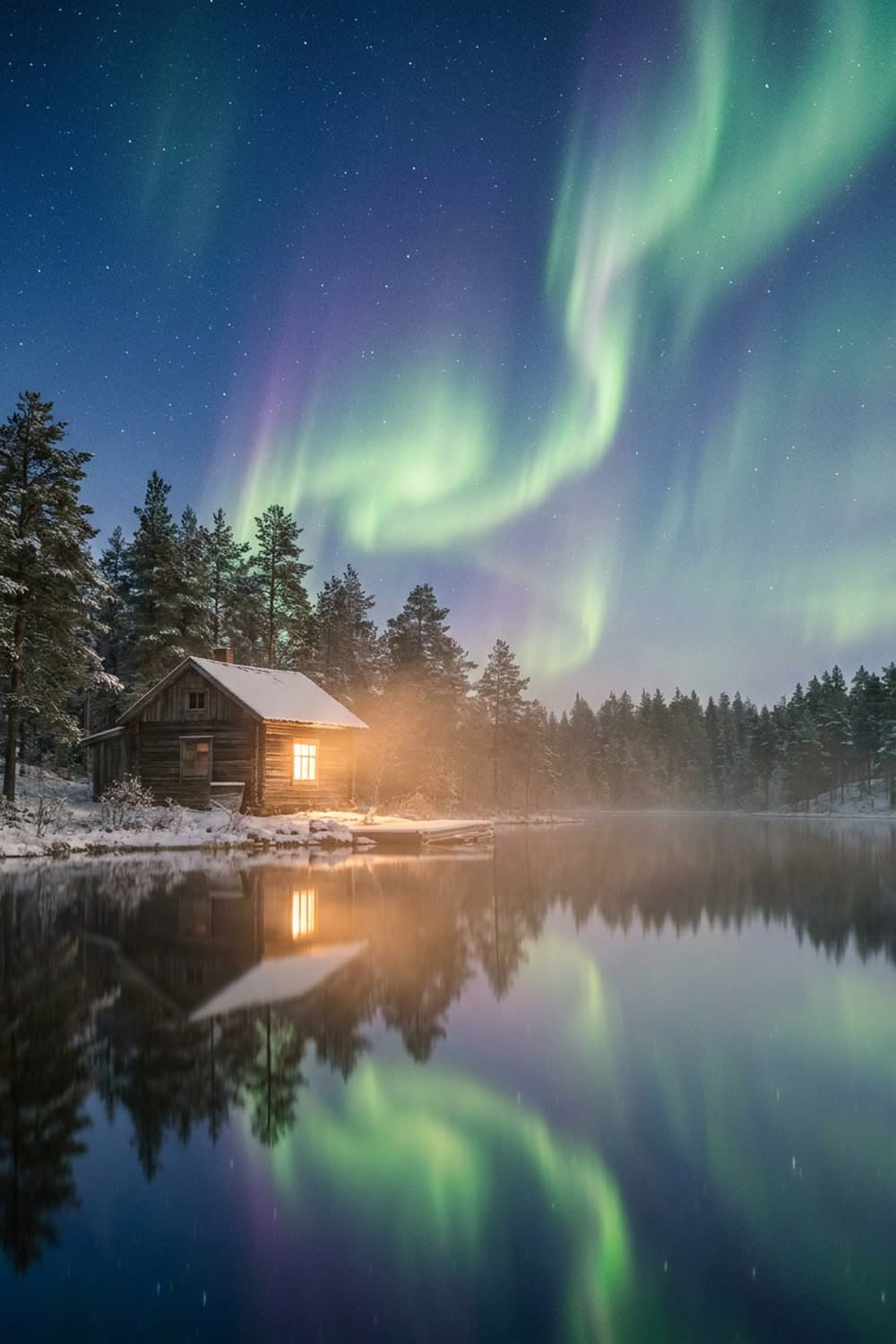
    There are two ways to hunt the northern lights: shivering in a parking lot, or watching from a firelit cabin with a drink while the sky unfurls green over the snow. The cabin method is the correct one. Aurora travel is a waiting game, and the secret to winning it is making the waiting itself the holiday.

    Where the odds are best

    • Tromsø, Norway: the aurora capital: island fjord scenery, and the Gulf Stream keeps it milder than its latitude has any right to be.
    • Finnish Lapland (Saariselkä, Levi, Rovaniemi): home of the glass igloo, aurora viewing from bed: plus husky sleds and profound silence.
    • Abisko, Sweden: a microclimate keeps its sky famously clear: statistically among the best viewing on earth.
    • Iceland: aurora over waterfalls and black beaches, with hot tubs as standard cabin equipment.
    • Yukon and Alaska: the North American wilderness version, big skies and log cabins with wood stoves.

    Timing: dark, clear, patient

    Aurora season runs September to early April: you need darkness, clear sky and solar activity, in that order of controllability. September and March are the insider picks, statistically active, less brutally cold, with September offering auroras reflected in unfrozen lakes. Peak viewing hours run roughly 9 pm to 2 am. Book at least four nights: the aurora keeps no schedule, and multi-night stays convert luck into probability. New moon weeks darken the sky an extra stop.

    The cabin strategy

    Choose lodging away from town lights with a clear northern view: glass igloos and aurora cabins with skylights mean the sky wakes you instead of an alarm app. The ideal setup: sauna or hot tub (the Nordic wait-state), a fireplace, and a porch for the moment it begins. Many lodges offer aurora alerts, a knock or a text when the sky ignites, which lets you sleep guilt-free between shows. Fill the days with the daylight repertoire: husky sledding, snowshoeing, reindeer farms, ice fishing: the aurora is the headliner, but Lapland’s opening acts are excellent.

    Seeing it well

    Real auroras often start as a pale grey-green arc that cameras see as vivid before eyes do: give yourself fifteen dark-adapted minutes away from phone screens. When a strong display erupts, curtains rippling, the whole sky in motion, put the camera down after the first minutes: no sensor captures the scale, and the memory is the true souvenir. Dress in more layers than dignity suggests: the show rewards those still outside at 1 am.

    The honest promise

    No trip can guarantee the lights: what a cabin trip guarantees is snow-silence, saunas, wood smoke, wild stars and slow mornings, with a decent-to-excellent chance of the sky performing its greatest trick. Plan it so the aurora is the crown and not the foundation, and the trip cannot fail: it can only occasionally become transcendent.

    Pin this winter dream, and chase more travel guides on Plumeo. Daily wanderlust at @Plumeoblog.