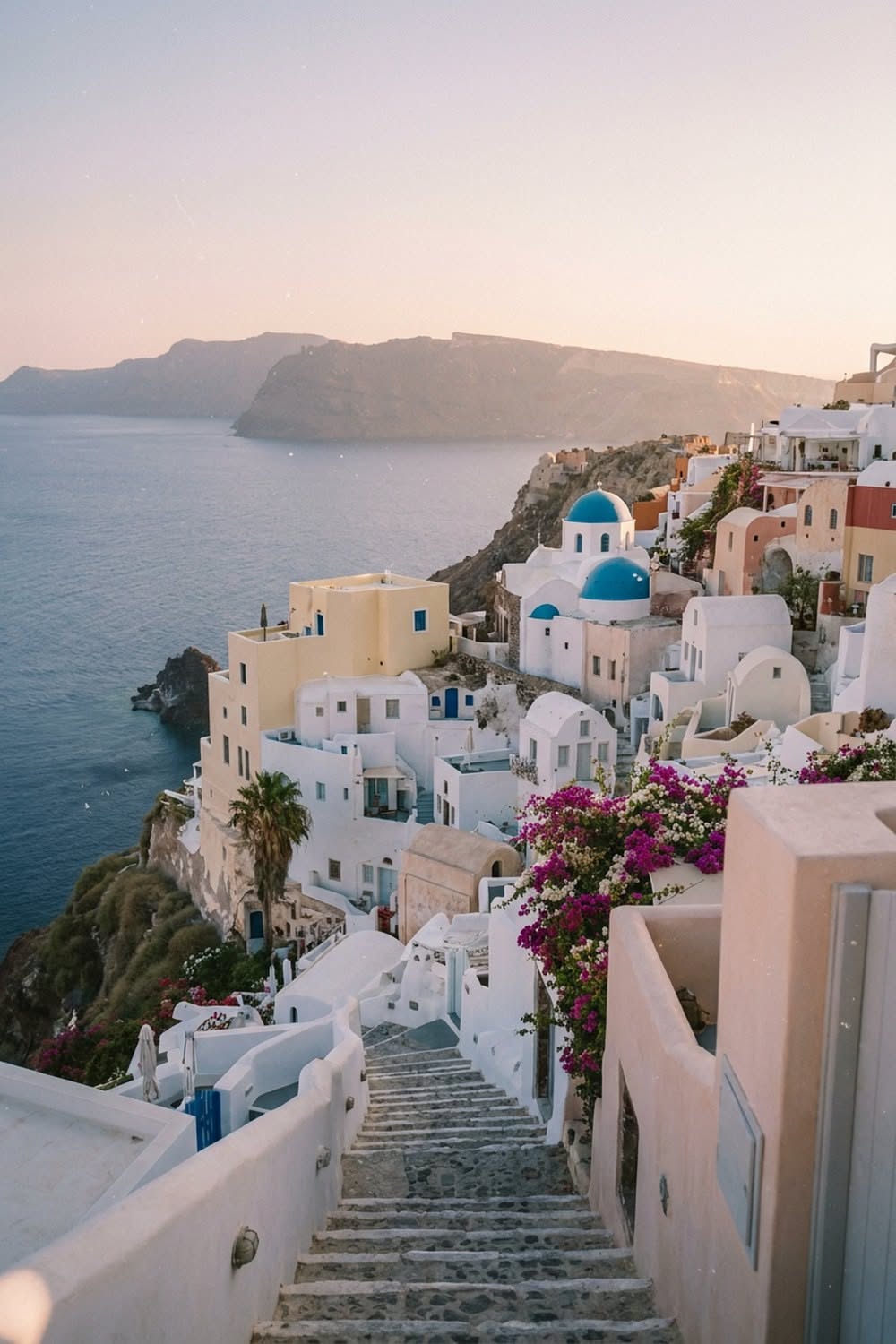
Santorini is what happens when a volcano collapses into the sea and civilization decides to balance on the rim: white villages frosted along a 300-metre cliff, blue domes against a flooded caldera, sunsets that draw applause. It is the most famous island in Greece for honest reasons, and it hides a quieter, stranger island behind the postcard for travelers willing to walk ten minutes from the crowd.
The caldera villages
Oia is the icon: the blue domes, the windmills, the sunset that packs its marble lanes nightly (more on beating that below). Fira, the capital, brings energy and the cable car down to the old port: Imerovigli, between them, is the connoisseur’s base: the highest point on the rim, the same views, a fraction of the foot traffic, and hotel terraces that hang directly over the void. Wherever you stay, the caldera-facing terrace is the entire point of the splurge: budget accordingly, even for one night of it.
The Fira-to-Oia hike
The best free thing on the island: a 10 km cliff-edge path linking Fira, Firostefani, Imerovigli and Oia, roughly three hours of continuous caldera views, whitewashed chapels and volcanic ridge. Walk it north toward Oia in the late afternoon and arrive as the sunset builds, or go at first light and have the rim nearly to yourself. Real shoes, water, and a hat: shade is a rumor up there.
The stranger Santorini
- Red Beach and the black sands of Perissa and Kamari: the volcano’s beach portfolio, umbrella-lined and warm into October.
- Akrotiri: a Bronze Age city preserved in ash, Greece’s Pompeii, 1,700 years older.
- Pyrgos village: the inland hilltop town the crowds forgot: blue doors, quiet lanes, the island’s best panoramic lunch.
- The volcano boat trip: hike the still-steaming crater islet and swim at the hot springs in the caldera’s heart.
Wine from the ash
Santorini’s vineyards grow in volcanic ash without irrigation, the vines coiled into ground-hugging baskets against the wind: the resulting Assyrtiko is one of the world’s great mineral whites. The wineries along the southern ridge, Santo Wines’ sunset terrace most famously, pour flights over caldera views: taste vinsanto, the island’s ancient sweet wine, before leaving. It is the rare tourist activity that is also the genuinely local one.
Crowd strategy and timing
The sunset move: skip Oia’s castle scrum and watch from the Fira-Imerovigli path, a wine terrace, or a catamaran on the water, same sun, no elbows. Visit in May, early June, September or October: summer brings cruise-ship midday surges that the shoulder months halve. Mornings before 9 am return Oia to the cats and the bakers, and that hour, pink light on white walls, no one on the marble, is the Santorini worth crossing the world for.
Pin this island dream, and sail through more travel guides on Plumeo. Daily wanderlust at @Plumeoblog.