Soft-luxury living

Category: Garden

Dreamy gardens, greenhouses and growing things.

  • Dreamy Greenhouse Ideas Every Plant Lover Will Want

    Dreamy Greenhouse Ideas Every Plant Lover Will Want

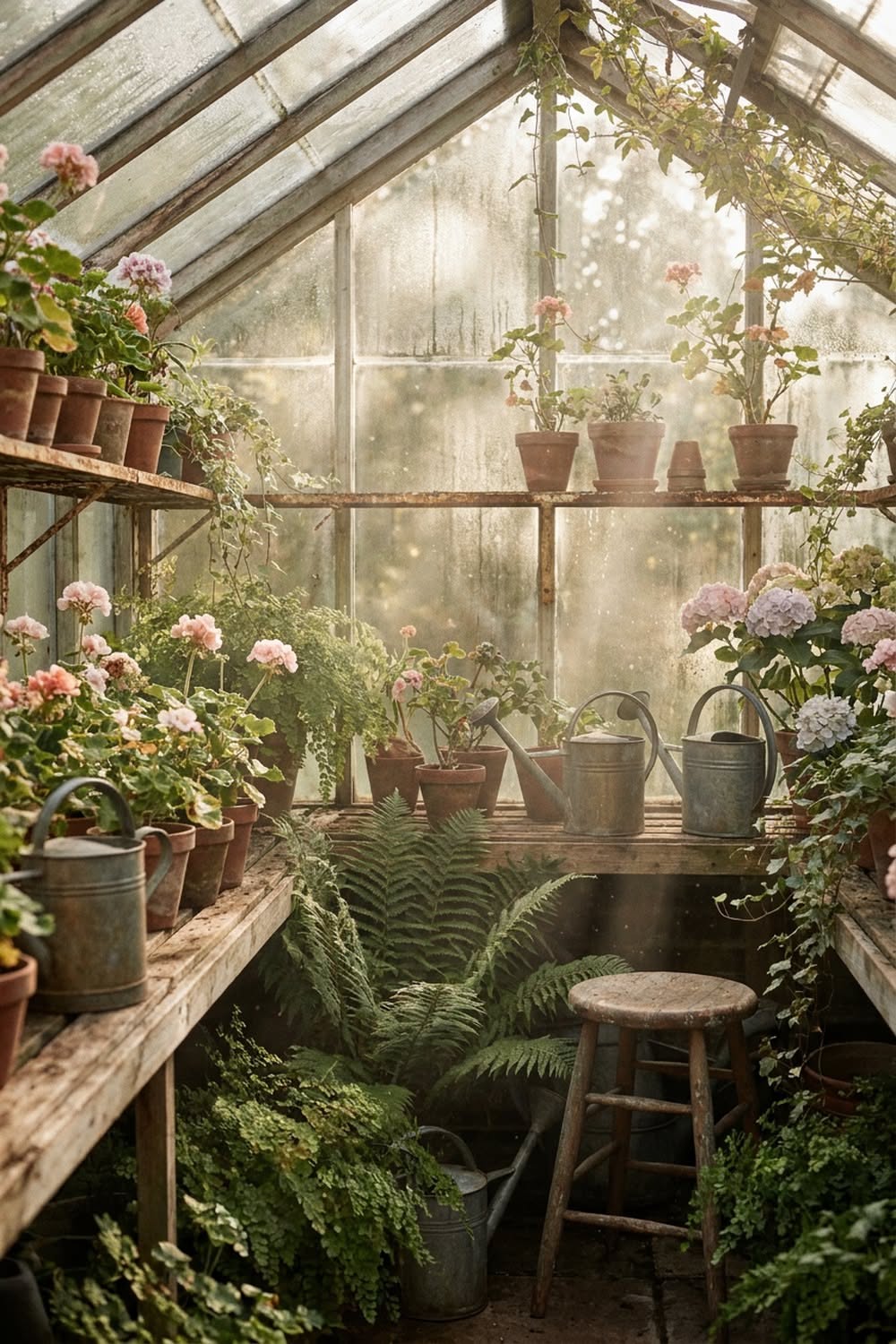
    Every plant lover has the same daydream: glass walls, warm light, the smell of tomato leaves and damp soil, and somewhere to sit while the rain does its thing outside. A greenhouse is part garden tool, part tiny sanctuary, and even a modest one can be both.

    Whether you are planning a real build or collecting ideas for someday, here is what makes a greenhouse feel dreamy instead of purely functional.

    Choose the style that fits your space

    • Freestanding glasshouse: the classic. Even 6 by 8 feet grows a serious amount of food and flowers.
    • Lean-to: built against a sunny wall, it borrows warmth from the house and suits narrow gardens.
    • Recycled-window greenhouse: patchwork panes and salvaged doors, the most storybook option of all.
    • Mini options: a cold frame or glass cloche row delivers the same season-stretching magic on a balcony budget.

    Get the practical trio right: light, air, water

    Site the greenhouse where it catches morning sun, ideally with the ridge running east to west. Ventilation matters more than beginners expect: roof vents plus a door you can prop open will save summer seedlings from cooking. A water butt on the downpipe gives you rain-warmed water right where you need it, and a simple gravel or brick floor drains happily and holds a little heat into the evening.

    The layout that works (and photographs beautifully)

    Run staging, which is simply waist-height benching, down one side for seed trays and pots of pelargoniums. Keep the other side for tall crops in beds or grow-bags: tomatoes, cucumbers, and a climbing jasmine if you are feeling romantic. Underneath the staging is storage for pots and compost, hidden by a linen skirt if you like the soft look. Hooks along the frame hold trowels, twine and a battered sun hat.

    Now make it somewhere you want to linger

    This is the part most people skip and always regret. Leave room for one chair, even a folding cafe chair, and a surface big enough for a mug. String solar fairy lights along the ridge, keep a woollen blanket in a basket, and let scented plants (sweet peas in spring, basil and lemon verbena in summer) do the aromatherapy. On a rainy afternoon, a greenhouse with a chair becomes the best room of the house.

    What to grow first

    For quick wins: salad leaves and radishes in early spring, then tomatoes, basil and cut flowers like zinnias started from seed. Overwinter tender favourites (pelargoniums, salvias, citrus in mild climates) and start dahlias early in pots. The greenhouse’s real gift is time: roughly a month extra at each end of the growing season.

    Pin this for your someday greenhouse, and wander more dreamy garden ideas on Plumeo. Daily inspiration at @Plumeoblog.
  • Dreamy Cut Flower Garden Ideas for a Cottage Yard

    Dreamy Cut Flower Garden Ideas for a Cottage Yard

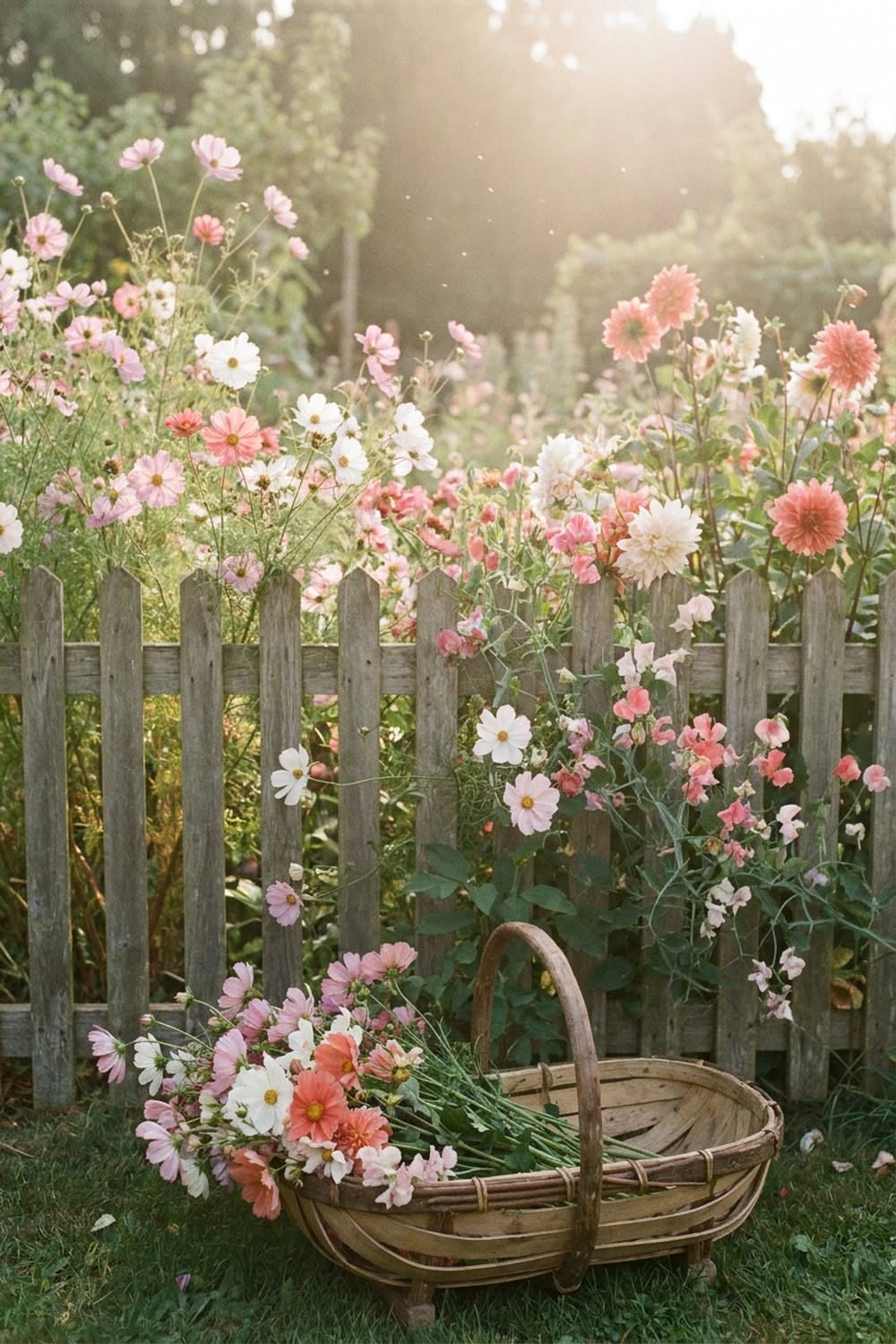
    A cut flower garden is the most rewarding patch you can plant: a few square metres that keep your kitchen table in fresh bouquets from June until frost. You do not need a farm, a greenhouse or perfect soil. You need sun, a handful of the right varieties and the confidence to cut deep.

    Start with cut-and-come-again flowers

    Some flowers sulk when picked. Others respond to cutting by producing more. Build your patch around the second kind:

    • Zinnias: the hardest working flower in any cutting garden, blooming until frost.
    • Cosmos: airy, romantic and absurdly productive from a packet of seed.
    • Dahlias: the queens of late summer, from dinner-plate blooms to little pompoms.
    • Snapdragons: tall spires that add shape to every bouquet.
    • Sweet peas: the scent of early summer, picked every other day.
    • Ammi and nigella: the lacy fillers florists charge a fortune for.

    A simple layout that actually works

    Forget ornamental borders here: a cutting garden is a working patch, and rows make it easy. Two or three beds about a metre wide, with narrow paths between, will let you reach every stem without stepping on the soil. Plant tall crops (dahlias, snapdragons, sweet peas on a frame) on the north side so they do not shade the rest, and sow shorter rows of zinnias and cosmos in front.

    If space is tight, one raised bed of about two by one metres still yields a bouquet a week at peak season. Even a row of zinnias along the fence counts.

    Succession is the secret to endless flowers

    Sow half your zinnia and cosmos seed in late spring and the rest four weeks later. That second sowing takes over in August just as the first begins to tire, and carries you deep into autumn. Tulips and narcissi planted in autumn give you a spring picking season before the summer crops even start.

    How to cut so the garden keeps giving

    1. Pick in the cool of morning, straight into a bucket of water.
    2. Cut deep, taking a long stem down to a set of side shoots: the plant will branch and reward you.
    3. Strip the lower leaves so nothing sits below the waterline.
    4. Deadhead anything you did not pick. A zinnia gone to seed is a zinnia slowing down.

    Make it dreamy, not just productive

    Choose a palette the same way you would for a border: blush, cream, dusty rose and burgundy make bouquets that always look composed. Let a few herbs in (mint, basil is wonderful in a vase), edge the beds with low catmint, and keep a bench or an old chair nearby. A cutting garden should be a place you linger with your coffee, secateurs optional.

    Pin this for planting season and explore more dreamy garden ideas on Plumeo. For daily garden and home inspiration, follow @Plumeoblog on Pinterest.

  • Kitchen Herb Gardens: Fresh Flavor on the Windowsill

    Kitchen Herb Gardens: Fresh Flavor on the Windowsill

    A kitchen herb garden is gardening at its most immediately rewarding: seed to scissors in weeks, harvested seconds before dinner, and decorative the entire time. A sunny windowsill and three pots is a fully operational start, and the difference fresh herbs make to everyday cooking is out of all proportion to the effort of keeping them alive.

    The starting lineup

    • Basil: the diva: wants the sunniest spot and steady moisture, pays in caprese and pesto.
    • Mint: unkillable and invasive: always its own pot, or it annexes the neighbors.
    • Chives: cut-and-come-again forever: the highest work-to-reward ratio on the sill.
    • Parsley and cilantro: the workhorses: cilantro runs to seed fast, so sow a pinch every few weeks.
    • Rosemary and thyme: the Mediterranean dry-lovers: sun, sparse water, benign neglect.

    Start with supermarket potted herbs split into fresh compost, or small plants from a nursery: seeds are cheaper and slower: both roads lead to the same windowsill.

    Light and the honest window audit

    Herbs want four to six hours of real sun: a south-facing kitchen window is prime real estate, east or west is workable, and a north window is where basil goes to sulk. If the kitchen is dim, a small full-spectrum grow light clipped above the pots solves it completely for pocket change and keeps the garden producing straight through winter, when a snip of fresh thyme feels faintly miraculous.

    Watering: the finger rule

    More windowsill herbs drown than starve. The rule: finger into the soil to the first knuckle: water thoroughly only when it comes out dry, and never let pots sit in a saucer of standing water. Drainage holes are non-negotiable: pretty cachepots can hide an ugly draining pot inside. Mediterranean herbs (rosemary, thyme, oregano) want to dry out properly between drinks: basil and mint prefer steadily moist: grouping by thirst makes the routine automatic.

    Harvest like you mean it

    The counterintuitive rule: cutting makes them grow. Pinch basil just above a leaf pair and it branches double: shear chives an inch from the soil and they return: take the outer stems of parsley and let the center keep producing. Never strip more than a third at once, and pinch off flower buds on sight: a flowering herb has decided to retire. Regular haircuts keep plants bushy, productive and permanently dinner-ready.

    Style meets supper

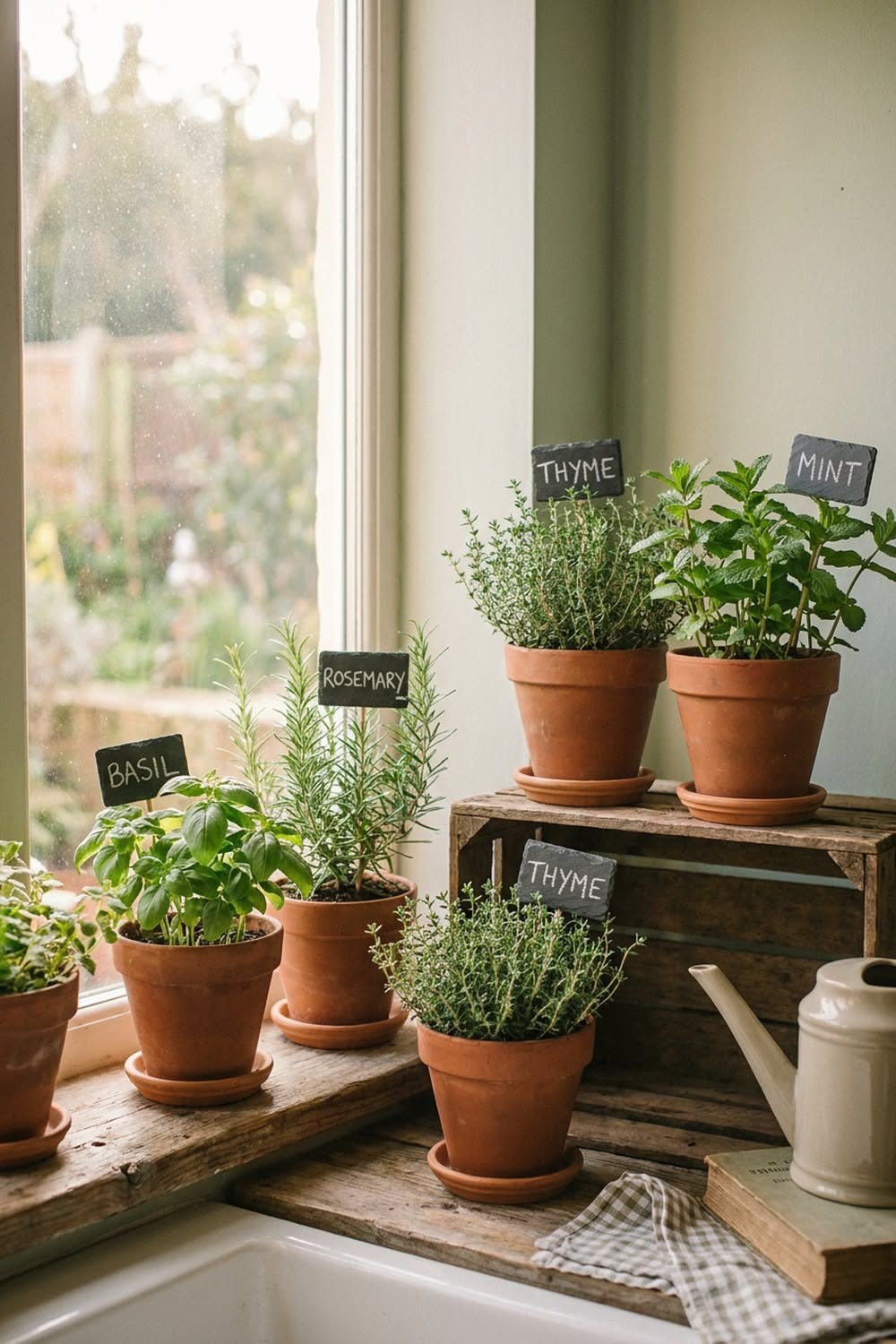
    Matched terracotta with hand-written labels, a trio of enamel pots on a tray, or a tiered stand by the window: the herb garden is legitimately decor that seasons things. Excess harvests become pesto, herb butter or ice-cube-tray portions in olive oil for winter. The endgame: reaching past the spice rack to scissors and a living plant, and tasting the difference in the first forkful.

    Save this windowsill garden, and grow more garden ideas on Plumeo. Daily green inspiration at @Plumeoblog.

  • Dreamy Cottage Garden Ideas for a Storybook Yard

    Dreamy Cottage Garden Ideas for a Storybook Yard

    There is a reason cottage gardens never go out of style. They feel unplanned in the loveliest way, all tumbling roses, crowded borders and paths that disappear around a corner. The good news: that romantic, slightly wild look is one of the most forgiving styles you can grow, because the “rules” are gentle and the plants do most of the work.

    Here is how to create a dreamy cottage garden of your own, whether you have a full yard or a strip of soil beside the door.

    Start with the bones: paths, edges and an entrance

    Every storybook garden has a sense of journey. Before you buy a single plant, sketch a simple path from the gate to the door, or from the patio to a seating spot. Stepping stones, gravel, or old brick laid in a soft curve all work beautifully. A cottage garden path should never feel like a corridor: let plants spill over the edges so the line blurs.

    If you can add one structure, make it an entrance. A simple wooden arch with a climbing rose or clematis instantly gives the garden a beginning, and walking under flowers never stops feeling special.

    Plant in layers, not rows

    The classic cottage border is built like a little amphitheatre: tall plants at the back, a generous middle layer, and low growers softening the front edge. A reliable framework looks like this:

    • Back: hollyhocks, delphiniums, foxgloves and climbing roses for height and drama.
    • Middle: peonies, phlox, salvia, shrub roses and lavender for the main flush of colour.
    • Front: catmint, hardy geraniums, alchemilla and dianthus tumbling onto the path.

    Plant in odd-numbered drifts of three or five rather than singles. Repetition of a few favourites along the border is what makes a cottage garden feel intentional instead of chaotic.

    Choose a soft, romantic palette

    You can plant almost anything in a cottage garden, but the dreamiest ones stick to a loose palette. Blush pink, dusty lavender, cream and soft blue with plenty of green reads as calm and romantic. Add one deeper accent, perhaps a wine-coloured rose or plum-toned scabiosa, so the scheme has depth. If you love brights, keep them in one corner or a cutting patch so the main view stays soft.

    Add the cottage signatures

    A few elements do a lot of storytelling:

    • A climbing rose or wisteria over the door or arch.
    • Self-seeders like forget-me-nots, poppies and nigella that pop up in the cracks.
    • Herbs tucked among the flowers: chives, sage, thyme and rosemary belong here.
    • A weathered bench, a birdbath or an old watering can left where you actually use it.
    • Picket fencing, low stone walls or woven willow edging instead of hard modern lines.

    Keep it blooming from spring to frost

    The secret to a border that never looks empty is succession. Spring bulbs (tulips, narcissi, alliums) hand over to early summer peonies and roses, then phlox, cosmos and dahlias carry high summer, and asters plus sedum close the season. When you buy plants, check the bloom month on the label and make sure every month from April to October has at least two performers.

    Low-effort habits that keep the magic alive

    Deadhead once a week with a cup of tea in hand, mulch generously in spring so weeds stay down and moisture stays in, and resist the urge to tidy too hard in autumn. Seedheads feed the birds, and a little softness through winter is part of the charm. Cottage gardens reward the relaxed gardener.

    Save this to your garden board on Pinterest so it is there when planting season arrives, and browse more dreamy garden ideas while the kettle boils. You can follow along daily at @Plumeoblog.

  • Cozy Cottage Potting Bench Ideas

    Cozy Cottage Potting Bench Ideas

    Every gardener eventually discovers the same truth: potting on the ground ruins your back, and potting on the kitchen table ruins the kitchen. Enter the potting bench, the garden’s most quietly romantic piece of furniture, half workstation, half still life of terracotta and twine.

    What a good bench actually needs

    • A generous worktop at standing height, roughly hip level, so repotting does not become a chiropractic event.
    • A lower shelf for bags of compost and the big pots.
    • Hooks and a rail for trowels, twine, snips and the hand fork you keep losing.
    • Somewhere for soil: a built-in basin, a removable tub, or simply a deep tray to catch the mess.

    Anything beyond that is decoration, which is, of course, half the fun.

    Buy, build or upcycle

    Ready-made benches are easy to find, but the most charming ones are usually rescued: an old dresser with the drawers removed, a butcher block on trestles, a vintage console left to weather. A coat of soft paint, sage, cream, faded blue, and a zinc or tile top for wipeability, and you have something no garden centre sells. If you build from scratch, two pallets and a free afternoon genuinely get you most of the way.

    Style it like a cottage corner

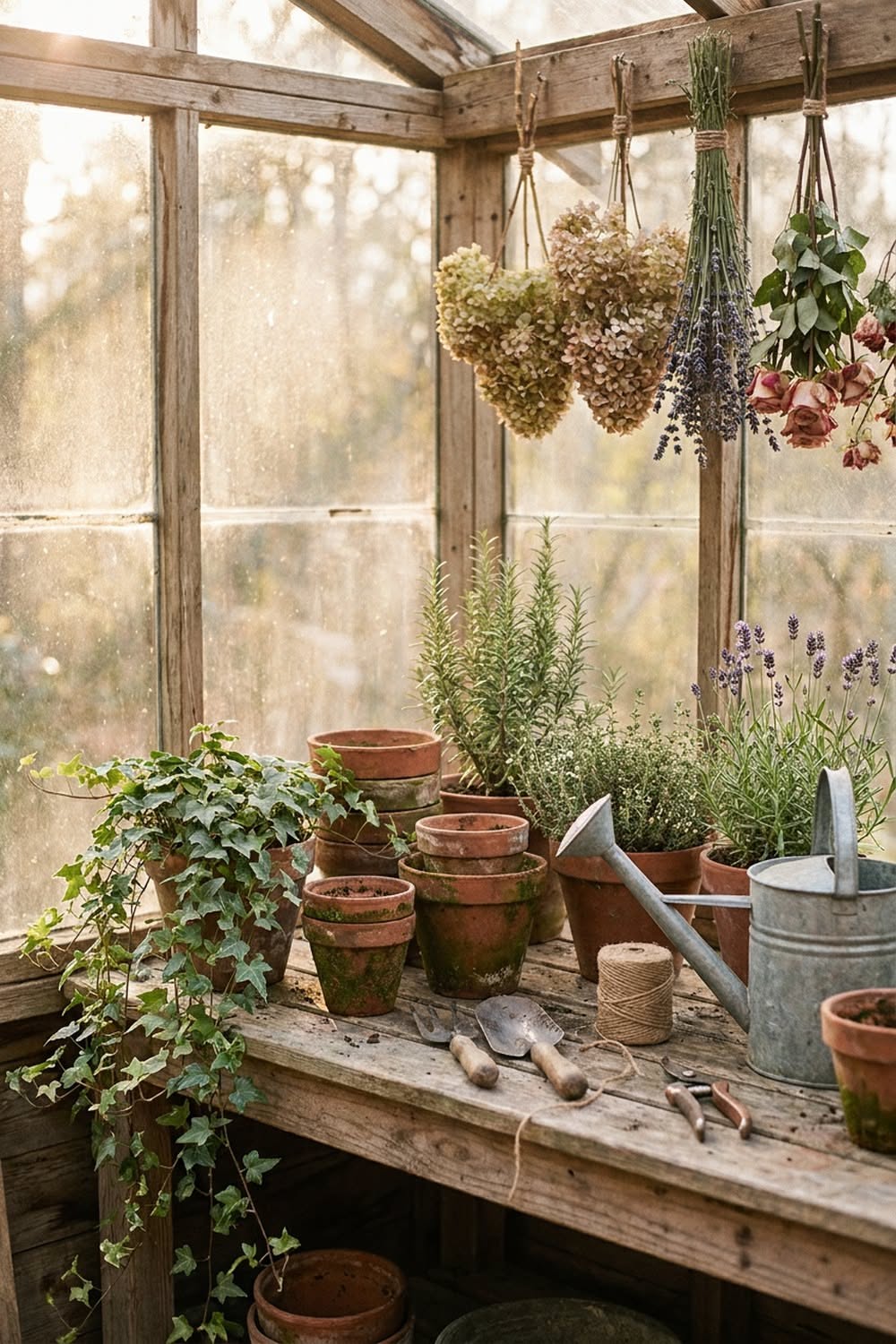
    The dreamiest potting benches look abundantly used: a cluster of weathered terracotta in different sizes, a stack of seed trays, enamel jugs holding brushes and dibbers, seed packets in an old wooden box. Let a trailing plant spill from the top shelf, hang a battered sun hat on the corner, and keep a jar of twine where you can see it. Patina is the point: the moss and watermarks are features, not flaws.

    Site it kindly

    Tuck the bench somewhere sheltered, against the shed, under an overhang, beside the greenhouse, ideally with morning light and a view of the garden you are working for. If it must live in the open, choose rot-resistant wood or paint everything properly and let the weather age it gracefully. A nearby water butt or tap saves a hundred trips a season.

    Keep it working all year

    Spring is seed-sowing headquarters, summer is repotting and bouquet-conditioning, autumn is bulb-planting central, and in winter the bench becomes storage for dormant dahlias and a perch for the robin who supervises everything. A potting bench is not really furniture at all. It is the garden’s kitchen counter, and like any good kitchen, it should look a little floury from use.

    Pin this corner of calm for your garden board, and dig into more cottage garden ideas on Plumeo. Daily inspiration at @Plumeoblog.
  • Wisteria Doorways: Dreamy Cottagecore Curb Appeal

    Wisteria Doorways: Dreamy Cottagecore Curb Appeal

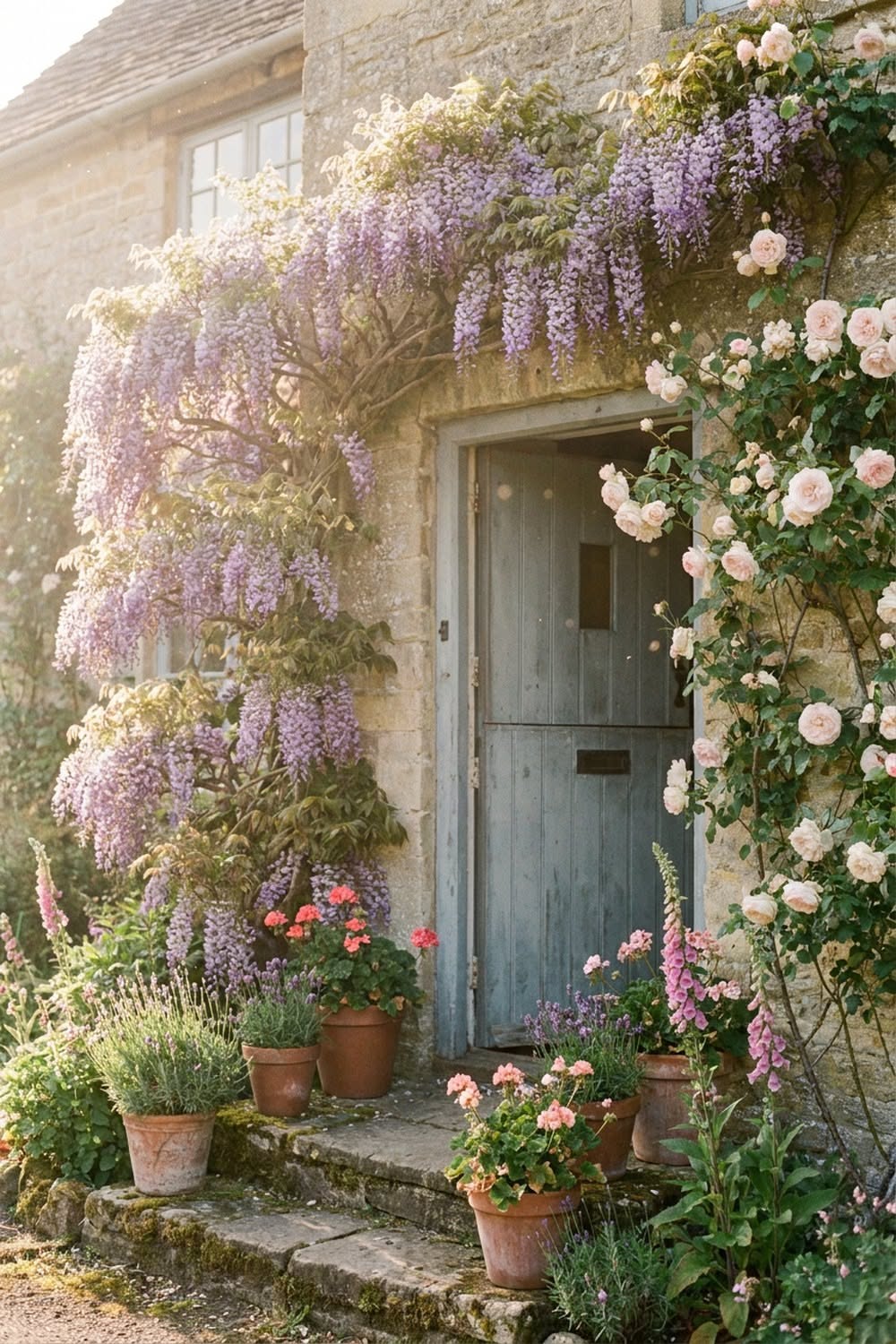
    Few garden sights stop people on the pavement like a doorway dripping with wisteria: long lilac racemes swaying over an old door, scent drifting down the path. It looks like something inherited from a grandmother with secrets. In truth, with the right variety and two prunes a year, it is achievable by any patient gardener.

    Choose your wisteria wisely

    Buy a grafted, named variety from a nursery, not a seed-grown mystery, which can sulk for a decade before flowering. Japanese wisteria (Wisteria floribunda) carries the longest, most dramatic flower trails; Chinese wisteria (Wisteria sinensis) blooms slightly earlier on bare wood. For smaller spaces or pots, the American Wisteria frutescens ‘Amethyst Falls’ is better behaved and repeat-flowers. Check what is recommended locally, in some regions the Asian species are considered invasive and the American type is the responsible choice.

    Give it something worthy to climb

    Wisteria becomes a small tree wearing a disguise: mature stems are heavy and genuinely strong. Never let it grip gutters or roof tiles. Fix a framework of sturdy horizontal wires on vine eyes, or a proper pergola or arch over the door, and tie the young stems along it. Full sun brings the best flowering, and a well-drained spot with average soil is plenty: rich feeding grows leaves, not flowers.

    The two prunes that make the magic

    • Summer (about two months after flowering): cut the long whippy shoots back to five or six leaves. This controls the beast and starts building flower spurs.
    • Late winter: shorten those same shoots again to two or three buds. The fat buds near the base are next spring’s blooms.

    That is the entire secret. Skip the prunes and you get green curtains; do them and the doorway disappears under flowers each May.

    Complete the storybook scene

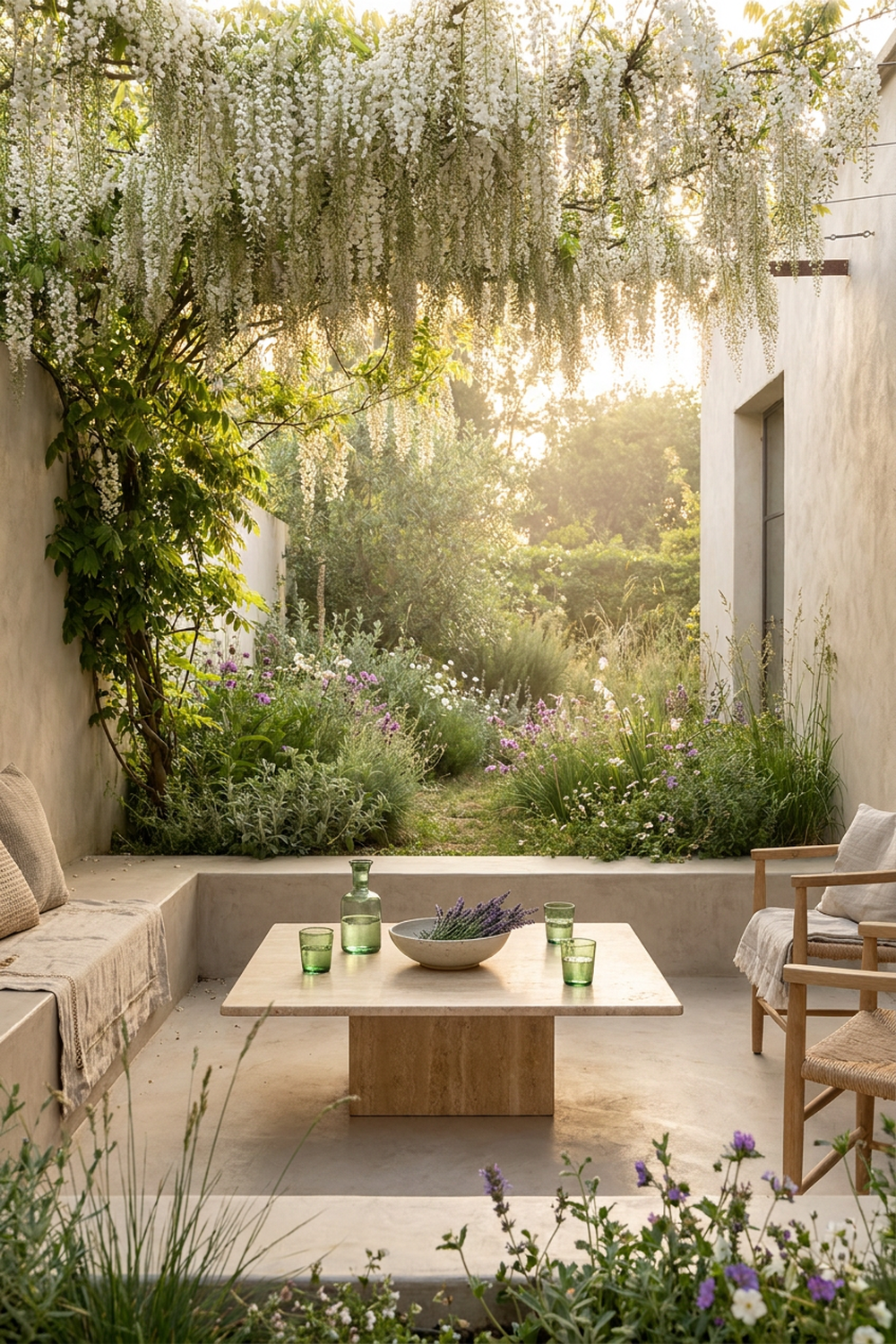
    Underplant with soft companions that bloom in the same season: forget-me-nots, tulips in cream and plum, lavender for later. A weathered bench beside the door, terracotta pots, and a climbing rose for after the wisteria finishes keep the entrance generous all summer. Paint the door a colour the lilac loves, sage green, cream, dusty blue, and let the path stay a little mossy. Perfection is not the aesthetic here; welcome is.

    Patience notes

    A grafted plant usually flowers within two to three years of settling in. Water well in the first summers, then mostly leave it alone apart from the pruning rhythm. Wisteria can live for decades, some famous specimens are over a century old, so you are not just decorating a doorway. You are planting the thing the next owners will fall in love with.

    Pin this for your dream-garden board, and grow through more cottage garden ideas on Plumeo. Daily inspiration at @Plumeoblog.
  • Dreamy Summer Patio Ideas for Golden Evenings

    Dreamy Summer Patio Ideas for Golden Evenings

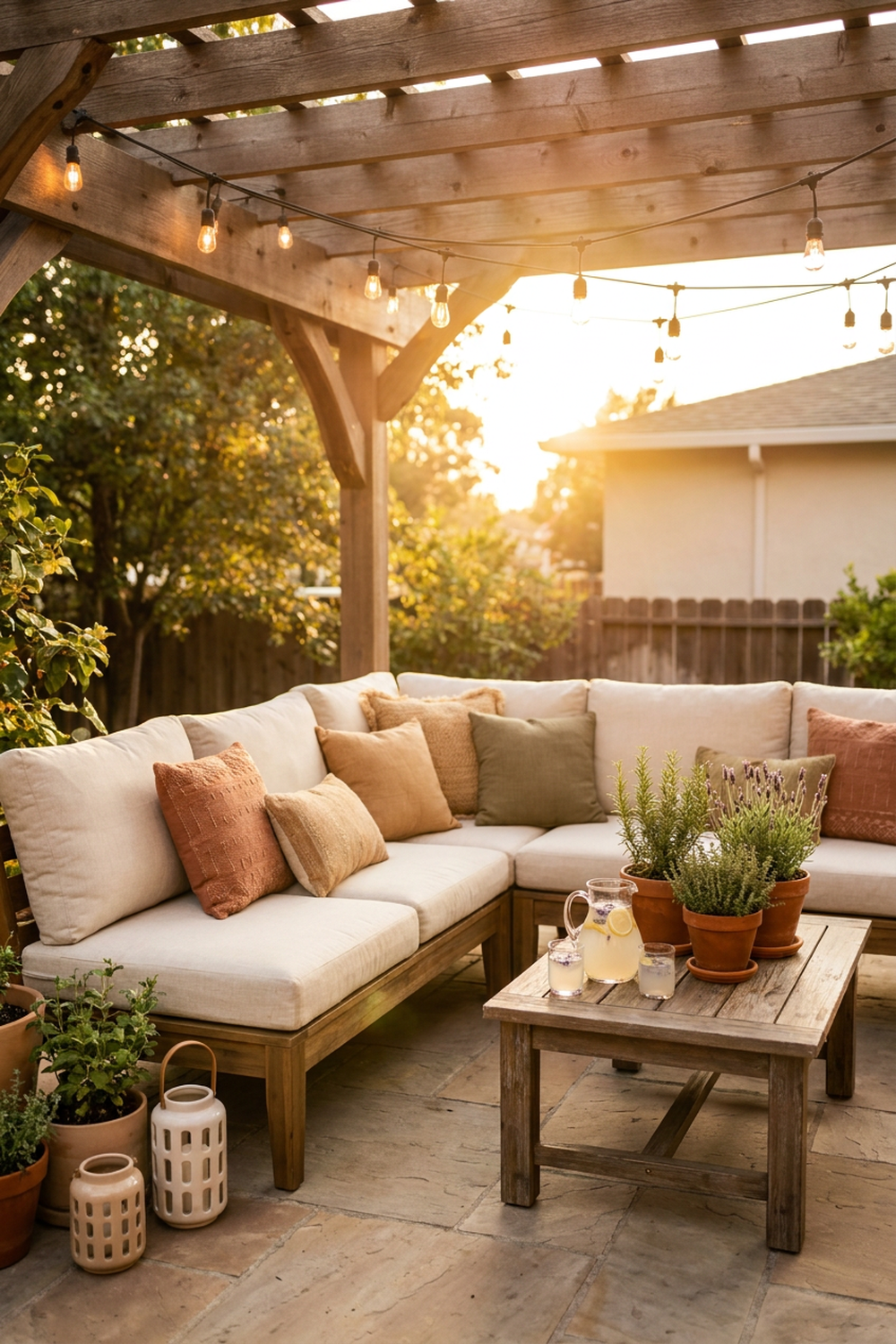
    The best room of a summer house is not a room at all. A patio in July, string lights on, drinks sweating gently, the evening stretching long and gold, is where the season actually happens. You do not need a landscaping budget to get there. You need seating that invites lingering, light that flatters everyone, and green things in pots. Here is the full recipe.

    Start with the seating, and make it soft

    Hard chairs empty a patio by nine. Whatever furniture you have, double the cushions: outdoor pillows on the bench, a seat pad on every chair, and one lounger or hammock for the person who commits fully to the evening. Arrange seats to face each other rather than lining the wall, conversation needs geometry. A low table in the middle, even a crate with a tray on top, holds the drinks and makes it official.

    String lights are non-negotiable

    Nothing transforms an outdoor space per dollar like warm string lights. Zigzag them overhead between the house and a post or tree for the cafe-terrace effect, or run them along the fence line if overhead is not an option. Add lanterns with candles (real or LED) at ground level, light at two heights is what makes the space feel designed. Skip anything cool-white: 2700K or warmer, always.

    Pot your way to a garden

    A patio with plants at its edges feels like a garden room; one without feels like a parking spot. Cluster pots in odd numbers and mixed heights: one tall (an olive, a grass, a small tree), a couple of mid-sized flowering things, and herbs where you can reach them, basil and mint earn their keep at the drinks station. Climbers on a trellis, jasmine or star jasmine especially, add walls and perfume to the outdoor room.

    The entertaining touches

    • A drinks tray or bar cart stocked before guests arrive, so nobody has to keep running inside.
    • Blankets in a basket for when the evening cools: they keep people outside an extra hour.
    • A speaker at low volume: music under the conversation, never over it.
    • Citronella candles doing quiet pest control disguised as ambiance.

    Make it an everyday habit

    The mistake is saving the patio for occasions. Morning coffee out there changes the whole day; dinner outside on a random Tuesday is a small holiday that costs nothing. Keep a tray by the door so migrating outside takes ten seconds, and let the patio be what it wants to be: the room where summer lives.

    Save these patio ideas for the next golden evening, and grow more garden inspiration on Plumeo. Daily ideas at @Plumeoblog.