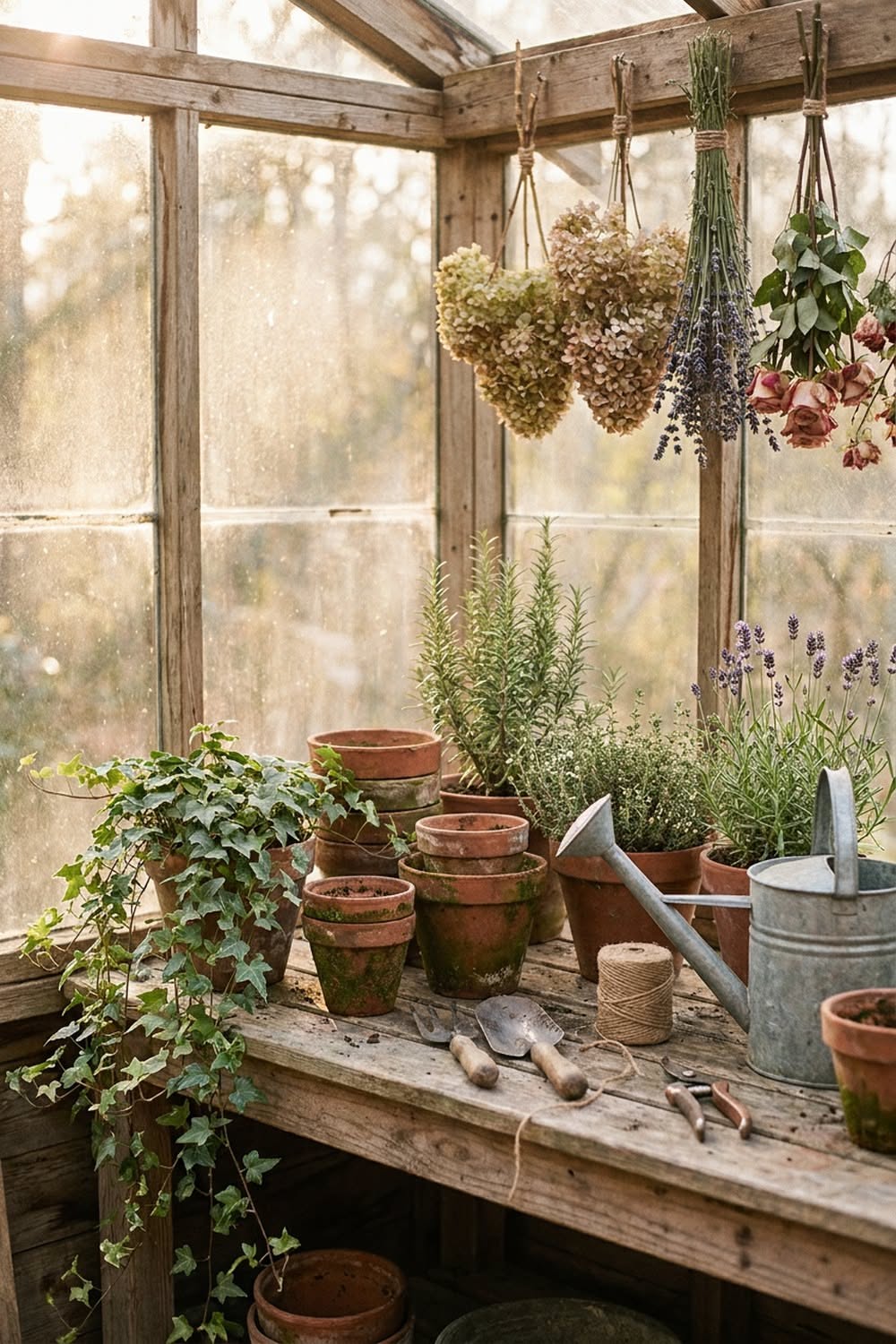
Every gardener eventually discovers the same truth: potting on the ground ruins your back, and potting on the kitchen table ruins the kitchen. Enter the potting bench, the garden’s most quietly romantic piece of furniture, half workstation, half still life of terracotta and twine.
What a good bench actually needs
- A generous worktop at standing height, roughly hip level, so repotting does not become a chiropractic event.
- A lower shelf for bags of compost and the big pots.
- Hooks and a rail for trowels, twine, snips and the hand fork you keep losing.
- Somewhere for soil: a built-in basin, a removable tub, or simply a deep tray to catch the mess.
Anything beyond that is decoration, which is, of course, half the fun.
Buy, build or upcycle
Ready-made benches are easy to find, but the most charming ones are usually rescued: an old dresser with the drawers removed, a butcher block on trestles, a vintage console left to weather. A coat of soft paint, sage, cream, faded blue, and a zinc or tile top for wipeability, and you have something no garden centre sells. If you build from scratch, two pallets and a free afternoon genuinely get you most of the way.
Style it like a cottage corner
The dreamiest potting benches look abundantly used: a cluster of weathered terracotta in different sizes, a stack of seed trays, enamel jugs holding brushes and dibbers, seed packets in an old wooden box. Let a trailing plant spill from the top shelf, hang a battered sun hat on the corner, and keep a jar of twine where you can see it. Patina is the point: the moss and watermarks are features, not flaws.
Site it kindly
Tuck the bench somewhere sheltered, against the shed, under an overhang, beside the greenhouse, ideally with morning light and a view of the garden you are working for. If it must live in the open, choose rot-resistant wood or paint everything properly and let the weather age it gracefully. A nearby water butt or tap saves a hundred trips a season.
Keep it working all year
Spring is seed-sowing headquarters, summer is repotting and bouquet-conditioning, autumn is bulb-planting central, and in winter the bench becomes storage for dormant dahlias and a perch for the robin who supervises everything. A potting bench is not really furniture at all. It is the garden’s kitchen counter, and like any good kitchen, it should look a little floury from use.
Pin this corner of calm for your garden board, and dig into more cottage garden ideas on Plumeo. Daily inspiration at @Plumeoblog.