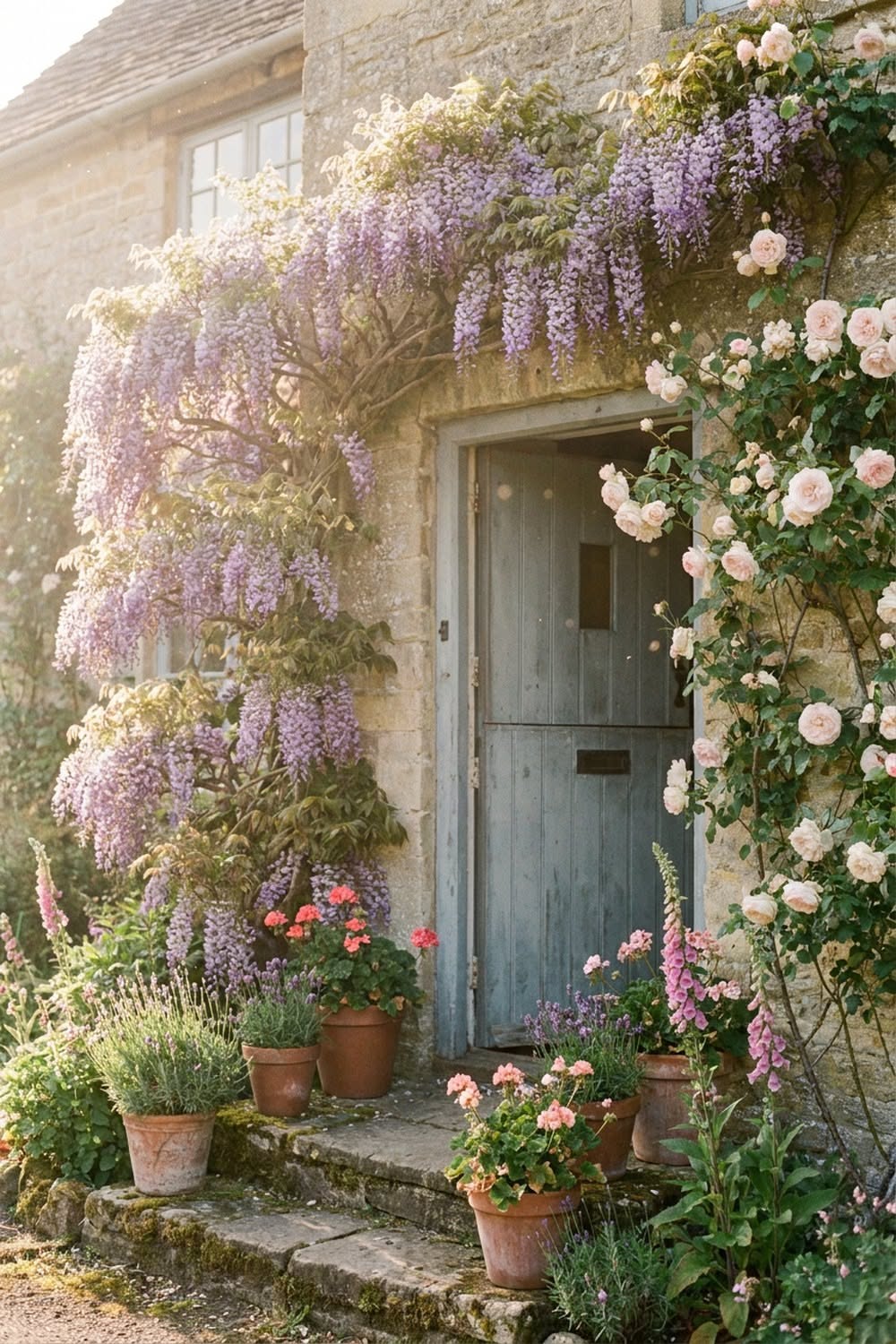
Few garden sights stop people on the pavement like a doorway dripping with wisteria: long lilac racemes swaying over an old door, scent drifting down the path. It looks like something inherited from a grandmother with secrets. In truth, with the right variety and two prunes a year, it is achievable by any patient gardener.
Choose your wisteria wisely
Buy a grafted, named variety from a nursery, not a seed-grown mystery, which can sulk for a decade before flowering. Japanese wisteria (Wisteria floribunda) carries the longest, most dramatic flower trails; Chinese wisteria (Wisteria sinensis) blooms slightly earlier on bare wood. For smaller spaces or pots, the American Wisteria frutescens ‘Amethyst Falls’ is better behaved and repeat-flowers. Check what is recommended locally, in some regions the Asian species are considered invasive and the American type is the responsible choice.
Give it something worthy to climb
Wisteria becomes a small tree wearing a disguise: mature stems are heavy and genuinely strong. Never let it grip gutters or roof tiles. Fix a framework of sturdy horizontal wires on vine eyes, or a proper pergola or arch over the door, and tie the young stems along it. Full sun brings the best flowering, and a well-drained spot with average soil is plenty: rich feeding grows leaves, not flowers.
The two prunes that make the magic
- Summer (about two months after flowering): cut the long whippy shoots back to five or six leaves. This controls the beast and starts building flower spurs.
- Late winter: shorten those same shoots again to two or three buds. The fat buds near the base are next spring’s blooms.
That is the entire secret. Skip the prunes and you get green curtains; do them and the doorway disappears under flowers each May.
Complete the storybook scene
Underplant with soft companions that bloom in the same season: forget-me-nots, tulips in cream and plum, lavender for later. A weathered bench beside the door, terracotta pots, and a climbing rose for after the wisteria finishes keep the entrance generous all summer. Paint the door a colour the lilac loves, sage green, cream, dusty blue, and let the path stay a little mossy. Perfection is not the aesthetic here; welcome is.
Patience notes
A grafted plant usually flowers within two to three years of settling in. Water well in the first summers, then mostly leave it alone apart from the pruning rhythm. Wisteria can live for decades, some famous specimens are over a century old, so you are not just decorating a doorway. You are planting the thing the next owners will fall in love with.
Pin this for your dream-garden board, and grow through more cottage garden ideas on Plumeo. Daily inspiration at @Plumeoblog.