Soft-luxury living

Category: Travel

Dreamy destinations and travel escapes.

  • Mount Fuji and Cherry Blossoms: Japan’s Perfect Frame

    Mount Fuji and Cherry Blossoms: Japan’s Perfect Frame

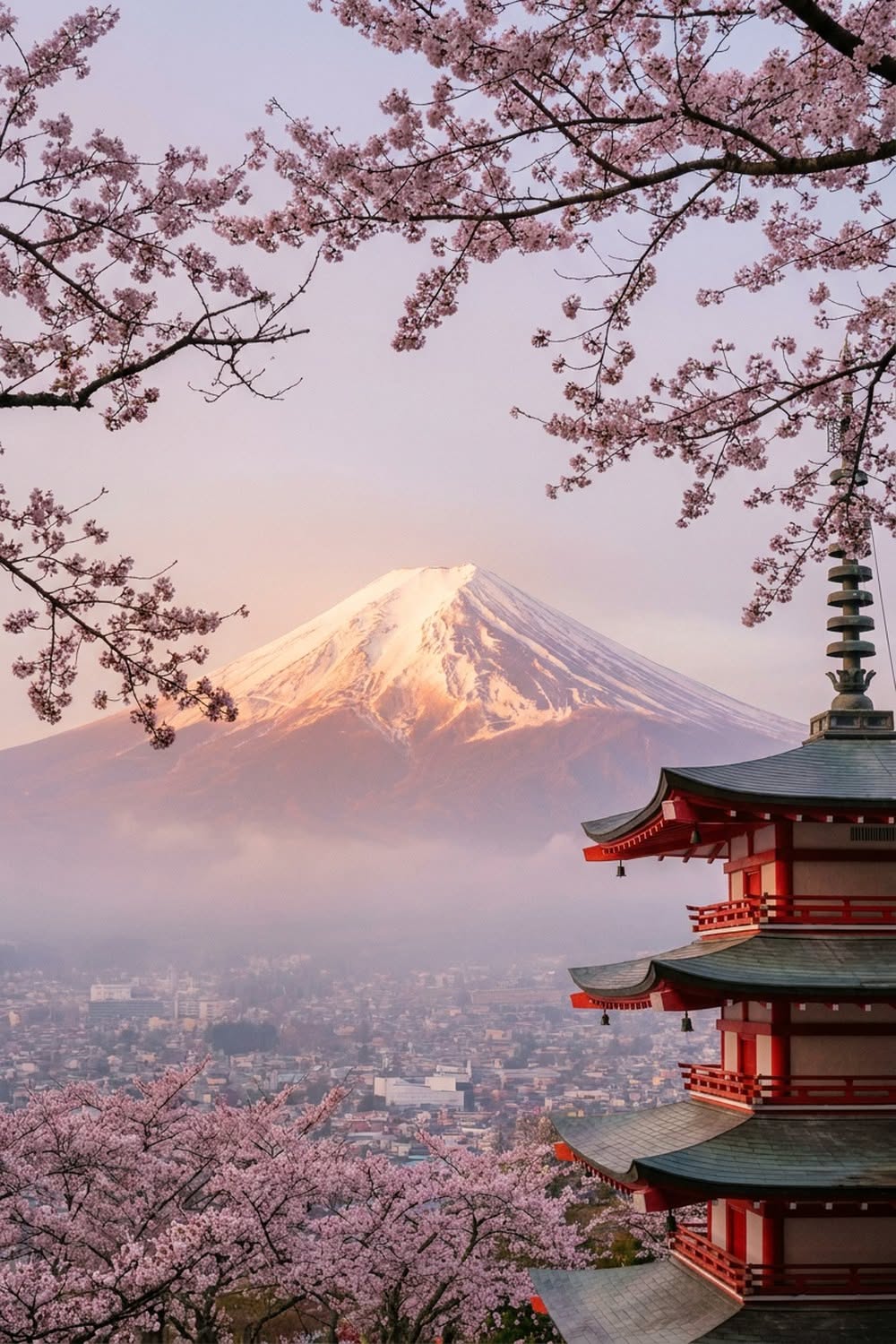
    There is one image that means Japan to the entire world: the snow-capped cone of Mount Fuji framed in pink cherry blossoms, usually with a five-storied pagoda completing the composition. That scene is real, it happens for about two weeks every April, and standing inside it is a matter of knowing three or four exact places and one weather rule.

    Chureito Pagoda: the postcard itself

    The iconic shot, pagoda, blossoms, Fuji, is taken from the Arakurayama Sengen Park in Fujiyoshida, up roughly 400 steps behind the vermilion Chureito Pagoda. In mid-April the hillside’s hundreds of cherry trees peak, and the viewing deck becomes one of the most photographed square metres in Asia. Go on a weekday at dawn: clear mornings before 9 am offer the best odds of an unclouded summit and a manageable crowd, and the climb keeps you warm in the mountain chill.

    Kawaguchiko: blossoms at the water line

    Lake Kawaguchiko, the most accessible of the Fuji Five Lakes, runs a cherry blossom festival along its northern shore in mid-April: a promenade of trees with Fuji rising directly across the water, doubled in reflection on still mornings. It is the gentler alternative to the pagoda scramble: rent a bike, circle the shore, and let the mountain photobomb everything. The town’s ryokan with lake-facing baths turn the view into an amenity: soaking in an onsen while Fuji floats over the blossoms is the itinerary’s undisputed peak.

    The timing puzzle

    Fuji-area blossoms bloom later than Tokyo’s, typically early-to-mid April versus Tokyo’s late March, because of altitude: this is the trip’s great scheduling gift, letting you catch Tokyo’s bloom first and Fuji’s second in one journey. The weather rule: Fuji hides in cloud roughly half of all days, with winter and early mornings the clearest. Build two or three days in the area rather than one, watch the forecast, and treat a fully visible mountain as the bonus it statistically is.

    The logistics, kept simple

    • Getting there: direct highway buses from Shinjuku reach Kawaguchiko in about two hours: the scenic Fuji Excursion train runs from Shinjuku too.
    • Chureito access: Shimoyoshida station on the Fujikyu line, then a 15-minute walk to the steps.
    • Stay overnight: day-trippers get midday haze: overnighters get dawn clarity and the evening lake.
    • Pack layers: April at the Five Lakes swings from frost to t-shirt in a single sunny day.

    Beyond the famous frame

    If the crowds at the icons run thick, the area hides quieter compositions: the Oshino Hakkai spring ponds, Lake Yamanakako’s swan boats, and random roadside orchards where Fuji looms over farm blossoms with nobody else parked. The mountain is generous: it stands behind everything in the region, waiting for any foreground you choose. The pagoda is the postcard: the empty orchard at 7 am might be the memory.

    Pin this bucket-list frame, and wander more travel guides on Plumeo. Daily wanderlust at @Plumeoblog.
  • Neuschwanstein Castle: A Real-Life Fairytale in Bavaria

    Neuschwanstein Castle: A Real-Life Fairytale in Bavaria

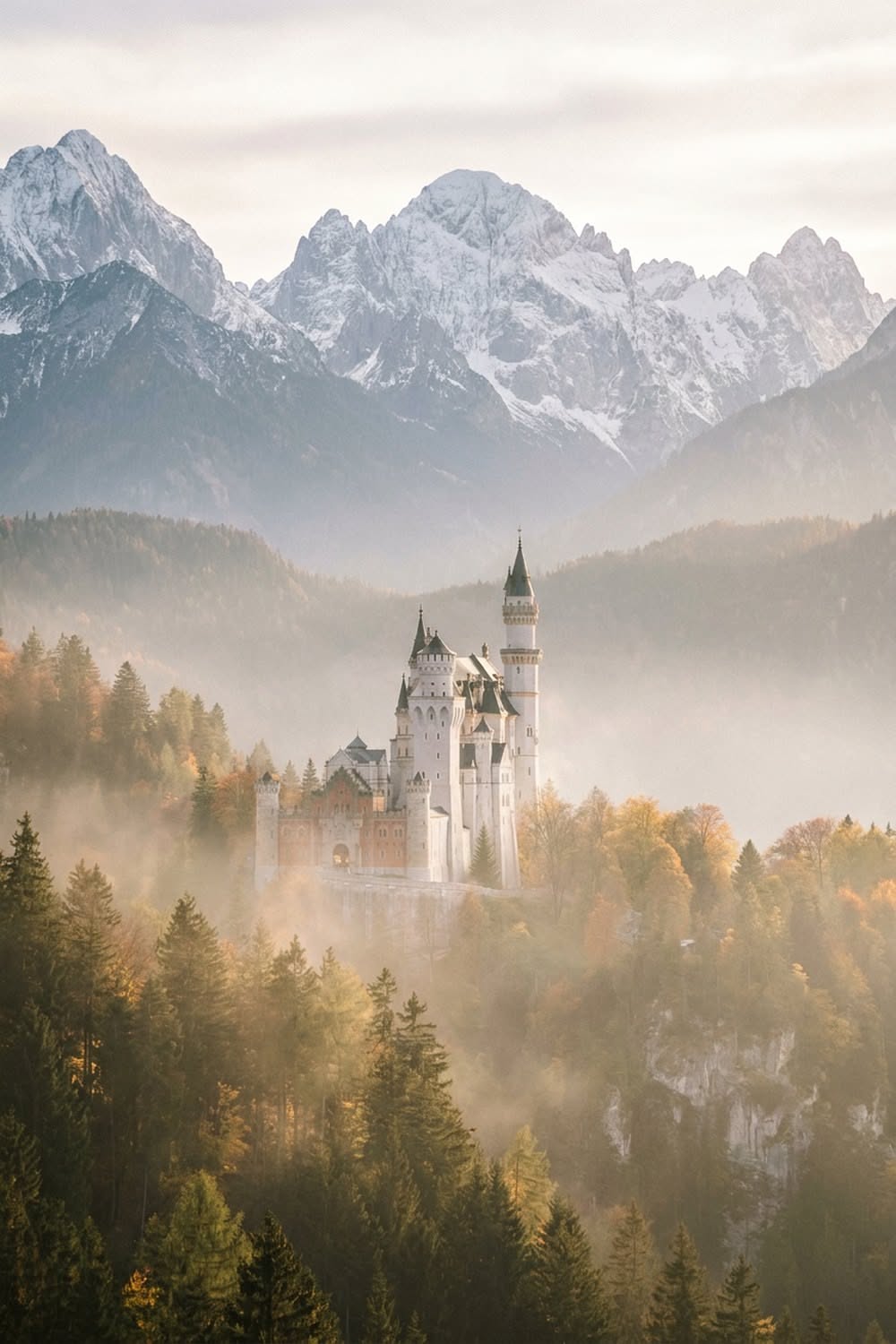
    White towers above a forested gorge, the Alps behind, mist in the valley: Neuschwanstein does not look like a real building so much as an illustration that escaped. It famously helped inspire the Disney castle, but the original, built for the reclusive King Ludwig II of Bavaria in the late 1800s, is stranger and more romantic than any copy.

    The view that makes the trip

    The photograph everyone comes for is taken from Marienbrucke, the slender bridge spanning the Pollat Gorge beside the castle. Arrive early: the bridge is gloriously empty at 8am and shoulder-to-shoulder by noon. From the bridge, a small unofficial path continues uphill for wider angles, take care and stay on the trodden route. Check locally in winter, as the bridge closes in icy conditions.

    Tickets and timing, simplified

    • Interior visits are by guided tour with a timed slot: book online well in advance, especially June to September.
    • The walk up from Hohenschwangau village takes 30 to 40 minutes; shuttle buses and horse carriages also run.
    • You can enjoy the exterior, the gorge and Marienbrucke without any ticket at all.
    • Give the day 4 to 6 hours including the neighbouring yellow castle, Hohenschwangau, where Ludwig grew up.

    Which season is the fairytale one?

    All of them, differently. October is the favourite: golden beech forest, valley mist, softer crowds. Winter snow turns it into a scene from a storybook, though tours thin and the bridge may close. Summer offers alpine lakes warm enough to swim after your visit. If you can only choose one moment, choose an autumn morning after rain, when the fog rises off the Alpsee lake below.

    The story inside the walls

    Ludwig II built Neuschwanstein as a private refuge dedicated to myth, swan knights and the operas of Wagner, and he lived in it for only a matter of months before his mysterious death in 1886. The interior tour is short but worth it for the Throne Hall, gleaming like a Byzantine church, and the grotto, an artificial cave inside a palace. The castle was opened to the public weeks after Ludwig died and has been enchanting visitors ever since.

    Make it a full Bavarian day

    Base yourself in Fussen, ten minutes away, a pastel old town on the Romantic Road. Swim or row on the Alpsee beneath the castles, walk the Pollat Gorge boardwalk if open, and end with apfelstrudel or a Bavarian beer garden dinner. Neuschwanstein is an easy two-hour train-and-bus trip from Munich, but staying overnight in Fussen buys you the quiet golden hours at either end of the day.

    Save this fairytale for your Europe board on Pinterest, and explore more dreamy travel escapes on Plumeo. Daily wanderlust at @Plumeoblog.

  • Machu Picchu at Sunrise: Planning a Bucket List Wonder

    Machu Picchu at Sunrise: Planning a Bucket List Wonder

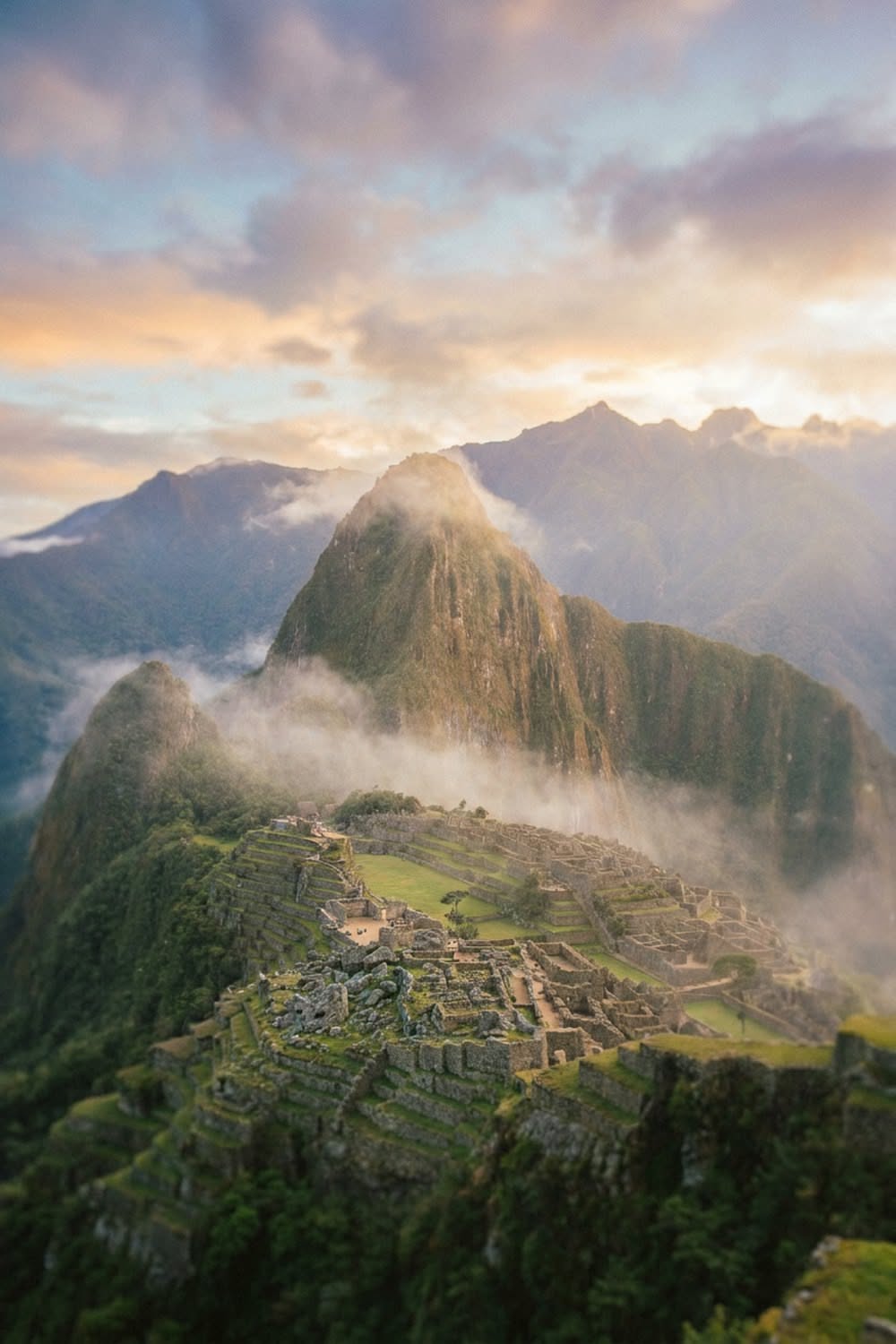
    You have seen the photograph a thousand times, and then you stand at the Guardian’s Hut at dawn and realise the photograph never came close. Machu Picchu sits on a knife-edge ridge with cloud forest breathing around it, and in the first hour of morning the mist opens and closes over the stone city like a curtain being drawn for you specifically.

    Getting there, simply explained

    Fly to Cusco, spend a night or two acclimatising (it sits at about 3,400 metres), then take the scenic train through the Sacred Valley to Aguas Calientes, the town below the ruins. From there, shuttle buses climb to the entrance from before dawn. Sleeping in Aguas Calientes the night before is the single best decision for a sunrise visit.

    Tickets and circuits: book early

    Entry is by timed ticket on fixed circuits, and daily numbers are capped, so book weeks or months ahead in high season. The classic upper-terrace panorama comes with the first circuits of the day. Add-on hikes are separate limited tickets: Huayna Picchu, the steep peak in every photo, or Machu Picchu Mountain, higher and quieter. Guides are readily available at the gate and genuinely enrich the visit.

    When to go

    The dry season, May to September, brings the most reliable mornings but the biggest crowds: book everything early. The shoulder months of April and October trade a small rain risk for softer light and thinner crowds, and the mist is often at its cinematic best. The rainy heart of summer (January and February) is lush but soggy, and the Inca Trail closes each February for restoration.

    Walking in, if you love a pilgrimage

    The four-day Inca Trail remains one of the world’s great walks, ending at the Sun Gate with the citadel spread below, permits sell out months ahead. The Salkantay trek is the wilder, easier-to-book alternative. Short on time? Even the two-hour climb from Aguas Calientes on foot, up the old stone steps, earns you the ruins in a way the bus cannot.

    Practical notes that save the day

    • Acclimatise in Cusco or the Sacred Valley first: altitude is real. Water, coca tea and a slow first day help.
    • Passports are required at the gate; large bags, tripods and drones are not allowed.
    • Weather changes by the quarter-hour: bring layers and a light rain shell even in dry season.
    • There are no re-entries on most tickets and few facilities inside: eat and hydrate beforehand.

    However you arrive, give yourself one unhurried moment on the upper terraces before the day fills in. Five centuries of cloud have drifted over these stones; watching a few of them do it is the whole reason you came.

    Save this to your bucket list board, and explore more dreamy travel escapes on Plumeo. Daily wanderlust at @Plumeoblog.