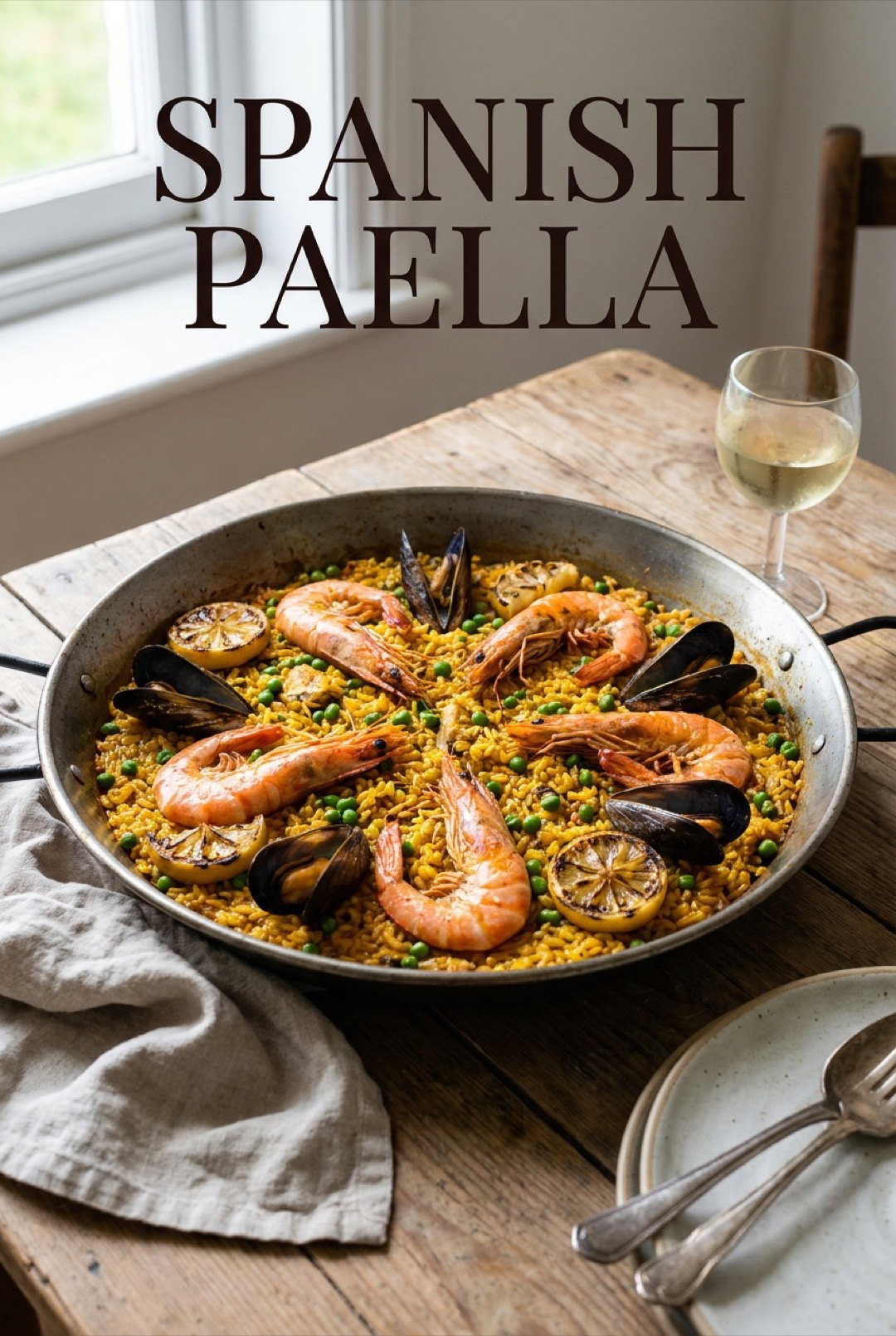
Paella is Spain in a pan: saffron-gold rice, sweet prawns, briny mussels and the crackling toasted layer at the bottom that Spaniards prize above everything else. It looks like restaurant theatre, but the method is honest home cooking, one wide pan, one gentle simmer, and the discipline to stop stirring.
What you need
- Short-grain rice, bomba if you can find it, arborio in a pinch
- A generous pinch of saffron threads steeped in warm stock
- Prawns, mussels and squid, or chicken and beans for the Valencian route
- Onion, garlic, grated tomato and smoked paprika for the sofrito
- The widest, shallowest pan you own
The method in five moves
- Cook the sofrito slowly until it darkens and sweetens: this is the flavour base.
- Toast the rice in the sofrito for a minute so every grain is coated.
- Pour in hot saffron stock, arrange the seafood on top, and do not stir again.
- Simmer 18 minutes, rotating the pan for even heat.
- Finish on high for one minute to form the socarrat, then rest under a tea towel.
The socarrat secret
The caramelised crust at the bottom, the socarrat, is the whole point of paella for many Spaniards. It forms in the final minute of cooking when the liquid is gone and the heat is high: listen for a faint crackle, smell for toasted rice, and pull the pan before toast becomes burn. Serve straight from the pan with lemon wedges, and scrape the bottom shamelessly.
Make it yours
Purists argue about paella the way other people argue about politics, but the pan is forgiving: swap in chicken and rosemary, keep it all-vegetable with artichokes and beans, or go full mariscos with whatever the fishmonger has. The constants are good stock, real saffron and patience with the crust: everything else is regional opinion.
Save this recipe for your next gathering, and travel through more world recipes on Plumeo. Daily inspiration at @Plumeoblog.