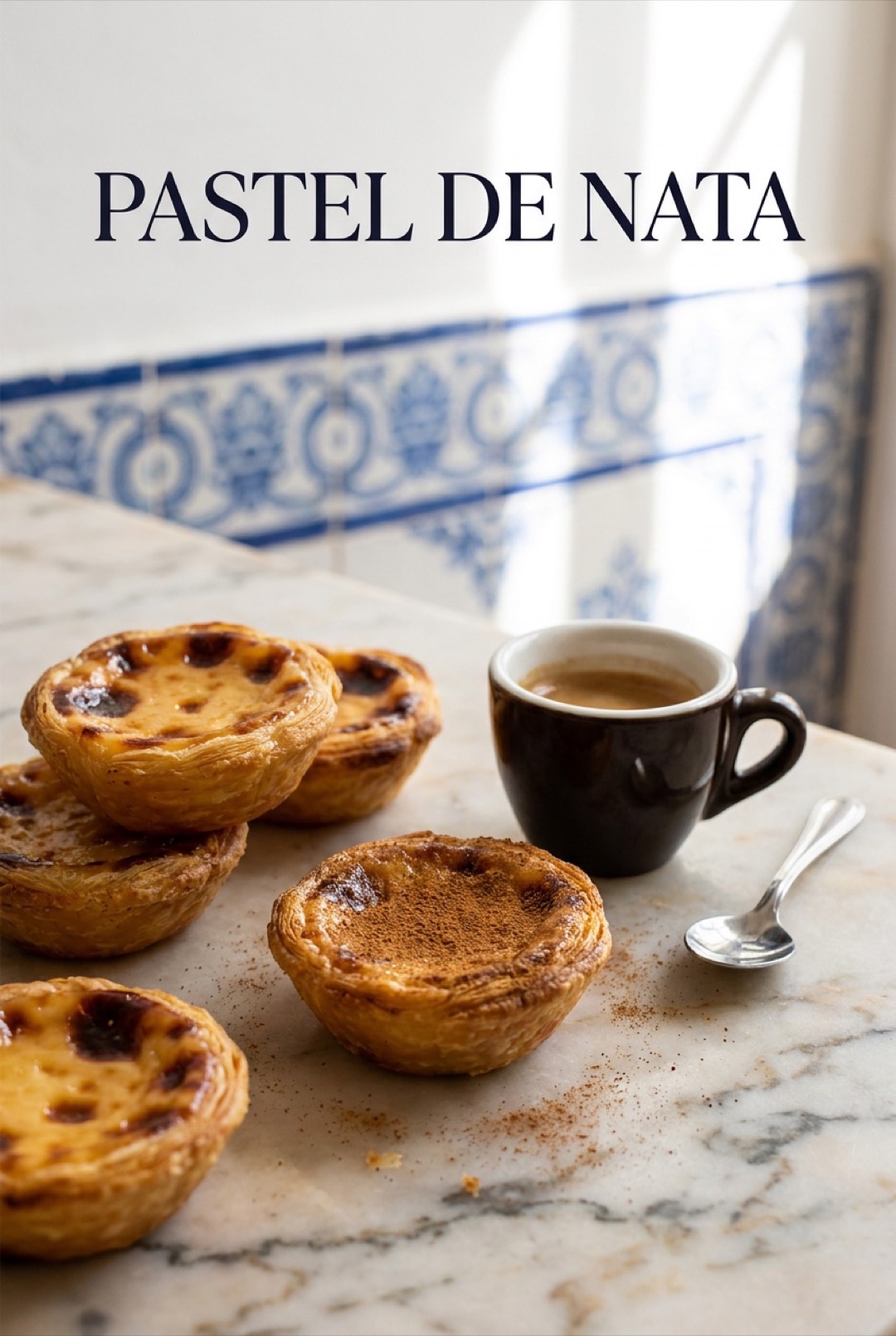
The pastel de nata is Portugal’s edible monument: a shatteringly crisp spiral of pastry holding silky custard, its top blistered dark from a ferociously hot oven. Born in a Lisbon monastery two centuries ago, it is best eaten warm with cinnamon and an espresso, ideally standing up, planning your second one.
The two components
- Pastry: laminated dough rolled into a log and sliced, so each cup bakes into crisp spirals: all-butter puff pastry is the honest home shortcut
- Custard: a cooked sugar syrup whisked into milk, flour and yolks, scented with lemon peel and cinnamon stick
The method
- Press pastry slices into muffin tins, spiraling the layers up the sides with wet thumbs.
- Make the syrup (sugar, water, lemon, cinnamon), then whisk into the milk-flour base and temper in the yolks.
- Fill the cups three-quarters full: custard rises.
- Bake at the hottest your oven goes, 250°C or more, for 10 to 12 minutes until the tops blister black-gold.
- Cool briefly in the tin, dust with cinnamon, eat warm.
Why heat is everything
Lisbon’s famous bakeries fire their ovens past 400°C: the violent heat sets the custard before it can soufflé and chars the sugar surface into the signature leopard spots. Home ovens cannot match it, but maxed out with a preheated tray, they get close. Resist baking longer at lower heat: pale, evenly-set custard is a different (lesser) dessert.
The Lisbon ritual
In Portugal the nata comes with a shot of strong coffee and a shake of cinnamon, and nobody eats just one: they are small by design and by mercy. The tarts are best the day they are baked, crisp against silk, but the unfilled pastry cups and custard both keep overnight, so tomorrow’s batch can be ready in fifteen minutes.
Save this little Portuguese wonder, and bake through more world recipes on Plumeo. Daily inspiration at @Plumeoblog.