Soft-luxury living

Category: Aesthetics

Cozy, dreamy, soft-luxury aesthetic living.

  • Attic Reading Nooks: Magic Under the Eaves

    Attic Reading Nooks: Magic Under the Eaves

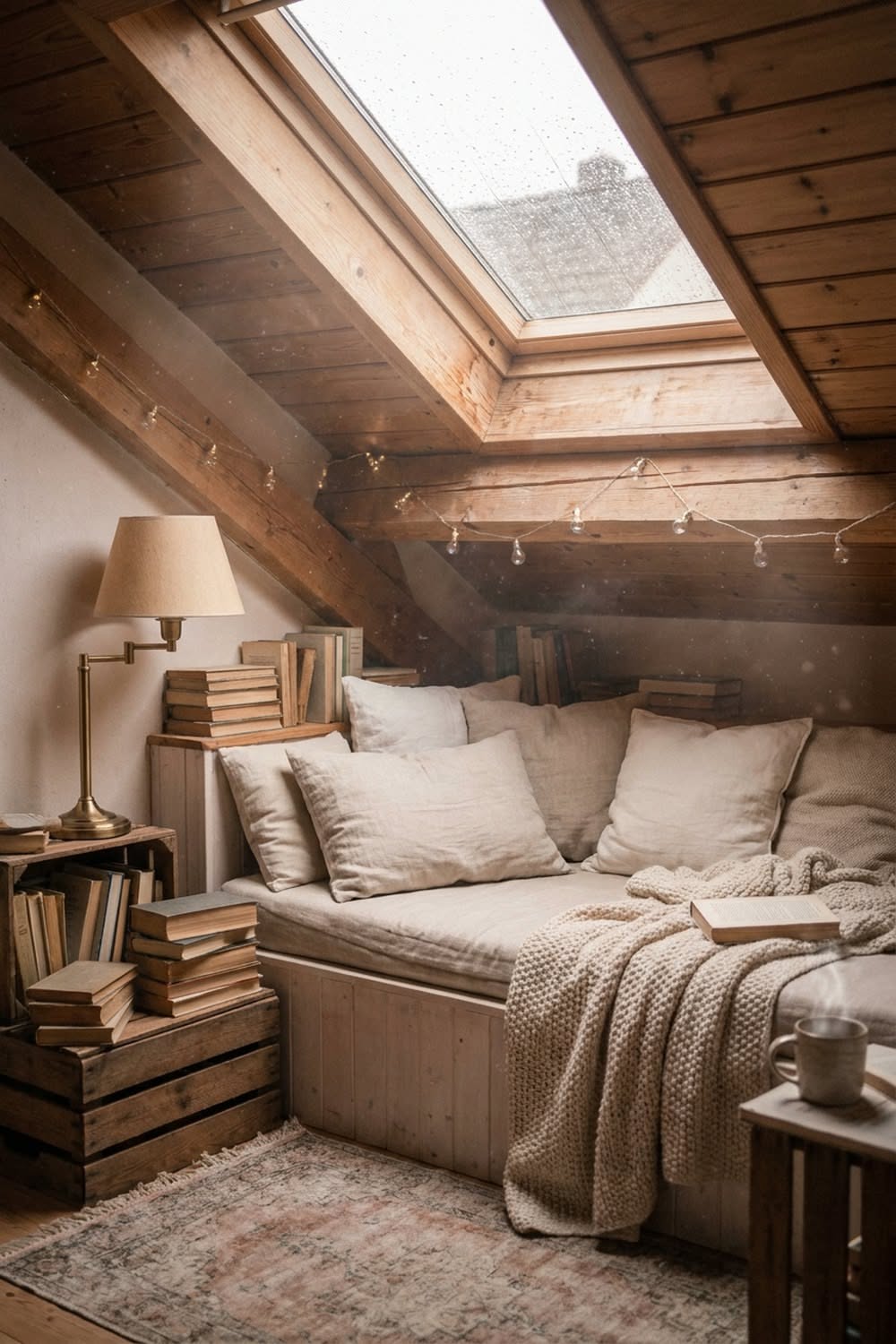
    Every child who ever read a book knew the attic was the best room in the house: the sloped ceilings, the secret-feeling stairs, the rain directly overhead. Adults with attics mostly store boxes in them, which is a quiet tragedy, because the space under the eaves is the single most atmospheric reading territory a house owns, and converting a corner of it takes a weekend.

    Why slopes make coziness

    Low, angled ceilings fail at dinner parties and excel at nooks: enclosure is the architecture of coziness, and the attic provides it structurally. The spots where the roof meets the floor, useless for standing, are exactly where a reading nest belongs: a mattress, daybed or deep cushion bank tucked into the slope, where the ceiling hangs close overhead like a tent. What the room loses in headroom it returns in hideaway.

    The light strategy

    If the attic has a skylight or dormer window, build the nook in its pool of light: reading under a skylight while rain lands on the glass is the entire genre in one sentence. For the dim corners, layer warm sources low: a small lamp at cushion height, string lights along the ridge beam, a candle lantern for the full garret effect. Attics run dark at the edges: three small warm lights beat one bright one, always.

    Building the nest

    • The base: a single mattress, futon or bench cushion fitted into the eave line, topped with a quilt.
    • The back wall: large cushions against the knee wall for sitting support.
    • Book storage: low shelves or crates along the slope where standing furniture cannot go: the dead zone becomes the library.
    • The soft floor: a rug over bare boards, because attic floors are honest about winter.
    • A blanket basket and a tea perch: the operational essentials.

    The practical fine print

    Check the unglamorous things first: flooring that can bear regular use, insulation enough to make the space livable in January and August (attics run to extremes: a small heater and a fan may both earn residence), safe access, and lighting that does not require rewiring: today’s rechargeable lamps and battery sconces solve the no-outlet attic completely. Clear only the corner you need: the boxes can keep the far end.

    A room with narrative

    An attic nook comes pre-loaded with story: it is where rainy Sundays go to become memories, where kids vanish with flashlights, where the adult who built it rediscovers three-hour reading sessions. Few home projects deliver more atmosphere per dollar, and none of them come with weather sounds included. The boxes never needed the best room in the house anyway.

    Pin this hideaway, and climb into more cozy home ideas on Plumeo. Daily comfort at @Plumeoblog.
  • Luxury Bedroom Ideas: The Five-Star Feeling at Home

    Luxury Bedroom Ideas: The Five-Star Feeling at Home

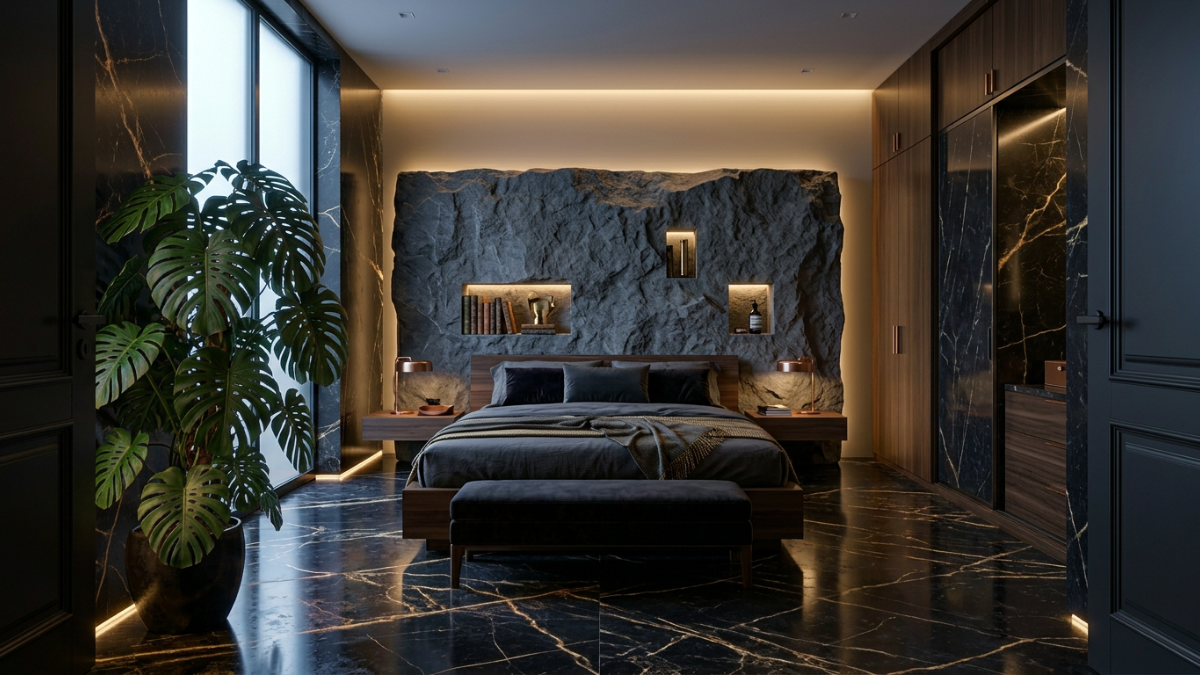
    Walk into a five-star suite and the effect is instant, yet almost nothing in the room is exotic: a big dressed bed, symmetry, layered light, no clutter. Hotel designers work from a checklist, which is excellent news, because checklists are copyable. Here is the luxury bedroom, reverse-engineered for home application.

    The bed is the headline act

    Luxury bedrooms are bed-first: a tall upholstered headboard (the single highest-impact purchase in this genre), the bed centered on its wall, and bedding built in layers: crisp white sheets as the base, hotels are right about white, a duvet with real loft, a folded coverlet or throw at the foot, and pillows arranged in ranks: sleepers behind, larger squares in front, one accent lumbar. The finishing touch is a made bed daily: five-star is, at its core, a discipline.

    Symmetry: the quiet luxury signal

    Matched nightstands, matched lamps, art centered over the headboard: the brain reads symmetry as order, and order as expense. It is the cheapest trick in the chapter: even two identical inexpensive lamps flanking the bed deliver more perceived luxury than one designer piece off to the side. Keep nightstand surfaces to three items maximum: a lamp, a book, one object. The empty space is the luxury.

    Light in layers, warm and dimmable

    • Bedside lamps or pendants at pillow height for the golden pool of light.
    • An accent source across the room: a small lamp or picture light: depth is what hotels sell.
    • Dimmers or smart warm bulbs everywhere: full brightness is for cleaning, not living.
    • Blackout curtains hung wide and floor-length: generous drapery reads five-star and sleeps better too.

    Materials with hand-feel

    Luxury is tactile before it is visual: velvet or boucle on the headboard or bench, a rug soft enough for bare feet extending well beyond the bed sides, silk-adjacent cushions, brass or matte black hardware, and one marble, glass or ceramic object catching lamplight. Palette stays restrained, creams and taupes, or the moody hotel alternative of charcoal and camel, with metallics as punctuation rather than theme.

    The suite details

    The last ten percent is choreography: a bench or ottoman at the bed’s foot, a carafe and glass on the nightstand, a candle with a lid (hotel rooms smell deliberate: pick one scent and stay loyal), a chair with a throw that suggests reading happens here, and ruthless clutter exile: the laundry chair is the single greatest enemy of the five-star effect. Luxury, at bedroom scale, is mostly the absence of chaos plus the presence of lamplight: both are free by Friday.

    Pin this suite upgrade, and check into more bedroom inspiration on Plumeo. Daily calm at @Plumeoblog.

  • Pottery at Home: Designs and Ideas for Beginners

    Pottery at Home: Designs and Ideas for Beginners

    Pottery has quietly become the craft of the decade, and not because everyone bought a wheel: hand-building, shaping clay with nothing but fingers and a few kitchen tools, is ancient, beginner-friendly and deeply calming in a way screens never manage. An afternoon with a block of clay produces real objects and a strangely quiet mind. Here is how to start at the kitchen table.

    Choose your clay, honestly

    No kiln, no problem: air-dry clay is the home starting point: inexpensive, mess-manageable, and finished with paint and sealant instead of firing (decorative pieces only: it stays porous, so no soup). Oven-bake polymer clay suits small precise objects like trinket dishes and beads. When the hobby gets serious, community studios fire real stoneware by the piece, and that is the path to actual mugs holding actual coffee. Start with air-dry: the skills transfer completely.

    The three hand-building techniques

    1. Pinch pots: a ball of clay, a thumb pressed in, walls pinched thin while rotating: humanity’s first pottery, still the best first lesson.
    2. Coil building: rolled ropes of clay stacked and smoothed into vases and planters: height without a wheel.
    3. Slab work: clay rolled flat like pastry, cut and joined into trays, dishes and little houses: a rolling pin and a butter knife are the entire toolkit.

    Score and wet every join (scratch both surfaces, add slip, press), keep walls an even finger-width, and let pieces dry slowly under loose plastic: cracks come from hurry.

    Beginner designs that actually look good

    The secret of handsome beginner pottery is embracing the handmade look rather than fighting for factory smoothness: an organic-edged trinket dish with visible finger marks, a speckled bud vase (flick brown paint over cream for the ceramic-studio effect), a coil planter with the coils left proudly visible, wavy-rim catch-all bowls, and slab wall hangings stamped with lace or leaves before drying. Earthy palettes, cream, terracotta, sage, matte black, make everything look intentional: seal air-dry pieces with matte varnish for the professional finish.

    Why it feels so good

    Clay demands both hands and full attention, which evicts the phone and the mental to-do list for the duration: crafters call it moving meditation, and studios sell out classes on that promise alone. There is also the modest miracle at the end: an object that exists because an afternoon did. Imperfect, fingerprinted, and better decor for both.

    Growing the habit

    Keep a small kit, a kilo of clay, a rib, a knife, a sponge, in a shoebox and pottery becomes a rainy-afternoon default. Gift the output (handmade dishes are elite presents), join one wheel-throwing taster class when curiosity peaks, and let the windowsill fill slowly with small earthen proof that slowness still produces things.

    Save this craft for a slow weekend, and shape more creative home ideas on Plumeo. Daily inspiration at @Plumeoblog.

  • Create a Cozy Coffee Shop Corner at Home

    Create a Cozy Coffee Shop Corner at Home

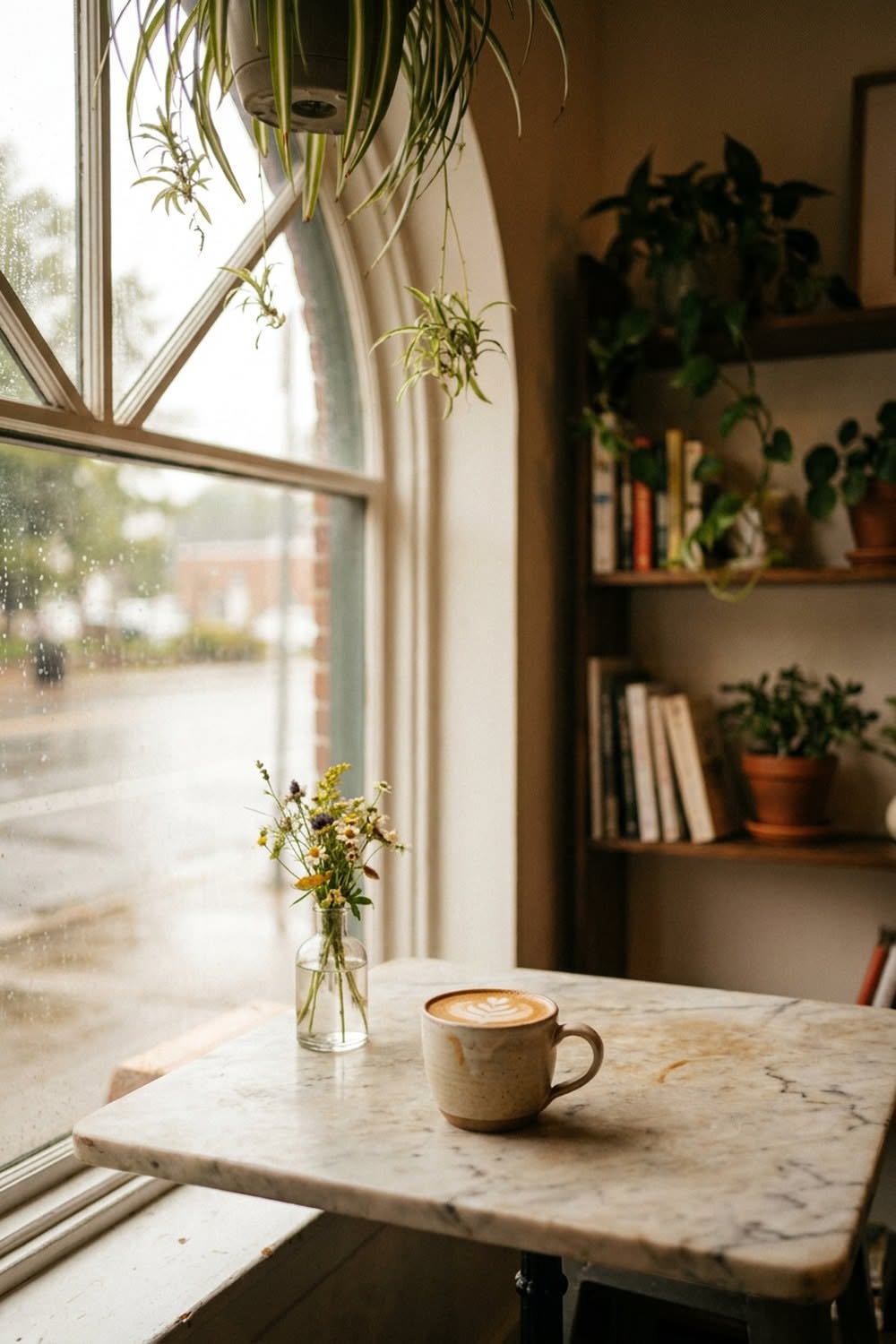
    Think about why you love your favourite cafe. It is rarely the coffee alone. It is the seat by the window, the cup with actual weight to it, the low hum of a place designed for lingering. All of that is portable. With one corner, a chair and a bit of intention, you can build the cafe feeling into your own home.

    Claim the corner

    You need less space than you think: a small round table, one comfortable chair, ideally near a window. The round table matters, it reads cafe rather than dining, and a bistro chair or a soft armchair sets the mood. If a window seat or a corner of the kitchen counter is all you have, that works too. The point is that this spot is for coffee and nothing else: no laptops piling up, no mail.

    Get the light right

    Cafes glow because they layer light. Daylight from the window in the morning, then a small warm lamp for grey afternoons, a candle for the last-coffee-of-the-day hours. Overhead lights kill the mood entirely: if a lamp is the only thing you add to your corner, it will still transform it.

    The equipment, honestly ranked

    • Cups first: two or three genuinely lovely ones beat a cupboard of promotional mugs. Weight and shape change the whole experience.
    • A brewer you enjoy using: french press, moka pot, pour-over cone, or a machine, ritual value matters as much as extraction.
    • A milk frother if lattes are your love language: the inexpensive handheld ones are surprisingly capable.
    • A tray: corralling the kit on a tray or small cart instantly looks curated instead of cluttered.

    Add the cafe details

    A small vase with two or three stems, a stack of books or magazines within reach, a linen napkin instead of kitchen roll. Music makes the room: a soft jazz or acoustic playlist at low volume is doing more work in your favourite cafe than you realise. And keep something sweet in a tin nearby, because a biscotti situation elevates everything.

    Protect the ritual

    The corner works only if you use it like a cafe: sit down, phone face-down, ten unhurried minutes minimum. Weekday mornings it is your espresso bar; weekend afternoons it is the window seat where you read forty pages and refill twice. The house did not change. The habit did, and that is the entire secret of cafe magic.

    Save this cozy corner idea, and pour over more home aesthetic inspiration on Plumeo. Daily warmth at @Plumeoblog.

  • The Ultimate Cozy Gaming Setup

    The Ultimate Cozy Gaming Setup

    Gaming setups spent a decade chasing the RGB spaceship look: the cozy setup is the correction. Warm light instead of rainbow strips, wood and plants instead of black plastic, a chair you can actually spend a Sunday in. The goal is a corner that feels like a retreat with a screen in it, and the conversion is mostly lighting and tidying, not new hardware.

    Light: warm, low, behind the screen

    The single biggest change: swap cool RGB for warm tones. A bias light behind the monitor (warm white or amber LED strip) reduces eye strain and instantly softens the whole corner: add a small desk lamp with a 2700K bulb, string lights or a paper lantern for the ambient layer, and keep the overhead off during sessions. If RGB hardware is staying, set it to a static warm amber or dusty rose: the fixtures obey, and the spaceship becomes a cabin.

    Comfort is the spec that matters

    Long sessions live and die on the body: a chair with real lumbar support (or a cushion retrofitted to the current one), a blanket within arm’s reach as standard equipment, and a footrest or ottoman for the leaned-back controller hours. Screen at eye level, warm socks in winter, and a side table for the drink so the desk stays for the game. The console-and-armchair corner, with a soft throw and good speakers, is the genre’s coziest floor plan and deserves more respect than it gets.

    The material swap

    • Wood in the sightline: a desk with a timber top, a monitor stand, a shelf of games and small objects.
    • A desk mat in felt or muted fabric: the fastest way to de-plastic a setup.
    • Plants, real or convincingly fake: a trailing pothos over the shelf does disproportionate work.
    • Soft floor and wall: a rug underfoot, a poster or print in a real frame instead of taped ephemera.
    • Headphones on a wooden stand: gear displayed like objects, not equipment.

    The cable war, won once

    Nothing un-cozies a corner like a cable nest: one afternoon with velcro ties, an under-desk tray or raceway, and a power strip mounted out of sight retires the problem permanently. Wireless peripherals where budget allows, and everything else routed along the desk’s back edge. A tidy desk photographs like a decision and, more usefully, feels like one every time you sit down.

    Session rituals

    The cozy setup earns its name in use: a hot drink at the start of the evening session, the lantern and bias light on, phone parked out of reach, and the kind of games that match the room, long RPGs, farming sims, atmospheric indies, played without the guilt-scroll in the other hand. A gaming corner built like a reading nook gets used like one: often, happily, and long past bedtime on the good nights.

    Save this setup inspiration, and level up more cozy space ideas on Plumeo. Daily comfort at @Plumeoblog.
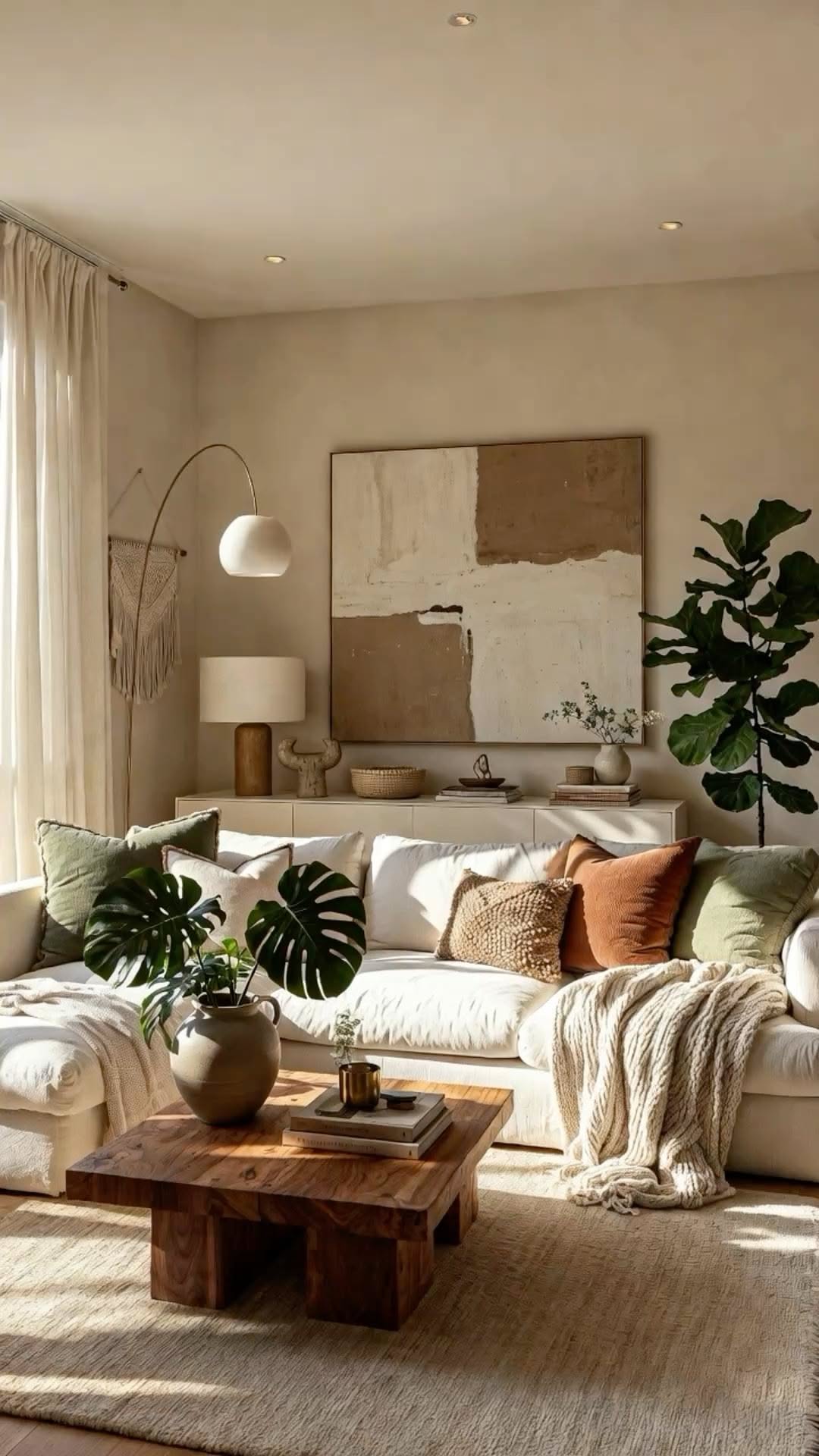
  • Neutral Living Room Ideas with Real Warmth

    Neutral Living Room Ideas with Real Warmth

    The neutral living room has a bad-faith reputation: critics call it beige and boring, while everyone secretly screenshots the good ones. The difference between bland and breathtaking is never the palette, it is the layering: texture, tone variation, warm light and a few organic shapes. Calm is the goal: flat is the failure mode. Here is how the good ones do it.

    Stack the shades, not one beige

    A neutral room needs at least five distinct tones doing different jobs: warm white on the walls, cream in the sofa, oatmeal and sand in the textiles, taupe or mushroom in the accents, and a grounding note of chocolate, black or charcoal in small doses (frames, a lamp base, a stripe). Single-shade rooms read like waiting areas: layered ones read like editorials. Undertones must agree: keep everything warm-based or everything cool-based, and the mysterious no-reason clash never happens.

    Texture is the color

    • Boucle or linen on the sofa, with cushions in velvet, chunky knit and washed cotton: same tones, different hands.
    • A wool or jute rug with visible weave: the room’s textural foundation.
    • Wood in at least two finishes: a pale oak table, a darker vintage piece: neutrals need wood the way tea needs a biscuit.
    • Stone, ceramic and rattan accents: a travertine tray, a big earthen vase, a woven basket for throws.

    The test: photograph the room in black and white. If it still looks rich, the texture is doing its job.

    Warm light or nothing

    Neutrals live and die by lighting: cool white bulbs turn cream into hospital, while 2700K warmth turns the same room golden. Layer three sources minimum, a floor lamp by the sofa, a table lamp on the console, candles or a small accent lamp, and retire the overhead to cloudy-day duty. Evening is when neutral rooms peak: lamplight on layered creams is the entire quiet-luxury effect in one switch flip.

    Shape and life

    With color quiet, silhouettes speak: a curved sofa or round coffee table, an arched mirror, sculptural lamps, one vintage piece with actual history to interrupt the newness. Then the living layer: a big green plant (the one non-neutral every neutral room needs), branches or dried grasses in a floor vase, books in warm covers, and art in tonal abstracts or line drawings. One near-black object per zone keeps the softness from floating away.

    Keep it livable

    The practical epilogue: choose washable covers and performance fabrics in the paler tones, let throws live in a basket rather than a museum fold, and accept that a lived-in neutral room, slightly rumpled, mug on the table, book split open on the arm, is the aspirational photo, not the untouched one. Calm is for using, not preserving.

    Pin this calm palette, and layer up more home inspiration on Plumeo. Daily style at @Plumeoblog.

  • Autumn Self-Care: A Cozy Season Reset

    Autumn Self-Care: A Cozy Season Reset

    Autumn asks something different of us: the light shortens, the pace shifts indoors, and the year quietly begins its accounting. Self-care in this season is less about spa performance and more about adjustment, warming the routines, softening the evenings, and meeting the darker months with provisions instead of dread. Consider this the seasonal maintenance manual.

    Warm the daily rituals

    Swap the season’s defaults deliberately: showers become occasional baths (epsom salts, a candle, twenty minutes, door locked), iced drinks become the tea rotation, the evening scroll becomes twenty pages under a blanket. Light is medicine now: mornings near a bright window or outdoors, evenings in lamplight and candle glow. These are small trades, and together they are the difference between enduring autumn and inhabiting it.

    Move gently, outside when possible

    Cold-season movement wants a lower register: walks through actual falling leaves (the crunch is documented mood infrastructure), slow morning stretches, yoga by lamplight. The rule that survives motivation dips: ten minutes counts. An autumn walk taken at golden hour, phone in pocket, delivers more nervous-system repair per minute than most things sold for the purpose.

    The cozy toolkit

    • A dedicated comfort corner: one chair, one blanket, one lamp, officially yours.
    • The tea and candle inventory, stocked in September like firewood.
    • A journal for the year’s accounting: autumn is the natural season for taking stock, gently.
    • Comfort media rations: the reread books, the rewatch films, saved for when the dark arrives early.
    • Soup and bake supplies: cooking-as-care is at seasonal maximum.

    Protect the social warmth

    Hibernation drifts into isolation without a plan: schedule the low-effort versions of connection: soup night with one friend, a standing walk date, the long phone call during the Sunday reset. Autumn socializing done right is smaller and warmer than summer’s: fewer people, deeper couches, hot drinks. Say yes to those and guilt-free no to the draining rest: the season’s shorter days ration energy, and rationing is self-care with a budget.

    Watch the light, kindly

    If the shrinking days genuinely drag your mood down, treat that as information, not weakness: morning light exposure, vitamin D with breakfast, movement most days, and a light-therapy lamp are the standard first-line kit, and a doctor’s conversation is warranted when the heaviness persists. Caring for the mind is the least optional item on this entire list, in this season most of all.

    The permission slip

    Autumn self-care ultimately reduces to one sentence: the year is winding down, and you are allowed to wind with it. Slower evenings, earlier nights, warmer meals, softer goals: not falling behind, just falling in season. The trees are not embarrassed to let go of things: take the hint.

    Save this seasonal reset, and nurture more cozy living ideas on Plumeo. Daily warmth at @Plumeoblog.

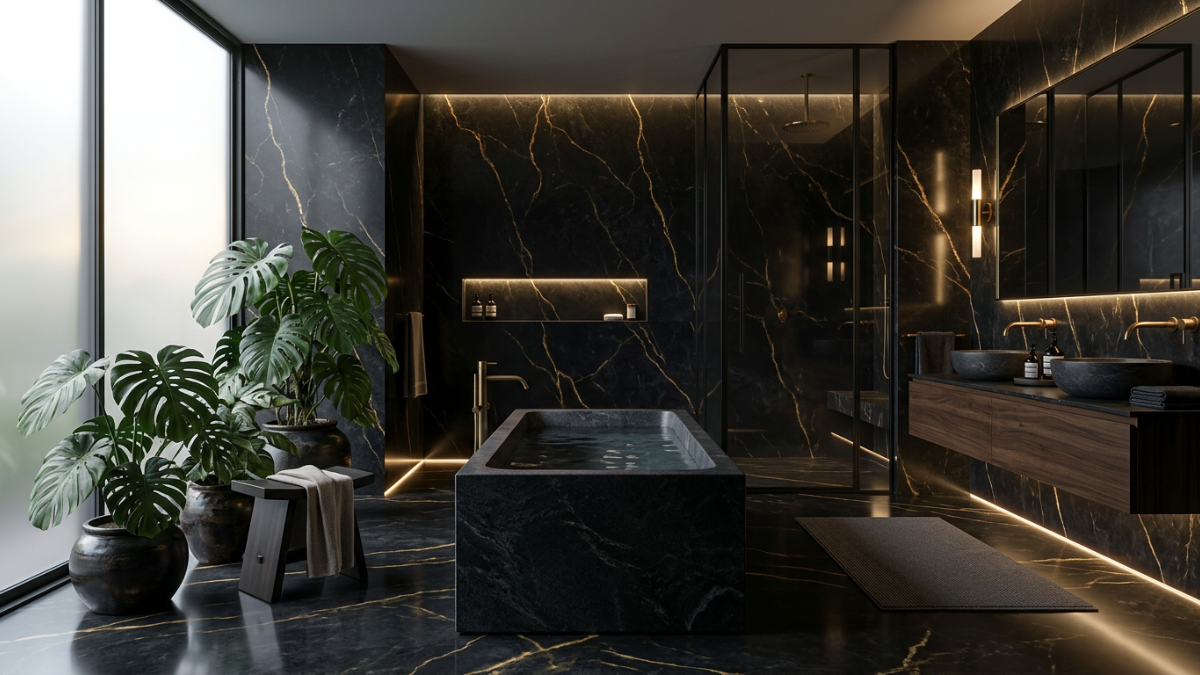
  • Black Marble Bathroom Ideas: Bold, Glossy, Timeless

    Black Marble Bathroom Ideas: Bold, Glossy, Timeless

    The black marble bathroom is the interiors equivalent of a tuxedo: dramatic, unarguably elegant, and immune to trend cycles because it predates all of them. White-veined black stone, brass hardware, warm low light: the formula reads five-star hotel and old-money apartment at the same time, and it scales from full renovation down to a rental-safe weekend refresh.

    Let the veining be the art

    Black marble’s entire drama lives in its veining: the lightning-strike whites of Nero Marquina, the gold threads of Portoro. The design rule is therefore restraint everywhere else: large-format slabs or tiles with minimal grout lines let the pattern run like a mural, and one hero surface, the shower wall, the vanity top, a full backsplash, delivers more impact than scattering the stone thin. Book-matched slabs, mirrored at the seam, are the maximalist masterstroke where budget allows.

    The supporting cast: brass and warmth

    Black stone needs warm metal: brushed brass or gold taps, shower frames and mirror edges glow against the dark and keep the room from tipping into severity (matte black hardware is the stealth alternative: sleek, but colder). Wood introduces the other warmth, a walnut or oak vanity grounds the glamour, and white sanitaryware plus fluffy white towels provide the contrast that makes the marble read even deeper.

    Light it like a hotel spa

    • Warm bulbs only: cool light turns black marble to slate: 2700K turns it to velvet.
    • Sconces or pendants flanking the mirror at face height: flattering for humans, dramatic for stone.
    • A dimmable or hidden LED layer: under the vanity, along a niche: the floating glow of every spa photograph.
    • Candlelight tolerance: no room in the house rewards a lit candle more: bath night becomes an event.

    The budget versions

    The look survives translation: large-format porcelain tiles printed with marble veining deliver ninety percent of the effect at a fraction of the cost and none of the sealing anxiety: marble-effect vinyl and waterproof wall panels retrofit rentals: and the smallest version, a black marble tray, soap dispenser and tumbler on an existing vanity with a brass-framed mirror, changes a bathroom’s tax bracket for the price of a dinner out.

    Living with the drama

    The honest footnotes: real black stone shows water spots and toothpaste like a detective, so a squeegee and a soft cloth become habits, and polished marble floors want a bath mat with commitment. Porcelain versions shrug all of this off. Either way, the nightly payoff stands: stepping into a dark, gleaming, candle-ready bathroom feels like checking into somewhere expensive, indefinitely, no checkout time listed.

    Pin this moody upgrade, and soak in more home inspiration on Plumeo. Daily style at @Plumeoblog.

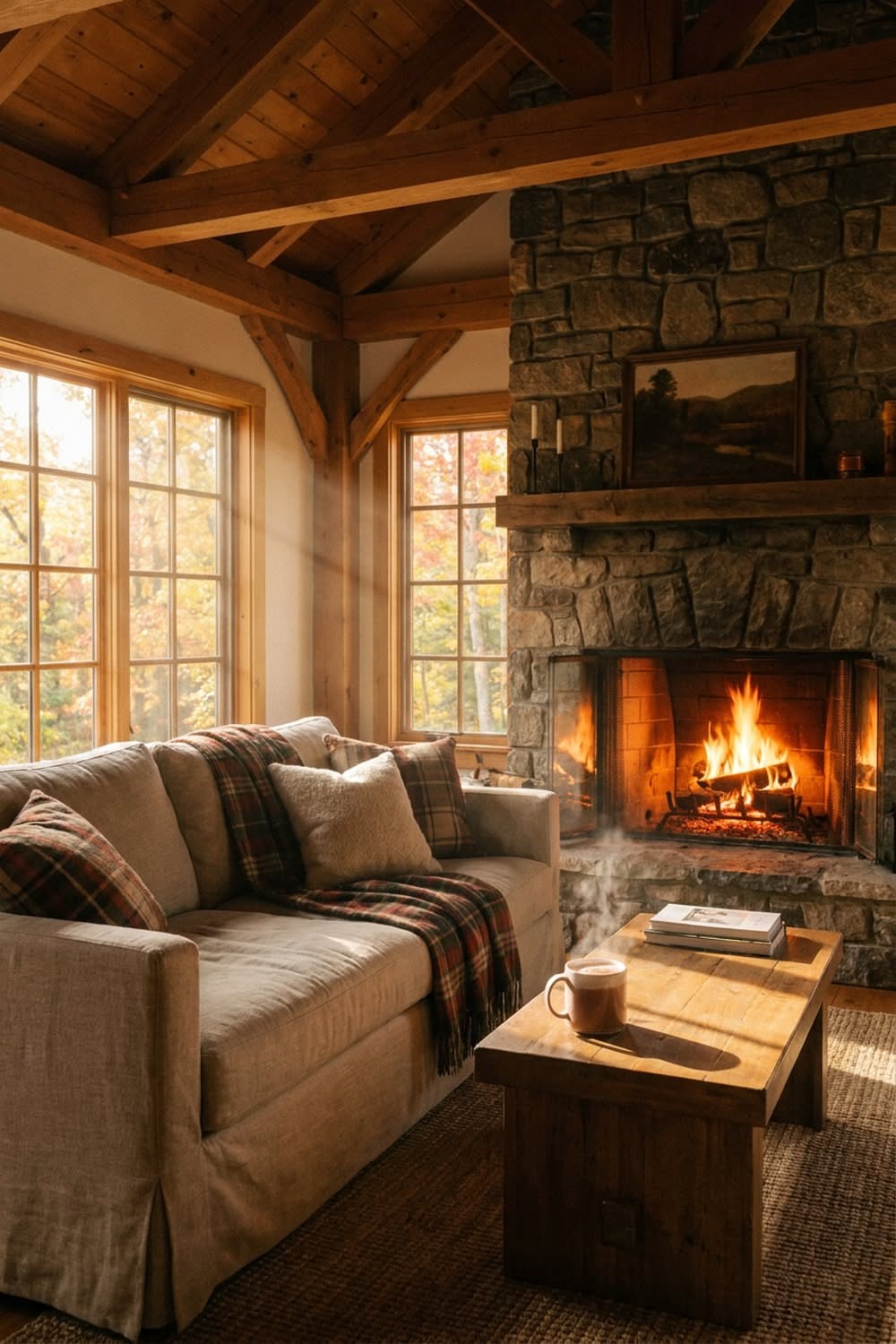
  • Cozy Cabin Aesthetic: Bringing the Woods Home

    Cozy Cabin Aesthetic: Bringing the Woods Home

    The cabin aesthetic is a feeling before it is a style: woodsmoke, wool, lamplight on timber, the sense that weather is happening somewhere else. You do not need the A-frame or the acreage: the entire mood is portable, built from a specific palette of materials and light that any apartment can adopt by the weekend.

    The material code: wood, wool, leather, iron

    Cabin warmth is material honesty: wood in every sightline (furniture, bowls, a paneled accent wall or even peel-and-stick planks), wool and flannel in the soft layer, leather that looks sat-in, and black iron or aged brass in the hardware. The palette follows the forest: pine green, oxblood, rust, cream and every brown from honey to espresso. Anything glossy, chrome or lacquer-white is from a different movie: edit it out of the cabin corner.

    Fire, or the idea of fire

    The hearth is the cabin’s heart, and the effect survives translation: a real fireplace if you are lucky, an electric stove-style heater if you are practical, or the honest hack, a cluster of candles and lanterns at floor level where a fire would live, plus a crackling-fireplace video on the screen during deep winter (zero shame: the sound does real work). Firelight’s job is flicker and amber: any flame, however small, delivers it.

    The layering checklist

    • Plaid and cable knit throws within reach of every seat: draped, not folded to death.
    • Sheepskin or faux fur over chair backs and benches.
    • A heavy rug underfoot: bare floors are for summer houses.
    • Warm-bulb lamps and lanterns at multiple low heights: 2700K or warmer, overheads retired.
    • Nature souvenirs: pinecones in a bowl, birch logs by the hearth, antler or botanical prints on the wall.

    Cabin rituals complete the room

    The aesthetic is half objects, half behavior: coffee brewed slowly and drunk by the window, board games and paperbacks instead of feeds, stew or chili on the stove, thick socks as house uniform. A cabin evening at home, lamps low, blanket on, something warm in the mug, costs nothing and delivers most of what the mountain lodge charges hundreds a night for.

    One corner is enough

    Full-house conversion is optional: a single cabin corner, the leather chair, the wood side table, the lantern, the plaid throw, gives the whole home somewhere to hibernate. Start there, let it spread naturally through winter, and by February the apartment will smell faintly of cedar and good decisions.

    Pin this lodge feeling, and warm up with more cozy home ideas on Plumeo. Daily comfort at @Plumeoblog.
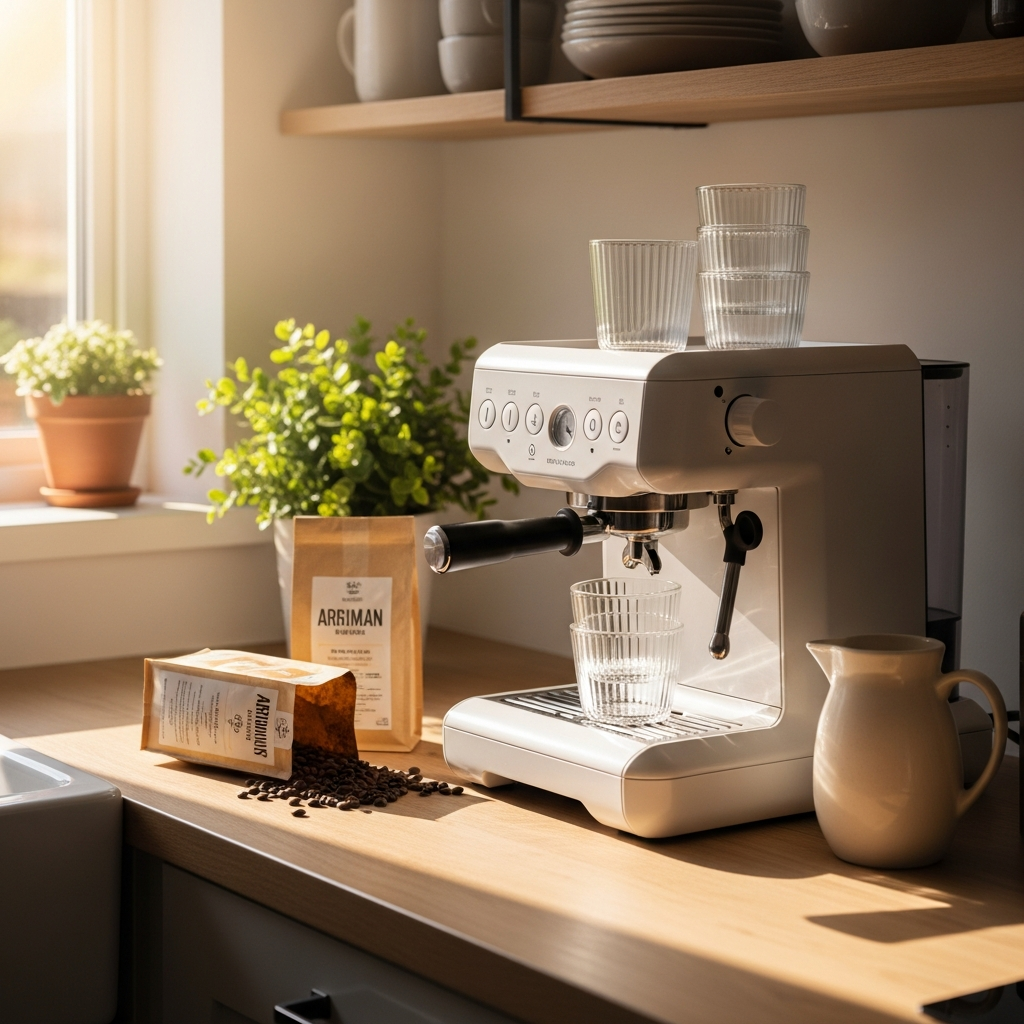
  • The Minimalist Coffee Station

    The Minimalist Coffee Station

    You don’t need a massive kitchen to build a dedicated, high-end coffee station. The key is curating the appliances so they look like intentional decor rather than cluttered machinery.

    Building the Station:

    • Matte Appliances: Ditch the shiny stainless steel for matte white or matte black espresso machines.
    • Display the Beans: Keep artisan beans in amber glass jars or aesthetic packaging.
    • Glassware: Stack heavy, ribbed glass latte cups nearby for easy access.