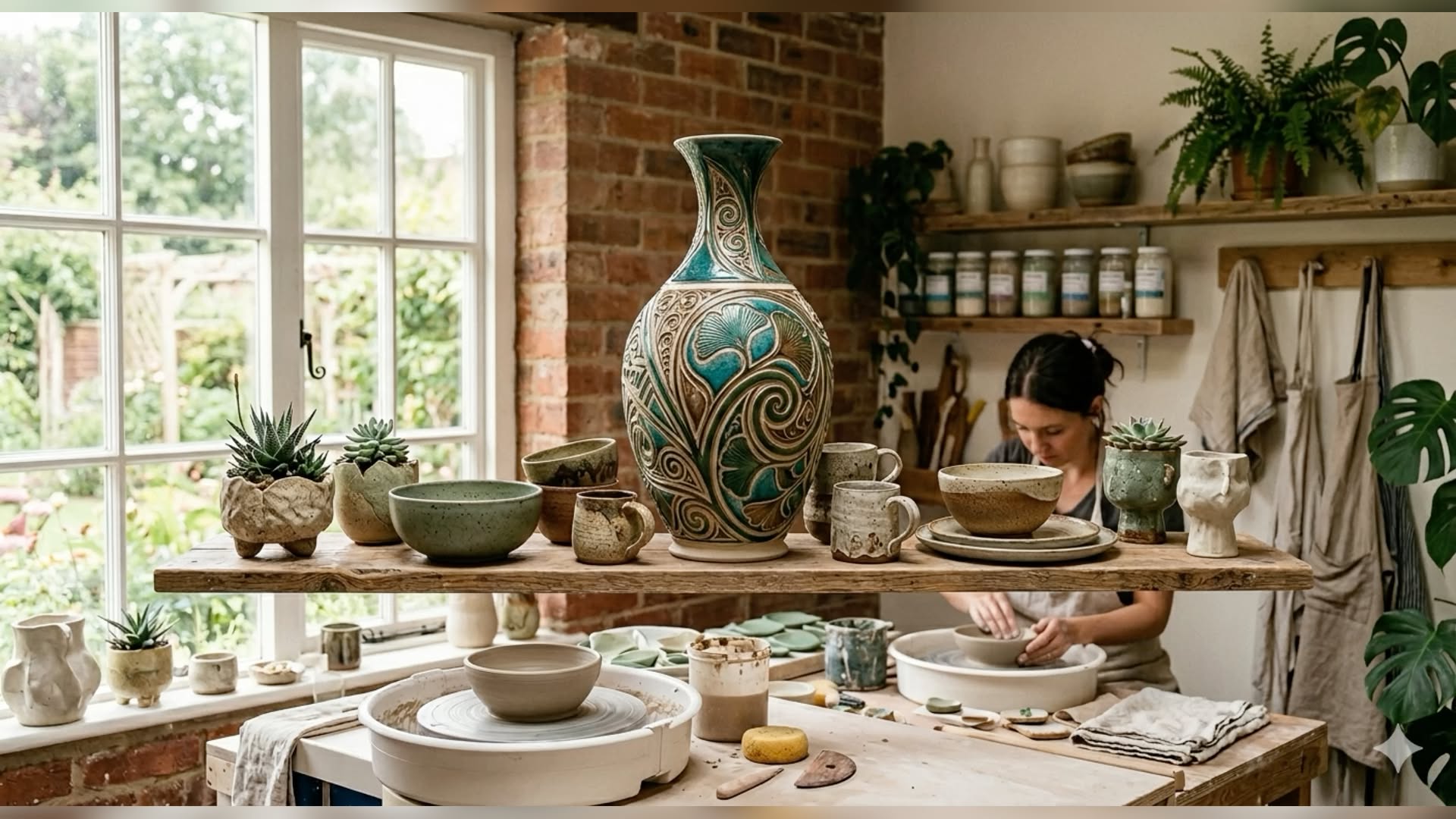
Pottery has quietly become the craft of the decade, and not because everyone bought a wheel: hand-building, shaping clay with nothing but fingers and a few kitchen tools, is ancient, beginner-friendly and deeply calming in a way screens never manage. An afternoon with a block of clay produces real objects and a strangely quiet mind. Here is how to start at the kitchen table.
Choose your clay, honestly
No kiln, no problem: air-dry clay is the home starting point: inexpensive, mess-manageable, and finished with paint and sealant instead of firing (decorative pieces only: it stays porous, so no soup). Oven-bake polymer clay suits small precise objects like trinket dishes and beads. When the hobby gets serious, community studios fire real stoneware by the piece, and that is the path to actual mugs holding actual coffee. Start with air-dry: the skills transfer completely.
The three hand-building techniques
- Pinch pots: a ball of clay, a thumb pressed in, walls pinched thin while rotating: humanity’s first pottery, still the best first lesson.
- Coil building: rolled ropes of clay stacked and smoothed into vases and planters: height without a wheel.
- Slab work: clay rolled flat like pastry, cut and joined into trays, dishes and little houses: a rolling pin and a butter knife are the entire toolkit.
Score and wet every join (scratch both surfaces, add slip, press), keep walls an even finger-width, and let pieces dry slowly under loose plastic: cracks come from hurry.
Beginner designs that actually look good
The secret of handsome beginner pottery is embracing the handmade look rather than fighting for factory smoothness: an organic-edged trinket dish with visible finger marks, a speckled bud vase (flick brown paint over cream for the ceramic-studio effect), a coil planter with the coils left proudly visible, wavy-rim catch-all bowls, and slab wall hangings stamped with lace or leaves before drying. Earthy palettes, cream, terracotta, sage, matte black, make everything look intentional: seal air-dry pieces with matte varnish for the professional finish.
Why it feels so good
Clay demands both hands and full attention, which evicts the phone and the mental to-do list for the duration: crafters call it moving meditation, and studios sell out classes on that promise alone. There is also the modest miracle at the end: an object that exists because an afternoon did. Imperfect, fingerprinted, and better decor for both.
Growing the habit
Keep a small kit, a kilo of clay, a rib, a knife, a sponge, in a shoebox and pottery becomes a rainy-afternoon default. Gift the output (handmade dishes are elite presents), join one wheel-throwing taster class when curiosity peaks, and let the windowsill fill slowly with small earthen proof that slowness still produces things.
Save this craft for a slow weekend, and shape more creative home ideas on Plumeo. Daily inspiration at @Plumeoblog.