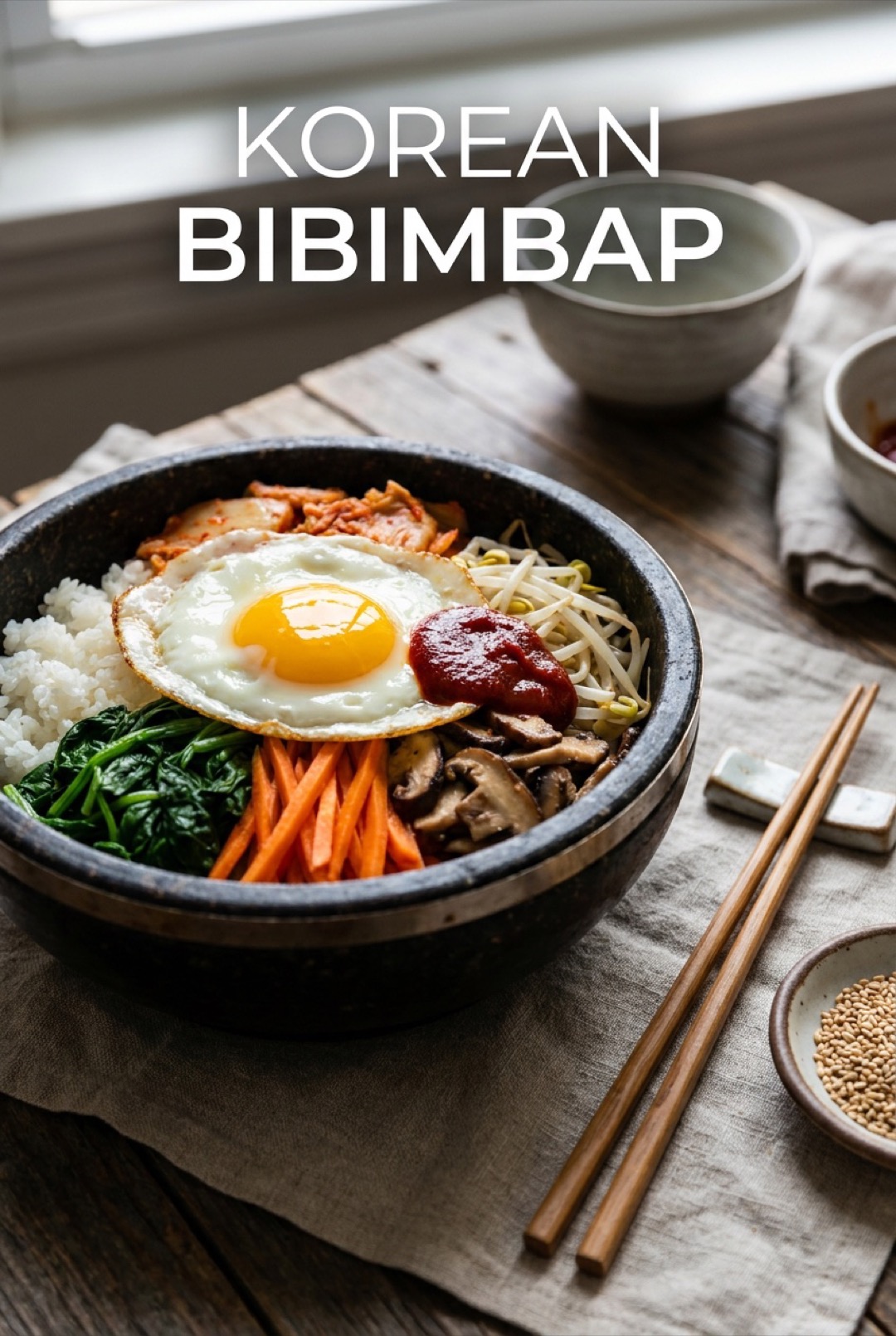
Bibimbap literally means mixed rice, but the beauty of Korea’s most famous bowl is that it arrives unmixed: neat wedges of seasoned vegetables, glossy marinated beef and a sunny fried egg arranged like a colour wheel over warm rice. You admire it for five seconds, then stir it into delicious chaos with a spoonful of gochujang.
The components
- Rice: short-grain, freshly steamed
- Vegetables: spinach, carrots, mushrooms, bean sprouts and courgette, each quickly sautéed and seasoned separately with sesame oil, garlic and salt
- Protein: thin-sliced beef in a soy-sesame-sugar marinade, or tofu for a vegetarian bowl
- The crown: a fried egg with a runny yolk
- The sauce: gochujang loosened with sesame oil and a little honey
Why vegetables are seasoned separately
The extra pans are the point: each vegetable keeps its own character, sweet carrot, earthy mushroom, nutty sprouts, so every mixed bite is layered instead of muddled. It sounds fussy but takes fifteen minutes in one pan wiped between batches, and the technique instantly upgrades any grain bowl you make afterwards.
The dolsot upgrade
Served in a scorching stone bowl, dolsot bibimbap, the bottom layer of rice toasts into a golden crust while the egg finishes cooking against the hot stone. No dolsot at home: heat a cast-iron pan, film it with sesame oil, press the assembled bowl in for two minutes and listen for the crackle. The crispy rice is worth the extra step every time.
Mix and eat
Add the sauce, break the yolk and stir everything until the rice turns terracotta red. Bibimbap forgives every substitution, leftover roast chicken, yesterday’s roasted vegetables, kimchi from the jar, which is why Korean home cooks treat it less as a recipe and more as the world’s most beautiful way to clear the fridge.
Save this bowl formula, and explore more world recipes on Plumeo. Daily inspiration at @Plumeoblog.