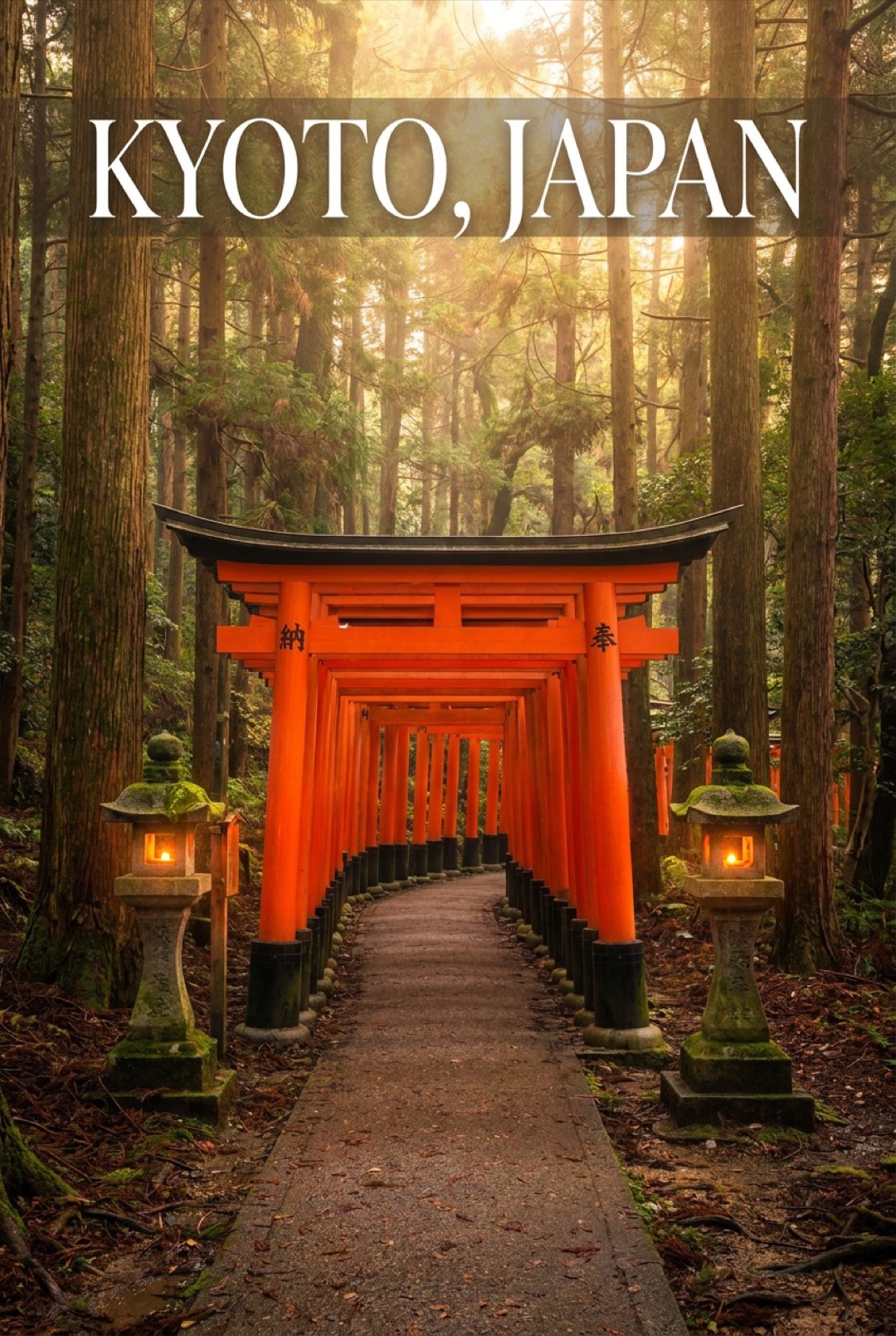
Kyoto is Japan’s soul kept beautifully intact: over a thousand temples, lantern-lit alleys, tea houses and gardens raked to perfection. It rewards slow travel like nowhere else, and even its most famous sights, seen early enough, can still feel like secrets.
The unmissables
- Fushimi Inari: thousands of vermilion torii gates winding up a mountain, go at dawn and keep climbing past the crowds
- Kinkaku-ji: the gold-leafed pavilion floating over its mirror pond
- Arashiyama: the bamboo grove at first light, then the Hozu river and monkey park
- Gion: evening lanes of wooden machiya houses and the flicker of lanterns
- Kiyomizu-dera: the hillside temple with the wooden stage and city views
When to go
Kyoto peaks twice: cherry blossoms in early April and fiery maples in late November, both magnificent and both busy. The insider seasons are early June, fresh green and quiet, and February, when temples sit in crisp stillness. Summer is hot and humid: if it is your window, plan mornings and shaded gardens.
Eat like Kyoto
This is the home of kaiseki, Japan’s seasonal tasting cuisine, but the city feeds every budget: Nishiki Market for street snacks, yudofu (silken tofu hotpot) near Nanzen-ji, matcha everything in Uji, and department store basements for the world’s most beautiful takeaway. Book kaiseki once: it is a memory, not a meal.
Practical magic
Base yourself near a subway line rather than inside Gion: Kyoto’s buses crawl in peak season. Buy an IC card, rent a bicycle for the flat city centre, and build each day around one district instead of criss-crossing. Two full days covers the icons: four lets Kyoto do what it does best, which is slow you down.
Save this guide for your Japan trip, and wander through more travel guides on Plumeo. Daily inspiration at @Plumeoblog.