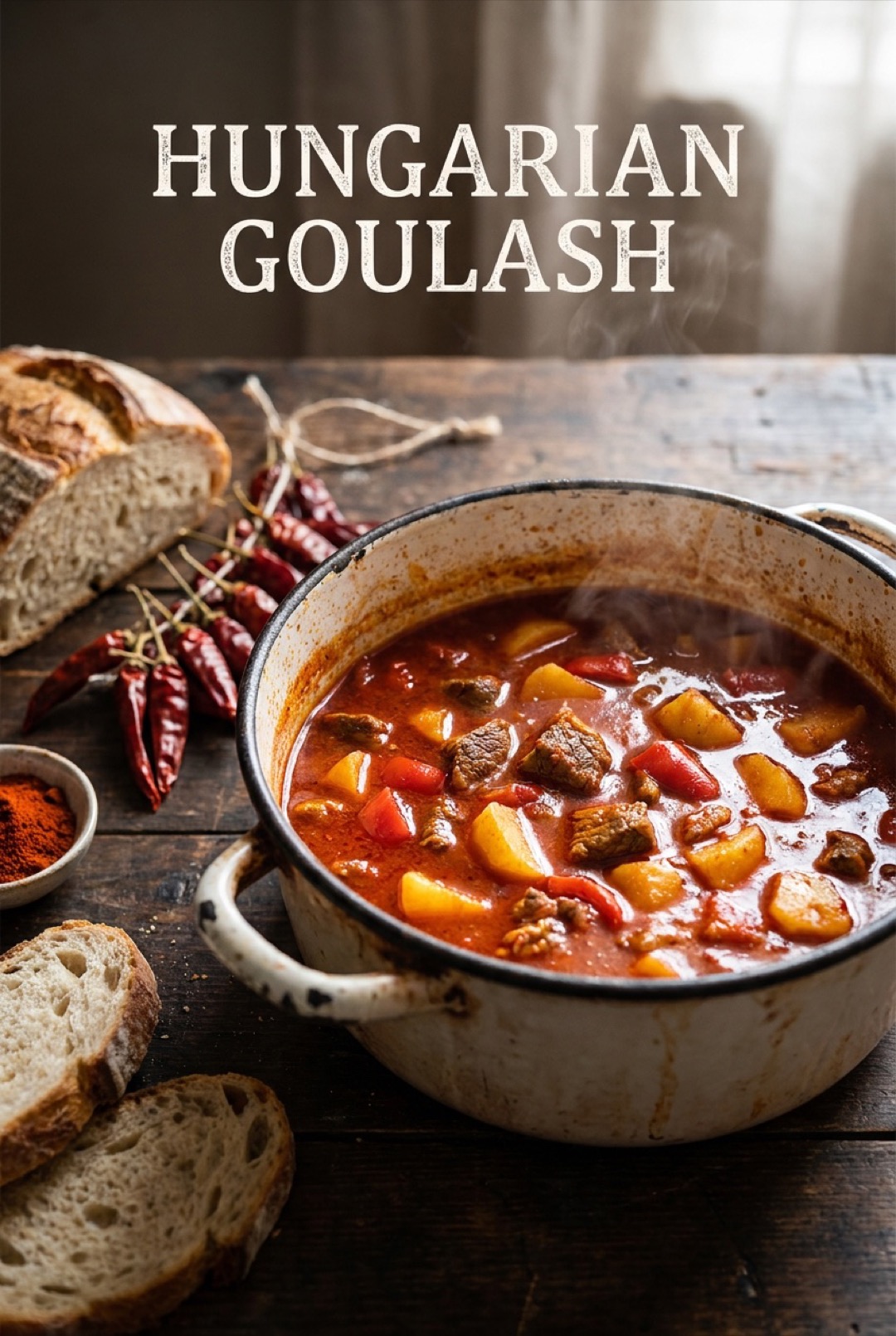
Real Hungarian gulyás is not the flour-thickened brown stew that borrowed its name abroad: it is a soulful, brick-red soup-stew where beef, onions and sweet paprika do all the work. Born over herdsmen’s fires on the Hungarian plain, it needs only patience, a heavy pot and shameless quantities of good paprika.
What matters most
- Paprika: genuine Hungarian sweet paprika, fresh and fragrant, several tablespoons, not a shy teaspoon
- Beef: shin or chuck, cut chunky, collagen is flavour
- Onions: equal in weight to half the beef, cooked to sweetness
- Supporting cast: caraway seeds, garlic, tomato, peppers and waxy potatoes
The method
- Sweat the onions slowly in lard or oil until golden and collapsing.
- Pull the pot OFF the heat, stir in the paprika for ten seconds, burnt paprika turns bitter, this step is sacred.
- Add beef, caraway, garlic and tomato: stir until coated and sizzling.
- Cover with water, simmer gently 90 minutes.
- Add potatoes and peppers: cook 30 minutes more until everything is tender.
Soup or stew: the consistency question
In Hungary gulyás leans brothy, eaten with a spoon and hunks of white bread, while its cousin pörkölt is the thicker braise served over dumplings. Let yours settle where you like it: the potatoes lend body naturally, and a longer simmer concentrates the broth. Whatever you do, resist flour: paprika-stained broth should shine, not coat.
Finishing touches
A few csipetke, pinched egg-dough dumplings simmered in the pot, make it fully traditional, and a dollop of sour cream is welcome heresy. Like every great stew it improves overnight, making goulash the rare dish that rewards cooking a day early. Serve steaming, with crusty bread and, ideally, snow outside the window.
Save this hearty classic, and simmer through more world recipes on Plumeo. Daily inspiration at @Plumeoblog.