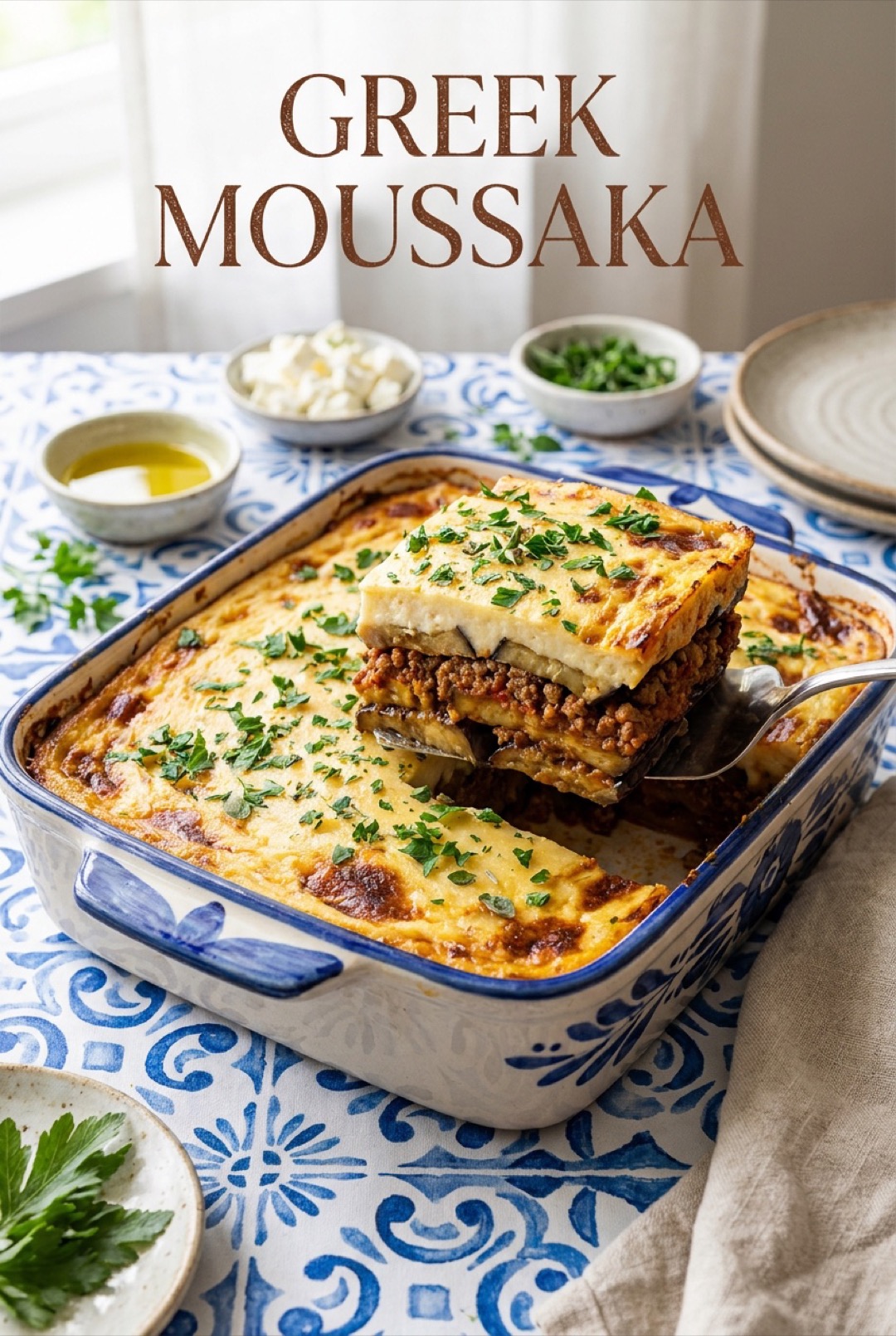
Moussaka is Greece’s grand casserole: silky roasted aubergine, a tomato-lamb sauce warmed with cinnamon, and a thick cloud of béchamel baked to a golden dome. It is unapologetically a project dish, three components, one glorious assembly, and precisely the kind of cooking that makes a Sunday feel like an occasion.
The three layers
- Aubergine: thick slices, salted, then roasted or lightly fried until golden and collapsed
- Meat sauce: lamb or beef with onion, garlic, tomato, red wine, cinnamon, allspice and oregano, simmered until thick
- Béchamel: a proper thick one, enriched with egg yolks and a handful of grated cheese so it sets like custard
Assembly and baking
- Layer half the aubergine in an oiled dish, then all the meat sauce.
- Add the remaining aubergine, pressing gently flat.
- Pour the béchamel over in a thick, even blanket.
- Dust with cheese and bake at 180°C for 45 minutes until burnished.
- Rest 30 minutes before slicing, the non-negotiable step.
Why the rest matters
Straight from the oven, moussaka slumps into delicious lava. Half an hour of rest lets the layers set so each slice stands tall and shows its strata, aubergine, ruddy meat, pale gold crown. Greek grandmothers serve it warm, not hot, often insisting it tastes best the next day, and they are, as usual, correct.
Rounding out the table
All moussaka needs is a sharp Greek salad, cold tomatoes, cucumber, feta and olives dressed with oil and oregano, and perhaps a glass of red. It reheats brilliantly and freezes in portions, making it the rare showpiece that doubles as meal prep. One tray, and the week suddenly looks Mediterranean.
Save this layered classic, and taste more world recipes on Plumeo. Daily inspiration at @Plumeoblog.