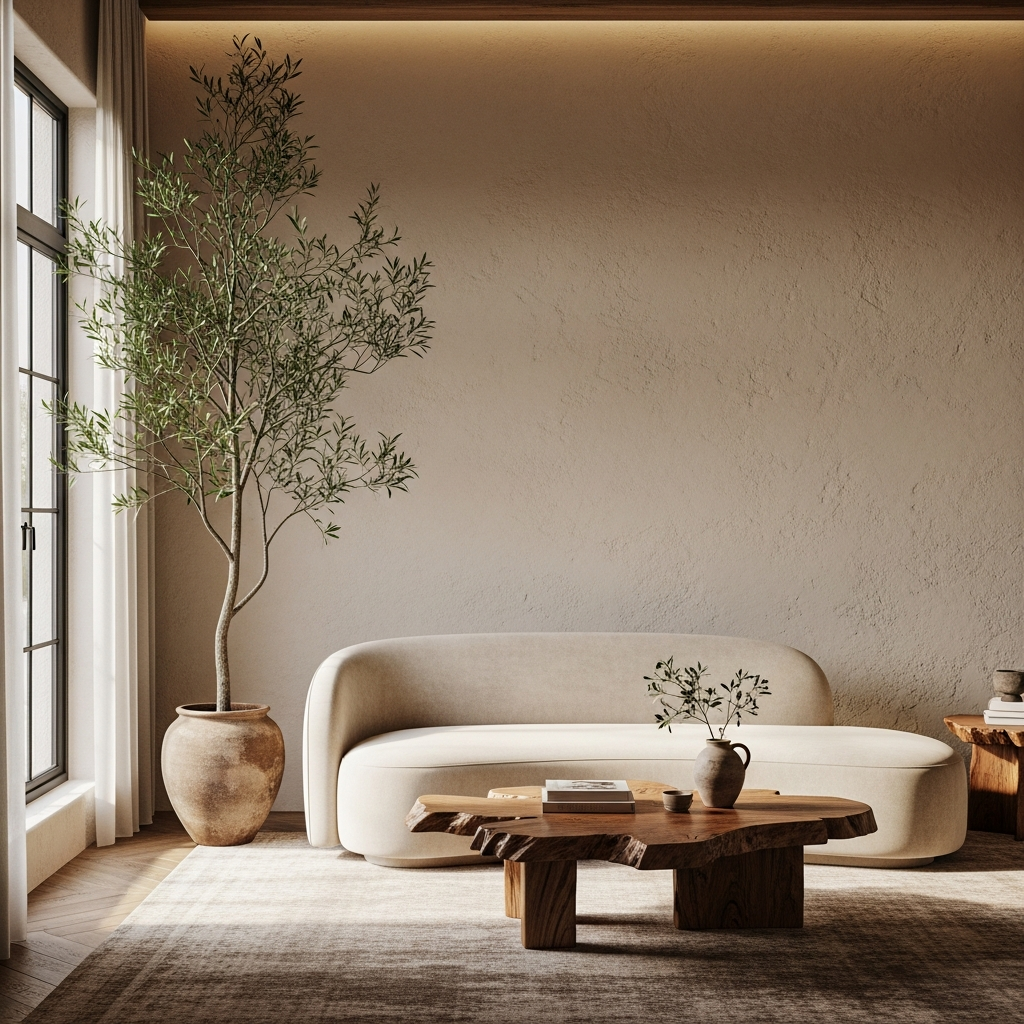
Wabi-sabi is the Japanese aesthetic of finding beauty in imperfection and impermanence: the cracked glaze, the weathered wood, the linen that wrinkles. Applied to a living room, it produces spaces that feel like an exhale: muted, natural, quietly imperfect, and immune to the showroom stiffness that haunts ordinary minimalism. Here is how to build one.
The philosophy, briefly
Wabi-sabi is not a shopping list: it is a permission slip. Objects are chosen for honesty rather than newness, wear is evidence of life rather than damage, and empty space is treated as a feature, not a vacancy to fill. The practical translation: fewer things, more natural ones, arranged loosely, and allowed to age in public. It is minimalism with the warmth left in.
The palette: earth, clay, stone
Wabi-sabi rooms live in muted, mineral tones: warm white, sand, clay, mushroom, faded terracotta, soft grey-green, deep umber. Nothing saturated, nothing glossy: colors that look mixed with a little dust. Limewash or textured paint on even one wall adds the soft, cloudy depth the style is famous for, and it forgives imperfect application by design: the blotchiness is the point.
Materials over objects
- Wood with visible grain and history: a low table in raw or aged timber, ideally with a knot or repair showing.
- Linen and cotton, wrinkles included: slipcovered seating, loose throws, curtains that puddle slightly.
- Ceramics with irregularity: hand-thrown vases and bowls, glaze drips welcome: one or two, not a shelf army.
- Stone, paper and rattan in the lamps, trays and floor textures.
- Dried branches or a single sculptural stem instead of a full bouquet: restraint is the arrangement.
Space and light as furnishings
The wabi-sabi living room keeps real negative space: a bare stretch of wall, a corner holding only light, a table surface with one object and room to breathe. Furniture sits low and grounded: floor cushions, a low sofa, that low wooden table. Light stays soft and indirect: paper lanterns, linen shades, candles, and daylight filtered through sheer curtains: the room should look best at the hours when shadows are long.
Living in it
The style’s deepest instruction is behavioral: repair rather than replace (the kintsugi spirit, gold seams optional), let the throw stay where the afternoon left it, keep surfaces clear enough that the one beautiful bowl gets seen. A wabi-sabi room is finished the way a garden is finished, which is to say never, and comfortably so. It asks less shopping of you than any aesthetic on the internet, and gives back a room that actually lowers the pulse on entry.
Pin this calm philosophy, and breathe through more mindful home ideas on Plumeo. Daily serenity at @Plumeoblog.