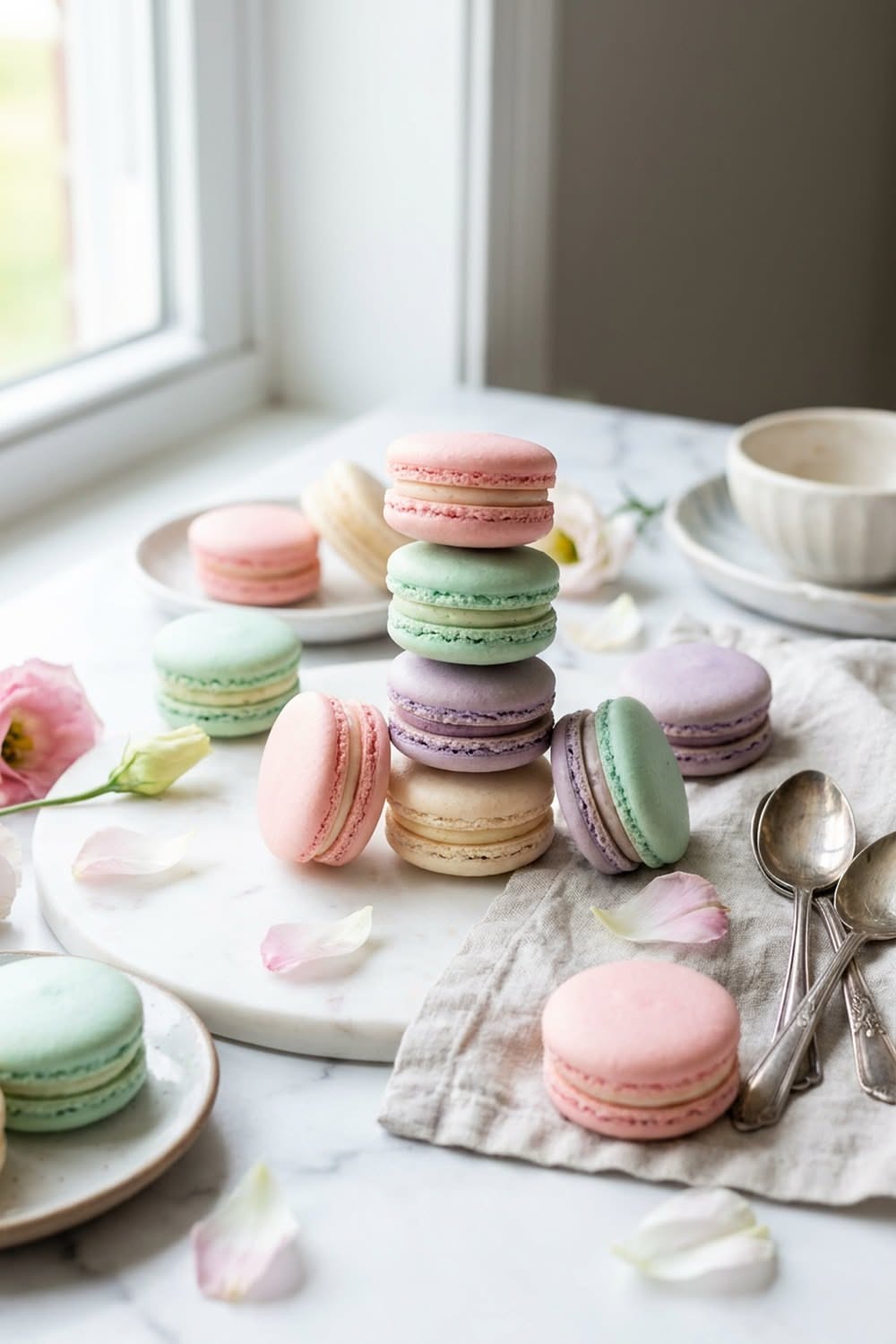
Macarons are the fussiest cookie in the world, and everyone should make them at least twice: once to fail informatively, once to feel like a wizard. The gap between failure and success is not talent: it is four checkpoints, batter flow, the rest, the oven, the maturing, each of which this guide will name honestly.
The ingredients, weighed to the gram
100g egg whites (aged a day on the counter, or at minimum room temperature), 100g caster sugar, 110g almond flour, 100g powdered sugar. A kitchen scale is not optional: macarons are chemistry with pastel ambitions. Sift the almond flour and powdered sugar together twice: gritty flour means bumpy shells, and bumpy shells haunt.
Meringue, then the macaronage test
Whip the whites, adding caster sugar gradually, to stiff, glossy peaks (gel color goes in here if you want pastels). Now macaronage: fold in the dry mixture deliberately, pressing batter against the bowl, until it flows off the spatula in a slow, unbroken ribbon that melts back into itself within about twenty seconds, the famous lava or figure-eight test. Underfolded batter pipes pointy hats: overfolded runs into sad puddles. When in doubt, stop one fold early: you can test-pipe a single round.
Pipe, rest, bake
- Pipe 3 cm rounds onto parchment or silicone, then rap the tray hard on the counter several times to evict air bubbles.
- Rest 30 to 60 minutes until the tops form a dry skin your finger can touch without sticking: the skin forces the rise downward, creating feet.
- Bake at 150°C for 13 to 15 minutes: shells are done when they wiggle only slightly on their feet.
- Cool fully before lifting: warm shells stick and break hearts.
Every oven lies: an oven thermometer and a sacrificial first tray are the professionals’ actual secret.
Fill and, crucially, wait
Pair shells by size, pipe a ring of filling, buttercream, ganache, or jam-centered buttercream, and sandwich gently. Then the step impatience always skips: mature the filled macarons 24 hours in the fridge. The filling softens the shell interiors into that chewy-crisp signature: same-day macarons are genuinely a different, lesser cookie. Serve at room temperature to people who should feel honored.
Reading your failures
No feet: batter overfolded or rest skipped. Cracked tops: air bubbles unrapped or oven too hot. Hollow shells: meringue overwhipped or oven too cool. Lopsided: uneven piping or a warped tray. Every failed batch still tastes like almond and sugar, and every macaron baker alive has produced a tray of frisbees: the second attempt is where the wizardry begins.
Save this guide for a rainy-day bake, and perfect more pastry recipes on Plumeo. Daily sweetness at @Plumeoblog.