Soft-luxury living

Author: John Adams

  • The Minimalist Coffee Station

    The Minimalist Coffee Station

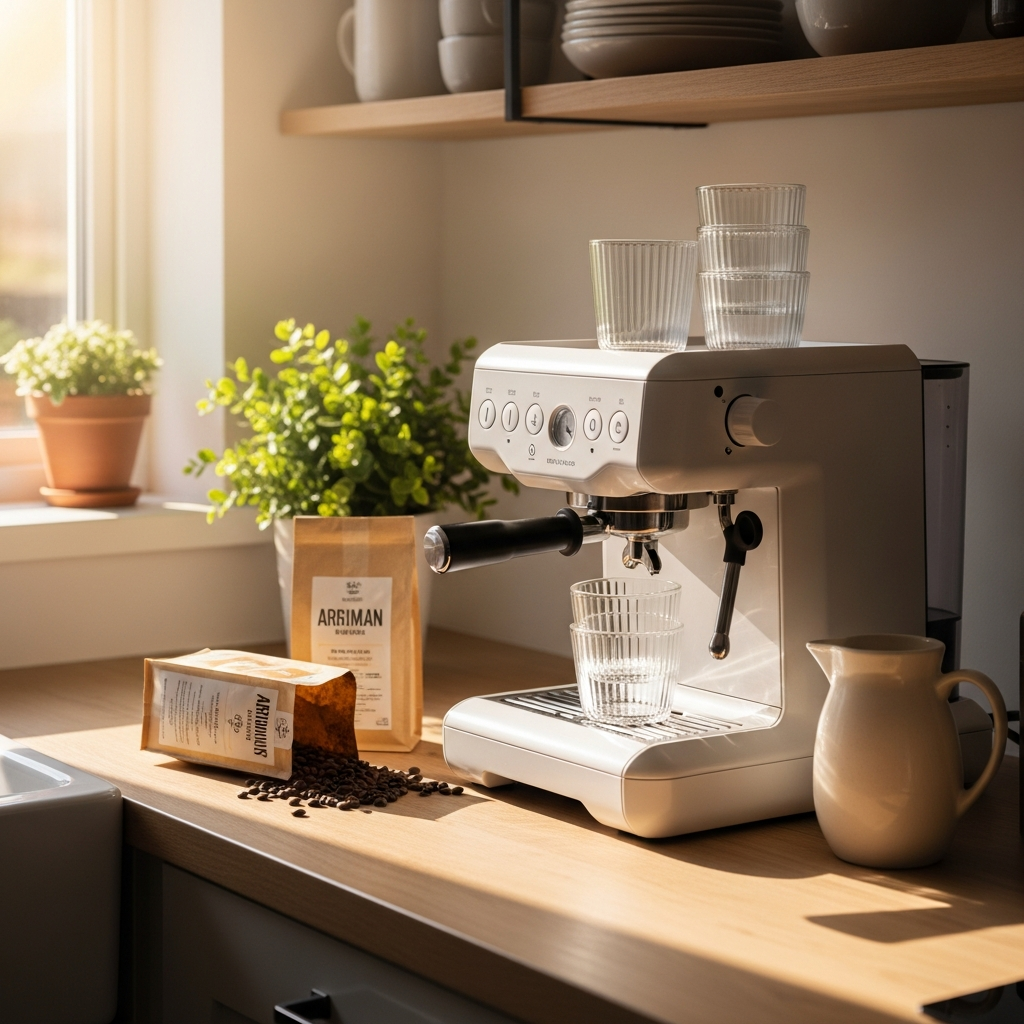
    You don’t need a massive kitchen to build a dedicated, high-end coffee station. The key is curating the appliances so they look like intentional decor rather than cluttered machinery.

    Building the Station:

    • Matte Appliances: Ditch the shiny stainless steel for matte white or matte black espresso machines.
    • Display the Beans: Keep artisan beans in amber glass jars or aesthetic packaging.
    • Glassware: Stack heavy, ribbed glass latte cups nearby for easy access.
  • The Glass Skin Makeup Routine, Step by Step

    The Glass Skin Makeup Routine, Step by Step

    Glass skin, the K-beauty ideal of skin so hydrated and even it reflects light like a pane, looks like genetics and is mostly technique. The finish is built in thin translucent layers: skincare doing half the makeup’s job, base products chosen for glow over coverage, and highlight placed where light naturally lands. Here is the full routine, in order.

    The prep is the makeup

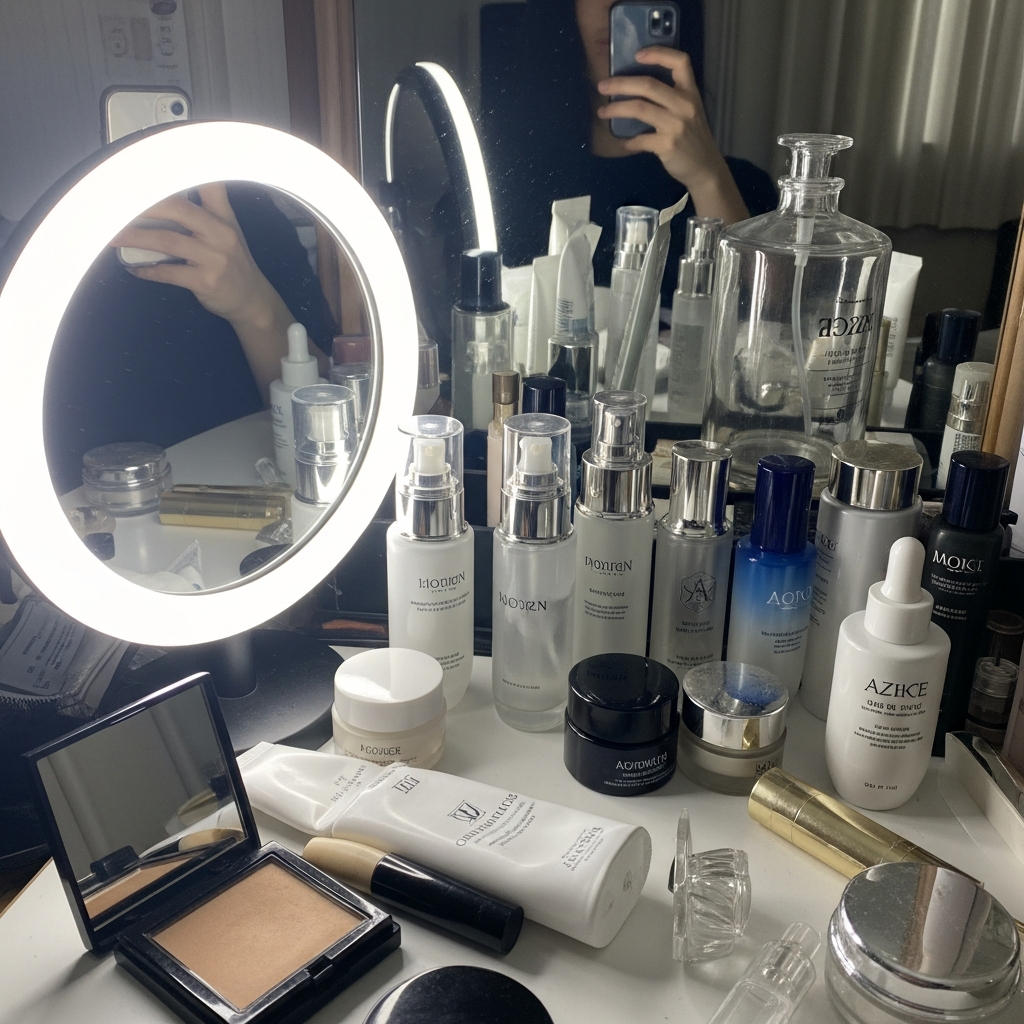
    Glass skin is roughly seventy percent skincare: makeup only mirrors the surface underneath. The pre-base stack: a hydrating toner or essence pressed in with palms, a hyaluronic serum on still-damp skin, a light moisturizer, and two minutes for everything to settle (rushing this stage is why bases go patchy by noon). Gentle exfoliation twice a week keeps the surface light-reflective: flaky skin scatters light, and scattered light is the opposite of glass.

    The base: thin, dewy, layered

    1. Glow primer or luminous sunscreen as the first light-bouncing layer.
    2. A dewy skin tint or thin foundation, applied with fingers or a damp sponge in pressing motions: warmth melts product into skin.
    3. Conceal only where needed: under eyes, around the nose, individual spots: full-coverage everywhere kills the translucency that makes the look.
    4. Powder as punctuation: a whisper of finely-milled translucent powder on the T-zone only: the cheekbones stay gloriously un-mattified.

    Highlight like light, not glitter

    Glass skin highlight is sheen, not sparkle: a liquid or balm highlighter with no visible glitter particles, tapped onto the high points where light already lands: cheekbone tops, brow bones, the nose bridge, cupid’s bow, and the inner corners of the eyes. Layer cream blush beneath in a soft berry or peach for the lit-from-within flush, and consider a spritz of fine mist over the finished face: it fuses the layers into one continuous surface, which is the entire optical trick.

    Keep the rest of the face quiet

    The glass base is the statement, so the supporting features stay soft: brushed-up brows with minimal fill, a wash of neutral shimmer or bare lids, curled lashes with one coat of mascara, and a glossy or balm-finish lip in a your-lips-but-juicier shade. Heavy contour and matte liquid lips belong to a different aesthetic and actively fight this one: glass skin reads best as expensive minimalism.

    Making it last (and the honest limits)

    Dewy finishes move: blot with tissue rather than powdering when shine turns to slick, keep the mist in your bag for midday revival, and accept the trade: glass skin is a glow with maintenance, not a locked-down matte. And the honest footnote: texture, pores and breakouts are normal skin behavior, and the goal is your best light-reflecting version, not a filter made flesh. Hydration, thin layers, strategic light: that is the whole secret, and it is learnable in two practice runs.

    Save this routine to your beauty board, and glow through more beauty guides on Plumeo. Daily inspiration at @Plumeoblog.

  • Minimalist Wabi-Sabi Living Room Ideas

    Minimalist Wabi-Sabi Living Room Ideas

    Wabi-sabi is the Japanese aesthetic of finding beauty in imperfection and impermanence: the cracked glaze, the weathered wood, the linen that wrinkles. Applied to a living room, it produces spaces that feel like an exhale: muted, natural, quietly imperfect, and immune to the showroom stiffness that haunts ordinary minimalism. Here is how to build one.

    The philosophy, briefly

    Wabi-sabi is not a shopping list: it is a permission slip. Objects are chosen for honesty rather than newness, wear is evidence of life rather than damage, and empty space is treated as a feature, not a vacancy to fill. The practical translation: fewer things, more natural ones, arranged loosely, and allowed to age in public. It is minimalism with the warmth left in.

    The palette: earth, clay, stone

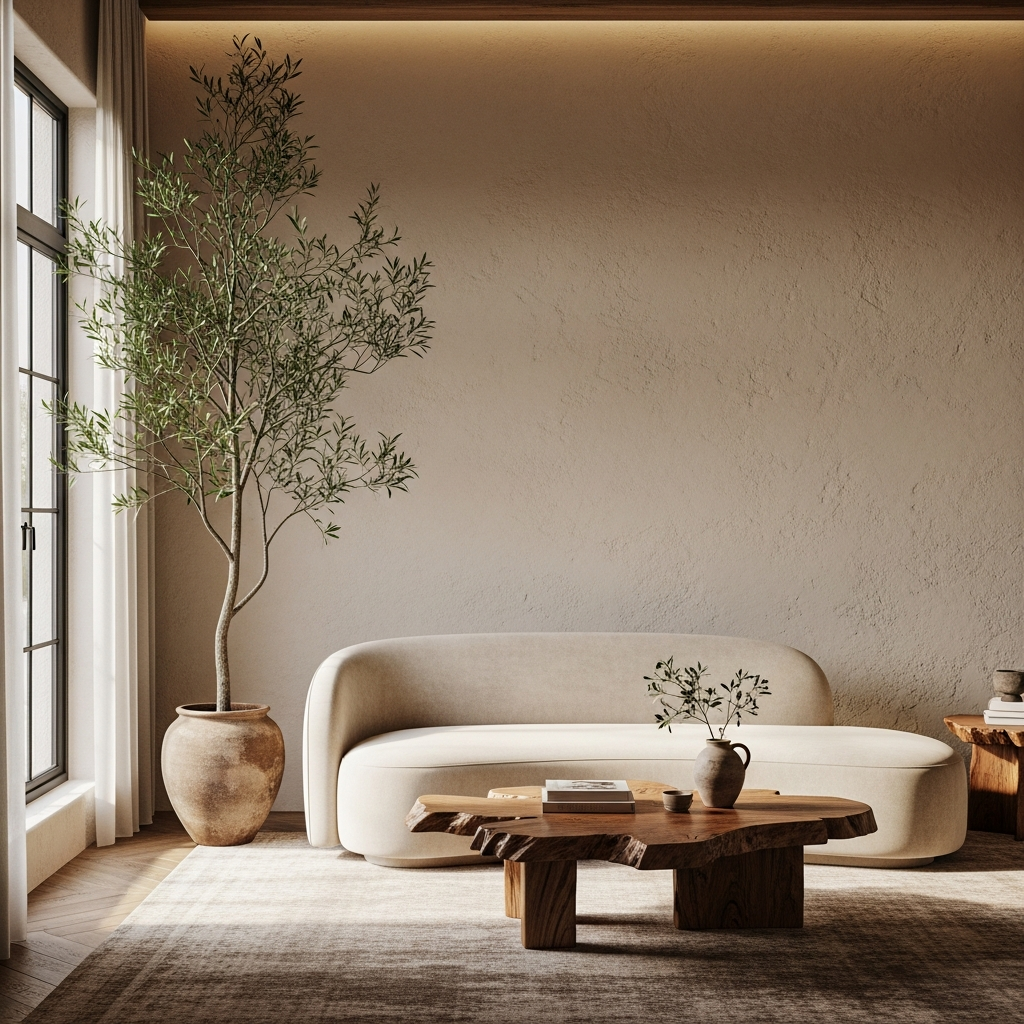
    Wabi-sabi rooms live in muted, mineral tones: warm white, sand, clay, mushroom, faded terracotta, soft grey-green, deep umber. Nothing saturated, nothing glossy: colors that look mixed with a little dust. Limewash or textured paint on even one wall adds the soft, cloudy depth the style is famous for, and it forgives imperfect application by design: the blotchiness is the point.

    Materials over objects

    • Wood with visible grain and history: a low table in raw or aged timber, ideally with a knot or repair showing.
    • Linen and cotton, wrinkles included: slipcovered seating, loose throws, curtains that puddle slightly.
    • Ceramics with irregularity: hand-thrown vases and bowls, glaze drips welcome: one or two, not a shelf army.
    • Stone, paper and rattan in the lamps, trays and floor textures.
    • Dried branches or a single sculptural stem instead of a full bouquet: restraint is the arrangement.

    Space and light as furnishings

    The wabi-sabi living room keeps real negative space: a bare stretch of wall, a corner holding only light, a table surface with one object and room to breathe. Furniture sits low and grounded: floor cushions, a low sofa, that low wooden table. Light stays soft and indirect: paper lanterns, linen shades, candles, and daylight filtered through sheer curtains: the room should look best at the hours when shadows are long.

    Living in it

    The style’s deepest instruction is behavioral: repair rather than replace (the kintsugi spirit, gold seams optional), let the throw stay where the afternoon left it, keep surfaces clear enough that the one beautiful bowl gets seen. A wabi-sabi room is finished the way a garden is finished, which is to say never, and comfortably so. It asks less shopping of you than any aesthetic on the internet, and gives back a room that actually lowers the pulse on entry.

    Pin this calm philosophy, and breathe through more mindful home ideas on Plumeo. Daily serenity at @Plumeoblog.

  • The Ultimate Trench Coat Outfit Formula

    The Ultimate Trench Coat Outfit Formula

    The trench coat is the most complete garment in fashion: a century of heritage, flattering on every frame, correct over jeans and over silk. It is also the centerpiece of the old-money autumn look for a simple reason: nothing else adds that much polish that fast. The craft is in the styling details, the belt, the collar, what happens underneath, and they are all learnable.

    The coat itself: what to look for

    The classic spec: a khaki or stone double-breasted trench, knee-length or below, in a cotton gabardine with enough body to hold its shape. Fit at the shoulders is the one non-negotiable: everything else tailors. Slightly oversized reads current and layers over knits: a longer midi length reads most old-money of all. Camel, black and chocolate are legitimate seconds, but the classic beige is the one that goes with every single thing you own.

    The styling rules that make it

    • Tie the belt, never buckle it: knotted at the front, or tied behind for the open-coat swing: the buckle is for rain, the knot is for style.
    • Pop the collar at the back: it frames the face and photographs like a decision.
    • Push or roll the sleeves slightly when worn open: deliberate ease is the entire aesthetic.
    • Over the shoulders, arms out, for the full editorial move: commit or skip, no half measures.

    Four fail-safe outfits

    The old-money classic: cream turtleneck, tailored trousers, loafers, gold jewelry, trench open: the reference look. The weekend: white tee, straight jeans, white sneakers, trench: the French-girl default that never dates. The office: silk blouse, wide-leg trousers, heeled boots, trench over the shoulders: quiet authority. The evening: slip dress or all-black knit-and-skirt, the trench as the finishing layer: the contrast of utility over silk is the whole point.

    The palette underneath

    Beige flatters a narrow, rich palette best: cream, camel, chocolate, navy, black, denim and forest green all sit beautifully under a trench, while tonal beige-on-cream layering is the quiet-luxury maximum. Accessories follow the heritage register: leather loafers or clean boots, a structured bag, a silk scarf at the neck or handle, gold over silver. One printed piece maximum: the coat prefers to be the story.

    A decade-long investment

    A good trench is a cost-per-wear miracle: spring and autumn outerwear, summer-evening layer, winter under-coat, and it survives every trend cycle by predating all of them. Buy the best construction the budget allows, secondhand racks are full of barely-worn classics, treat the occasional reproofing spray as maintenance, and let it age: a softly-worn trench carries more old money than a box-fresh one ever will.

    Save this timeless formula, and belt up more style inspiration on Plumeo. Daily looks at @Plumeoblog.