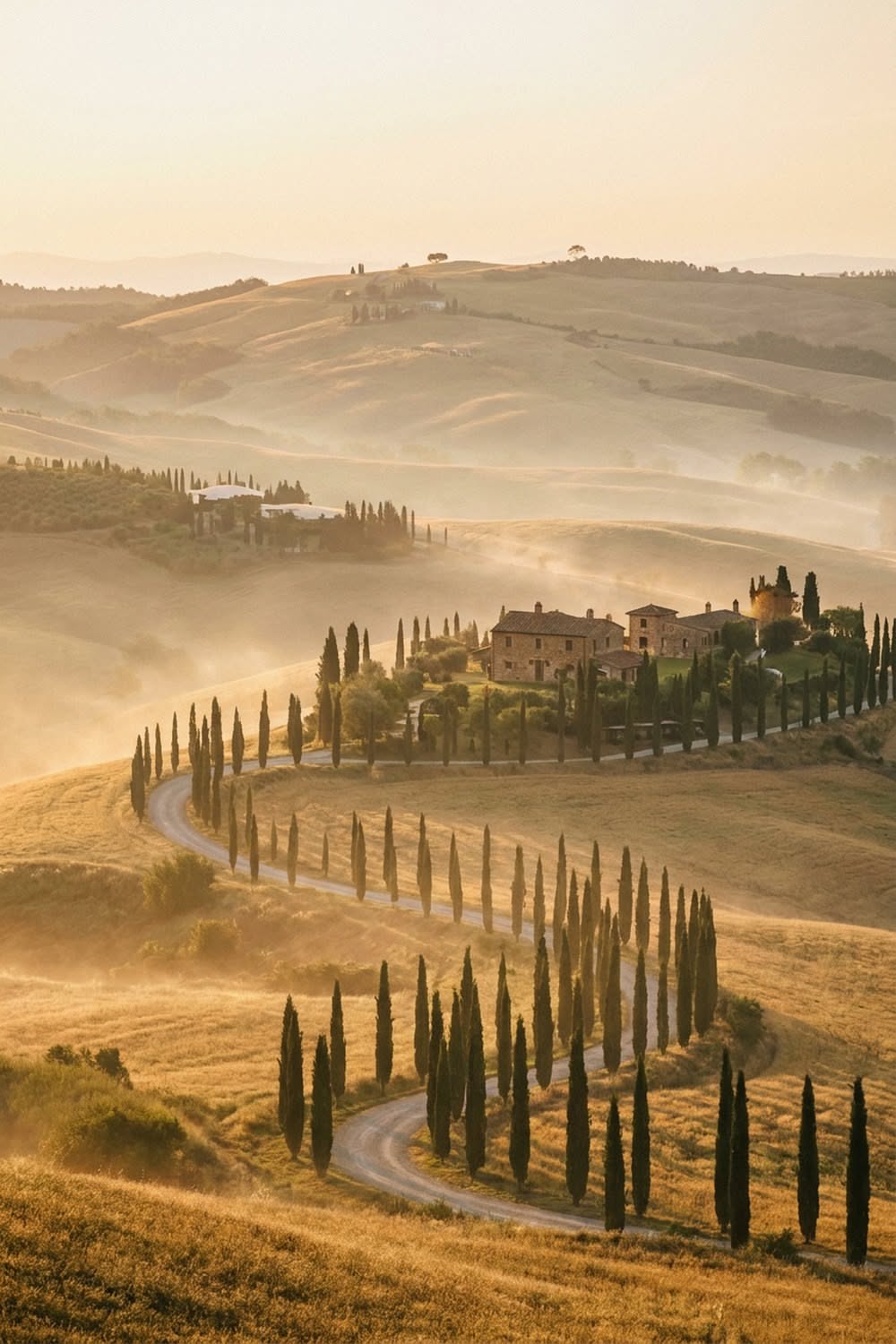
Tuscany invented a landscape so persuasive it became shorthand for the good life: cypress avenues winding to stone farmhouses, hill towns stacked like paintings, golden light with opinions about dinner. The region rewards slow travel more than almost anywhere in Europe: the correct itinerary is fewer places, longer, with a car and no particular hurry.
The cities: Florence and Siena
Florence is the Renaissance filed under one roof after another, Duomo, Uffizi, David, and deserves two or three days of proper attention (book the big museums ahead, climb something at sunset, cross the Arno to the Oltrarno for dinner where Florentines actually eat). Siena, an hour south, is the medieval counterweight: a shell-shaped piazza that hosts the Palio horse race, a striped cathedral, and lanes that have not changed their minds since 1300. See both, then leave the cities: Tuscany’s soul is rural.
Val d’Orcia: the postcard country
South of Siena lies the landscape from every screensaver: the Val d’Orcia, a UNESCO-listed sweep of wheat hills, lone farmhouses and the famous cypress-lined roads. Base in or near Pienza (pecorino cheese headquarters) or Montepulciano (wine with its own dignity), and drive the golden hours: the road between San Quirico d’Orcia and the chapel of Vitaleta at sunset is the single most photographed stretch of countryside in Italy, and it earns it daily. May brings green and poppies: late June through July, the golden wheat: autumn, plowed umber and grape harvest.
Eat and drink like a local landowner
- Pici pasta: the Val d’Orcia’s hand-rolled thick spaghetti, ideally cacio e pepe or with garlic-tomato.
- Bistecca alla fiorentina: the monumental shared steak, ordered by weight, never well-done.
- The wine triangle: Chianti Classico, Brunello di Montalcino, Vino Nobile di Montepulciano: tour one cellar minimum.
- Pecorino di Pienza with local honey, and cantucci dipped in vin santo to close every dinner.
Stay in an agriturismo
The definitive Tuscan accommodation is the agriturismo: a working farm or vineyard with rooms, where breakfast is their own produce and the evening entertainment is a pool overlooking the vines. It costs less than comparable hotels and delivers the exact fantasy the region sells. One rule: book dinner at the farm at least once: the nonna-cooked, wine-included table d’hôte is routinely the best meal of the trip.
The one-week shape
Two nights Florence, one Siena, three or four in a Val d’Orcia agriturismo with day loops to Pienza, Montalcino, Montepulciano and the abbey of Sant’Antimo: pick up the rental car only when leaving Florence (cities punish cars: hills require them). Drive slowly, stop often, and accept that you will spend a suspicious amount of the trip parked on gravel shoulders, photographing cypresses: everyone does: it is the regional sport.
Pin this golden itinerary, and roam more travel guides on Plumeo. Daily wanderlust at @Plumeoblog.