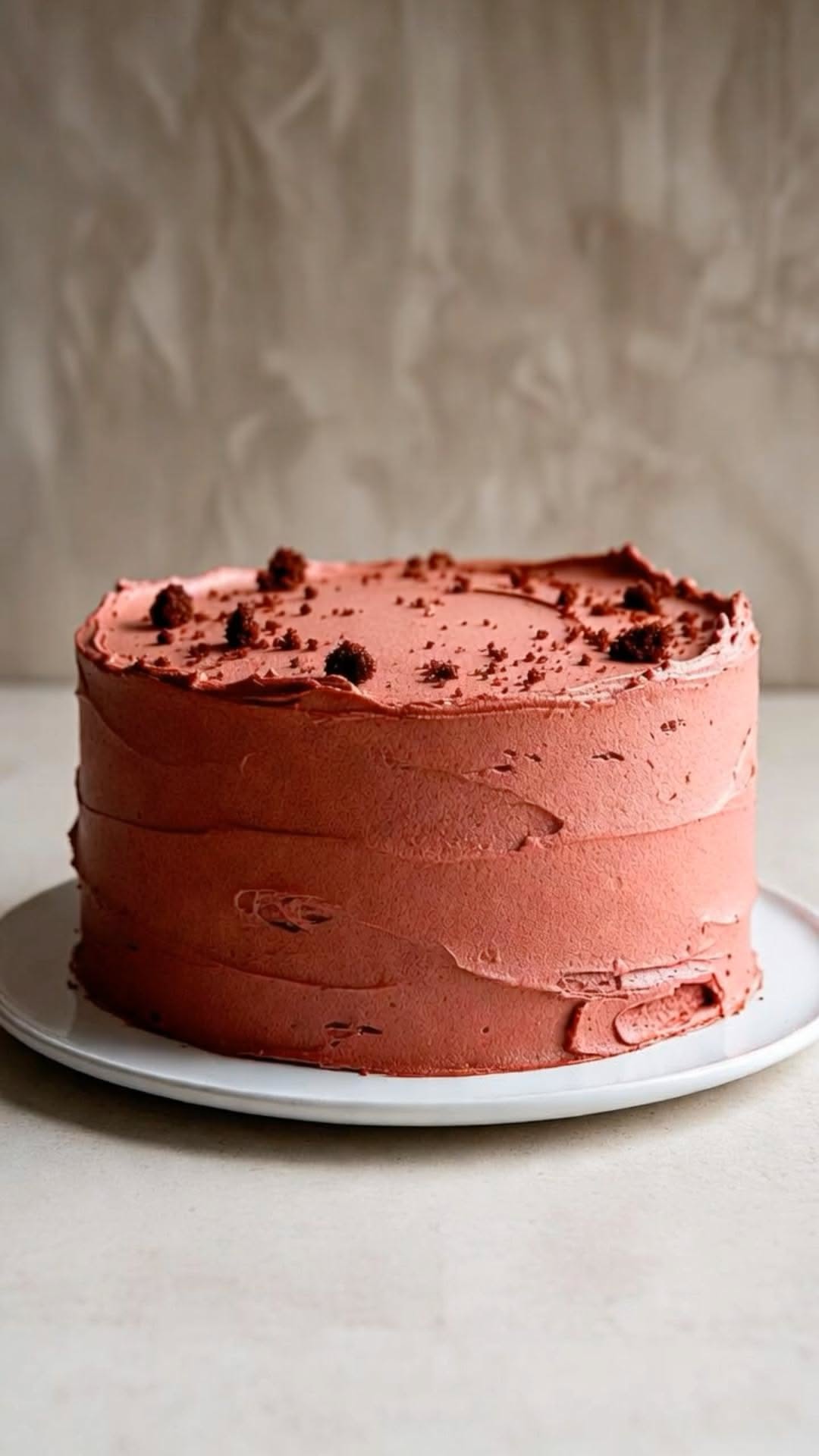
Red velvet is not chocolate cake in costume: it is its own thing, a fine, plush, faintly cocoa crumb with buttermilk tang, wrapped in cream cheese frosting, wearing that unmistakable crimson. The velvet in the name is a texture promise, delivered by a specific chemistry of buttermilk, vinegar and a light hand. Here is the classic, done properly.
The chemistry that makes it velvet
Whisk 320g flour with 2 tablespoons (only) of cocoa and a teaspoon of salt. Cream 115g butter with 300g sugar, then beat in 240ml of vegetable oil (the butter-plus-oil combination gives flavor and days of moistness), 3 eggs and 2 teaspoons of vanilla. Add the dry mix alternating with 240ml buttermilk. Finally the signature pair: a teaspoon of baking soda dissolved into a tablespoon of white vinegar, folded in fizzing at the very end. That acid-base flourish is what tenderizes the crumb to its namesake texture.
The red, honestly discussed
The original red came from cocoa reacting with acid: today’s scarlet is gel food coloring, about a tablespoon, added with the buttermilk. Gel, not liquid: liquid coloring waters the batter and still underdelivers. Beet powder works for the natural-color camp, landing at a dignified burgundy. Whichever route, the color show is half the cake’s job: commit.
Bake and stack
- Divide between two (tall) or three (elegant) lined 20 cm tins.
- Bake at 175°C for 25 to 30 minutes, until a toothpick comes out with a few moist crumbs.
- Cool ten minutes in the tin, then fully on racks: chill before frosting for clean assembly.
Cream cheese frosting with structure
The eternal problem, cream cheese frosting that slides, has a simple fix: cold cream cheese, soft butter. Beat 115g of genuinely soft butter until pale, add 450g of cold, brick-style cream cheese just until smooth, then 500g of powdered sugar and a teaspoon of vanilla. Mix only until combined: overbeating is what liquefies it. The result spreads in luxurious swoops and stays where it is put. Frost between layers, over the top, and around the sides, then press the traditional crumbs from a trimmed edge onto the frosting if you like the classic deli look.
Serving the occasion
Red velvet cuts most cleanly cold but tastes best at cool room temperature: pull it 30 minutes ahead. The crimson-and-white cross-section does its own marketing at birthdays, holidays and any table with a camera present. Keeps four days refrigerated under a dome, though the corner pieces rarely see day two.
Save this classic showstopper, and frost through more baking recipes on Plumeo. Daily sweetness at @Plumeoblog.