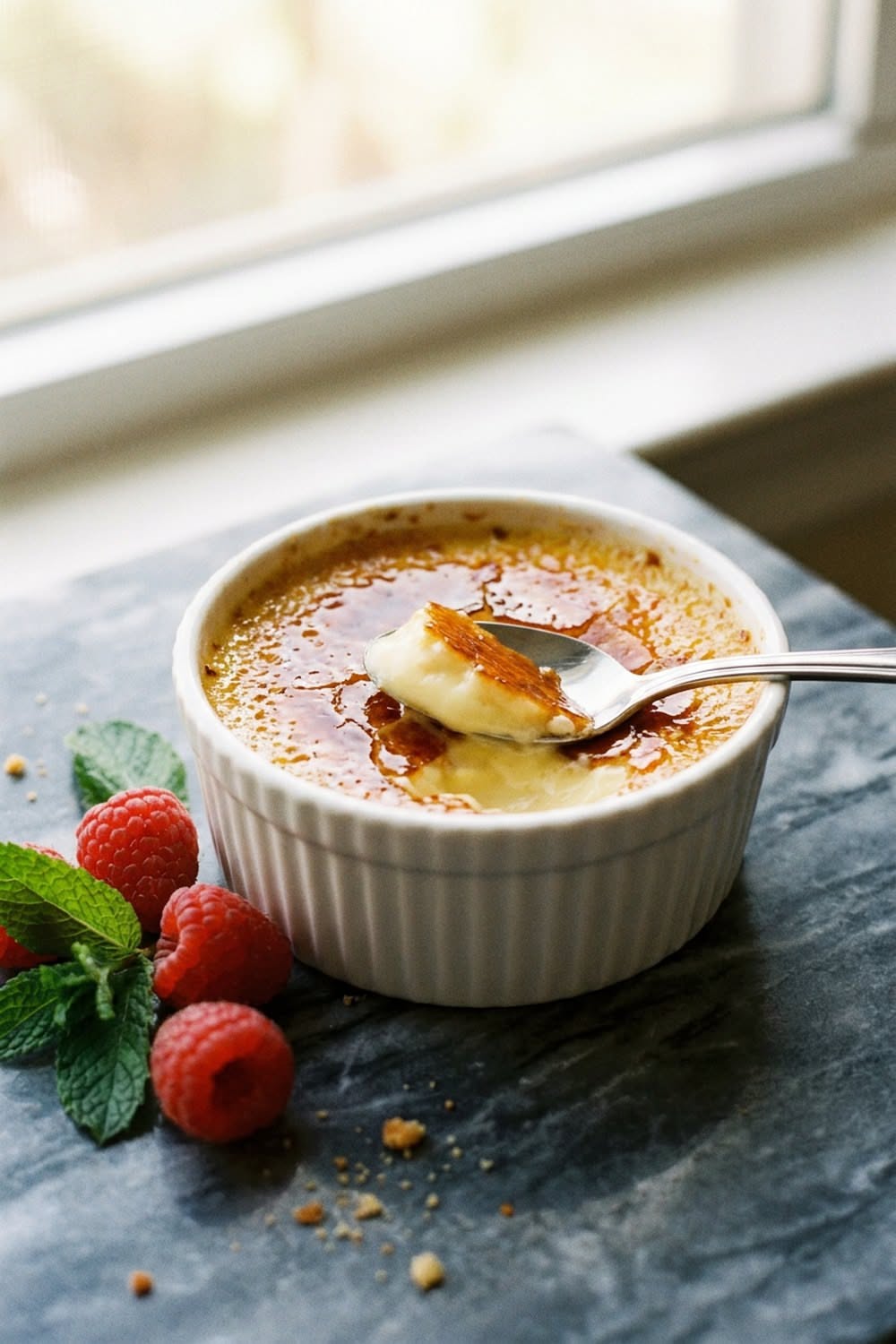
No dessert has better theater than crème brûlée: the tap of the spoon, the crack of the caramel, the give of cold silk underneath. It seems like restaurant-only sorcery, and it is actually four ingredients and one technique, a gentle water bath, plus the most fun a kitchen torch will ever be. Here is the whole ritual.
Four ingredients, chosen well
For four ramekins: 500ml heavy cream, 5 egg yolks, 70g sugar, and real vanilla, a split and scraped pod is worth it here, though good extract works. That is the entire list. Crème brûlée is a custard with nowhere to hide, so the cream should be fresh and the yolks the best you have.
The custard, step by step
- Warm the cream with the vanilla pod until steaming (not boiling); rest 10 minutes to infuse.
- Whisk yolks with sugar until pale: then pour in the warm cream gradually, whisking gently to avoid foam.
- Strain the mixture: this catches any cooked egg bits and guarantees silk.
- Divide between shallow ramekins set in a deep baking dish; pour hot water halfway up their sides.
- Bake at 150°C for 30 to 35 minutes until set at the edges with a slight tremble dead center.
- Chill at least 4 hours: cold custard under hot caramel is the entire contrast.
The water bath is not optional: it buffers the heat so the custard sets creamy instead of curdled. The tremble test beats any timer.
The brûlée moment
Just before serving, blot any moisture off the custard surface, sprinkle a thin, even layer of sugar (about 2 teaspoons per ramekin, tilt and tap to distribute), and torch in slow circles until it melts amber and glassy. No torch? The broiler works: ramekins close to the element, door open, eyes on, 2 to 3 minutes. Let the caramel harden for one minute: then serve immediately, while the crust is glass and the custard is still cold beneath it.
Where it can go wrong (and the fix)
Scrambled texture means the oven ran hot or the bath was skipped: trust 150°C. A crust that turns wet means it was torched too far ahead: caramelize within 20 minutes of serving. And a bitter top is just over-torching, aim for amber, not mahogany. Flavor riffs, espresso in the cream, a little orange zest, lavender for the ambitious, all work, but the vanilla original is the one that gets requested twice.
Save this for your next dinner party finale, and crack into more classic recipes on Plumeo. Daily sweetness at @Plumeoblog.