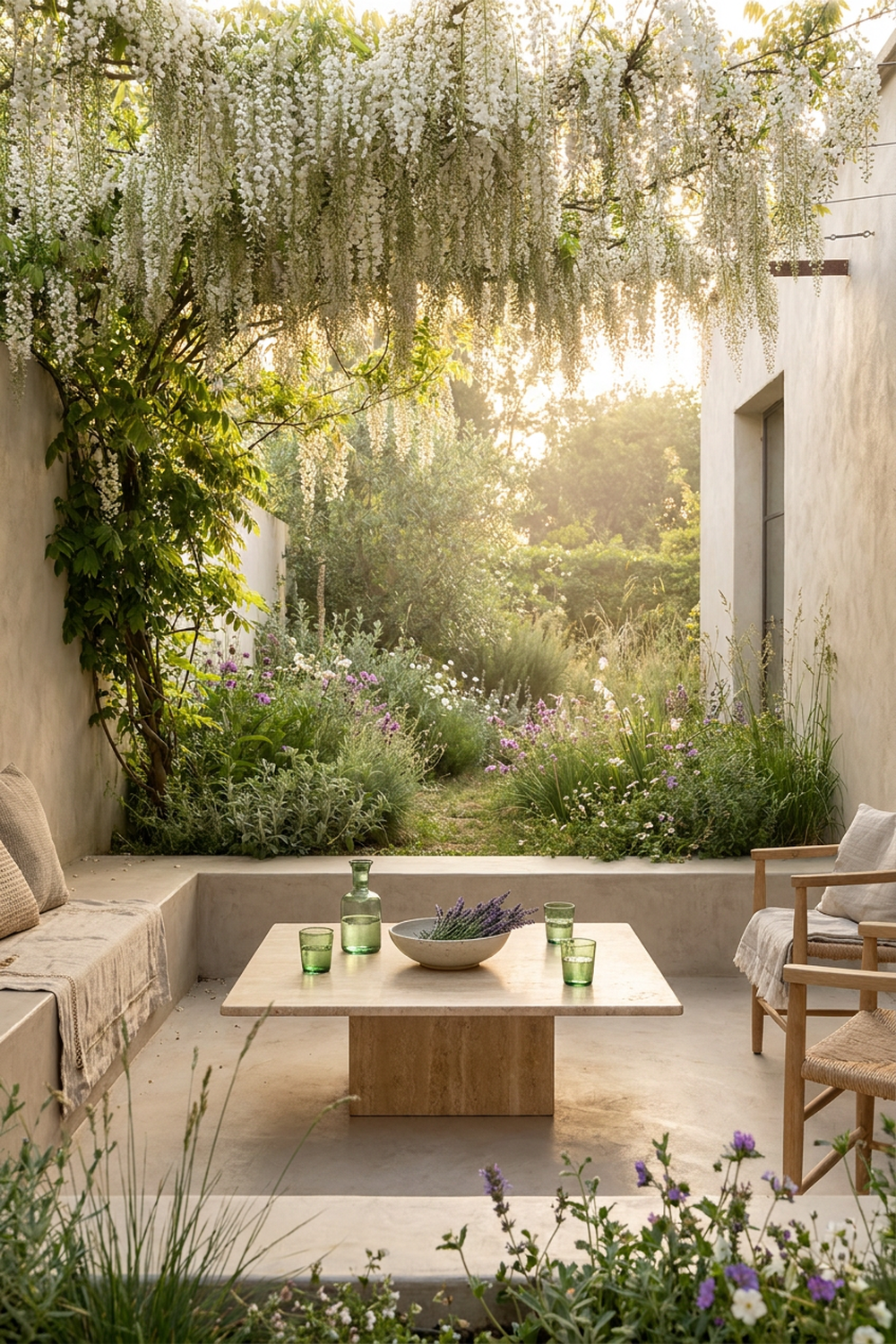
There is a reason cottage gardens never go out of style. They feel unplanned in the loveliest way, all tumbling roses, crowded borders and paths that disappear around a corner. The good news: that romantic, slightly wild look is one of the most forgiving styles you can grow, because the “rules” are gentle and the plants do most of the work.
Here is how to create a dreamy cottage garden of your own, whether you have a full yard or a strip of soil beside the door.
Start with the bones: paths, edges and an entrance
Every storybook garden has a sense of journey. Before you buy a single plant, sketch a simple path from the gate to the door, or from the patio to a seating spot. Stepping stones, gravel, or old brick laid in a soft curve all work beautifully. A cottage garden path should never feel like a corridor: let plants spill over the edges so the line blurs.
If you can add one structure, make it an entrance. A simple wooden arch with a climbing rose or clematis instantly gives the garden a beginning, and walking under flowers never stops feeling special.
Plant in layers, not rows
The classic cottage border is built like a little amphitheatre: tall plants at the back, a generous middle layer, and low growers softening the front edge. A reliable framework looks like this:
- Back: hollyhocks, delphiniums, foxgloves and climbing roses for height and drama.
- Middle: peonies, phlox, salvia, shrub roses and lavender for the main flush of colour.
- Front: catmint, hardy geraniums, alchemilla and dianthus tumbling onto the path.
Plant in odd-numbered drifts of three or five rather than singles. Repetition of a few favourites along the border is what makes a cottage garden feel intentional instead of chaotic.
Choose a soft, romantic palette
You can plant almost anything in a cottage garden, but the dreamiest ones stick to a loose palette. Blush pink, dusty lavender, cream and soft blue with plenty of green reads as calm and romantic. Add one deeper accent, perhaps a wine-coloured rose or plum-toned scabiosa, so the scheme has depth. If you love brights, keep them in one corner or a cutting patch so the main view stays soft.
Add the cottage signatures
A few elements do a lot of storytelling:
- A climbing rose or wisteria over the door or arch.
- Self-seeders like forget-me-nots, poppies and nigella that pop up in the cracks.
- Herbs tucked among the flowers: chives, sage, thyme and rosemary belong here.
- A weathered bench, a birdbath or an old watering can left where you actually use it.
- Picket fencing, low stone walls or woven willow edging instead of hard modern lines.
Keep it blooming from spring to frost
The secret to a border that never looks empty is succession. Spring bulbs (tulips, narcissi, alliums) hand over to early summer peonies and roses, then phlox, cosmos and dahlias carry high summer, and asters plus sedum close the season. When you buy plants, check the bloom month on the label and make sure every month from April to October has at least two performers.
Low-effort habits that keep the magic alive
Deadhead once a week with a cup of tea in hand, mulch generously in spring so weeds stay down and moisture stays in, and resist the urge to tidy too hard in autumn. Seedheads feed the birds, and a little softness through winter is part of the charm. Cottage gardens reward the relaxed gardener.
Save this to your garden board on Pinterest so it is there when planting season arrives, and browse more dreamy garden ideas while the kettle boils. You can follow along daily at @Plumeoblog.