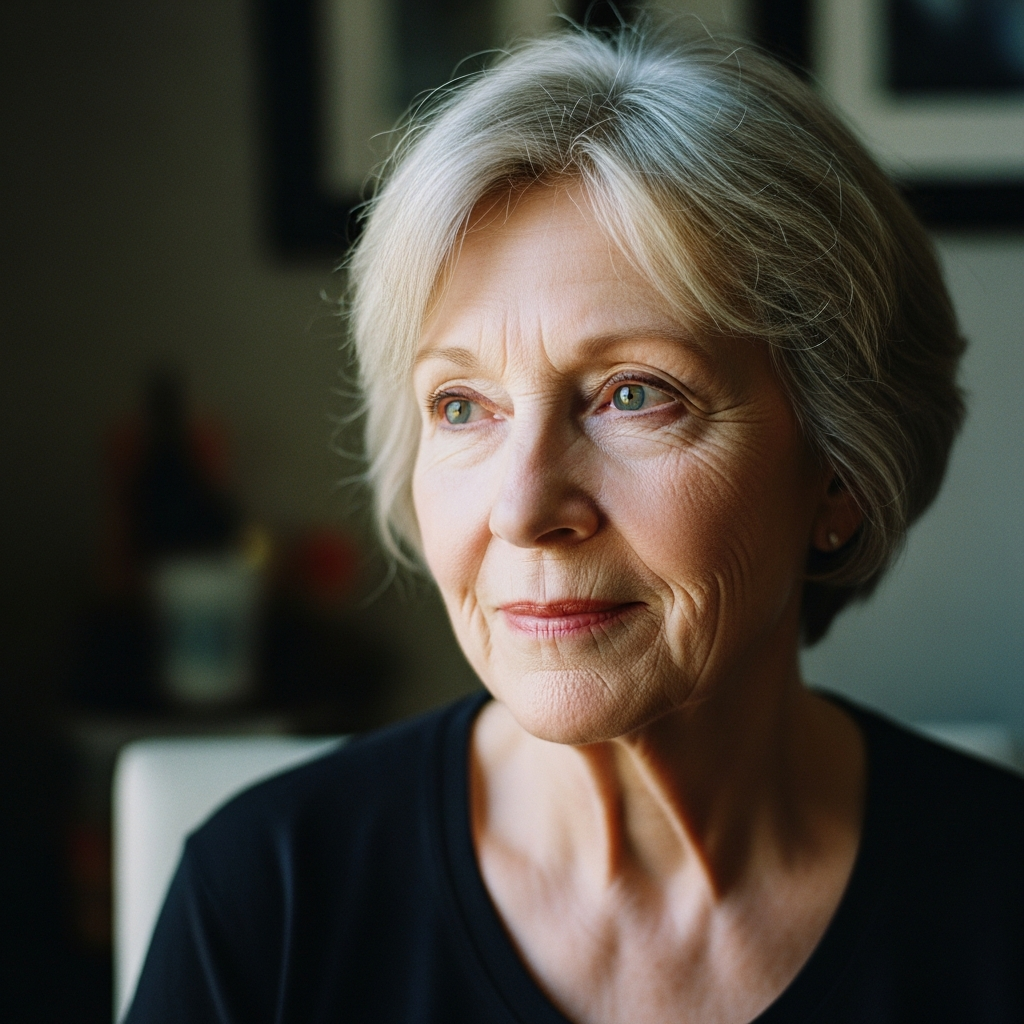
When Hollywood needed an actress capable of projecting a hurricane of conflicting emotions with little more than a tightened jaw or a devastatingly sharp glance, they called Mary Beth Hurt. The showbiz landscape lost one of its most formidable, quietly monumental talents on Sunday, as the three-time Tony-nominated actress passed away at the age of 79. The cause of death was complications from Alzheimer’s disease, a cruel curtain call for an artist whose entire life was built upon the meticulous architecture of memory, text, and emotional recall.
The news was confirmed in a heartbreakingly succinct joint statement on Facebook by her daughter, Molly Schrader, and her husband, the legendary writer-director Paul Schrader. The post read, simply: “She was an actress, a wife, a mother.” Yet, for cinephiles and theater purists who followed her decades-long career, she was so much more. Hurt was the thinking viewer’s leading lady, a master class in nuance who consistently elevated the material she was handed.
The Anatomy of a Cerebral Star
Hurt’s cinematic breakthrough arrived during a transformative era in American filmmaking, a period that demanded raw authenticity over polished glamour. She cemented her status as a titan of complex character work in Woody Allen’s 1978 dramatic pivot, Interiors. Playing Joey, the articulate but creatively stifled daughter grappling with the crushing weight of her mother’s depression, Hurt delivered a performance of astonishing, brittle intensity. She held her own against heavyweights like Geraldine Page and Diane Keaton, proving instantly that she possessed a rare, intellectual gravitas.
However, it was her role as Helen Holm in the 1982 adaptation of John Irving’s The World According to Garp that introduced her to a massive global audience. Opposite Robin Williams, Hurt was the indispensable anchor. In a film swirling with eccentricity, tragedy, and surrealism, her portrayal of Helen was fiercely independent, deeply flawed, and unapologetically human. She grounded the narrative’s wilder impulses, offering a masterclass in how to play the “straight woman” without ever fading into the background.
A Theatrical Force of Nature
While her filmography—which includes standout roles in The Age of Innocence, D.A.R.Y.L., and her husband’s searing drama Affliction—is heavily lauded, Hurt’s truest artistic home was arguably the stage. The Broadway community revered her. She was a creature of the theater, possessing a vocal command and physical presence that could command the back row of any auditorium.
Her three Tony Award nominations speak to a versatility that few of her contemporaries could match. Whether she was navigating the darkly comedic Southern gothic landscape of Beth Henley’s Crimes of the Heart, dissecting modern relationships in Michael Frayn’s Benefactors, or shining in Trelawny of the ‘Wells’, Hurt approached the stage with a blue-collar work ethic wrapped in high-art sensibilities. She did not act to be famous; she acted to uncover the messy, unvarnished truth of the human condition.
An Uncompromising Partnership
Behind the camera, Hurt’s life was deeply intertwined with the very fabric of New Hollywood. Her marriage to Paul Schrader—the scribe behind Taxi Driver and Raging Bull—created a quiet, enduring powerhouse couple in an industry notorious for fleeting romances. Together, they navigated the shifting tides of independent cinema and studio filmmaking. She frequently served as a muse and collaborator in his directorial efforts, most notably bringing a chilling, grounded reality to Light Sleeper and Affliction.
Their enduring partnership, culminating in the poignant public confirmation of her passing, highlights the profound personal loss behind the public mourning. Alzheimer’s disease relentlessly strips away the very tools an actor relies upon, making her final years a tragic juxtaposition to a life defined by sharp wit and razor-sharp memorization.
A Legacy Written in Nuance
In today’s hyper-saturated media ecosystem, where celebrity is often manufactured through viral moments and algorithm-friendly soundbites, Mary Beth Hurt represented an entirely different ethos. She was a craftsman. She leaves behind a blueprint for aspiring actors: a career built not on vanity, but on the fearless exploration of difficult, sometimes unlikable, but always deeply authentic women.
The marquees may dim, but the celluloid remains. Whenever a young actor studies the delicate art of the tragicomic, or a director seeks the perfect reference for a scene requiring unspoken devastation, Mary Beth Hurt’s work will be waiting. She was, and will forever remain, the uncompromising soul of a golden cinematic era.
Original Reporting: variety.com