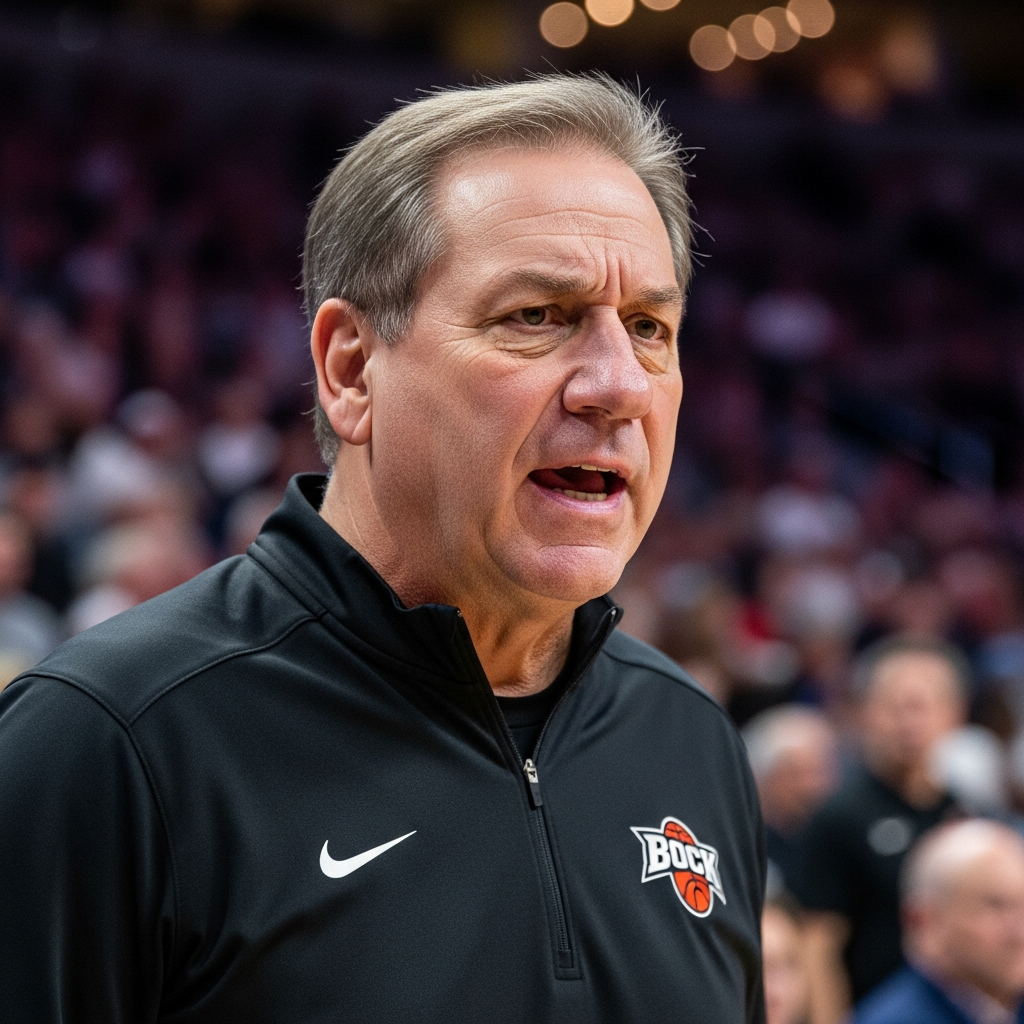
There is a predictable rhythm to the aftermath of a season-ending loss in the NCAA Tournament. The buzzer sounds, the locker room devolves into a sanctuary of tear-stained jerseys, and the head coach is paraded before a firing squad of microphones to dissect the autopsy of a season. For coaches of a certain vintage, this grim ritual always comes with an inevitable, lingering inquiry: Is this the end?
Following the Michigan State Spartans’ hard-fought exit in the Sweet 16 this past Friday, the media vultures circled Tom Izzo. At 69 years old, with a Hall of Fame resume firmly secured and a national championship ring already in his vault, the question of retirement wasn’t entirely unwarranted. Yet, Izzo’s response was a masterclass in blunt, unapologetic realism. He didn’t offer a philosophical monologue or a coy deflection. Instead, he shot back with seven words that perfectly encapsulate his enduring ethos: “Why? What the hell am I going to do?”
The Anatomy of a Foolish Question
In our modern sports zeitgeist, we are obsessed with the finish line. We demand perfectly curated exits, farewell tours, and tearful press conferences. But asking Tom Izzo about retirement fundamentally misunderstands the man’s psychological architecture. Izzo is not a CEO looking to cash out his stock options and retreat to a gated community in Florida. He is a lifer—a monolithic figure whose entire existence is inextricably tied to the squeak of sneakers on hardwood and the chaotic crucible of the Big Ten.
When Izzo asks, “What the hell am I going to do?”, it is not a rhetorical flourish. It is a genuine, existential query. Golf? Too slow. Broadcasting? Too detached. For a man who has spent nearly three decades pacing the sidelines in East Lansing, the prospect of waking up in October without a practice schedule to obsess over is a fate worse than a first-round exit. The friction, the stress, the late-night film sessions—these are not occupational hazards for Tom Izzo. They are his oxygen.
A Coach Out of Time, Yet Perfectly in Place
College athletics has mutated into an unrecognizable landscape over the past five years. The advent of Name, Image, and Likeness (NIL) deals and the unmitigated frenzy of the transfer portal have fundamentally altered the job description of an NCAA head coach. It is no longer just about drawing up baseline out-of-bounds plays; it is about roster retention, salary cap management, and perpetual recruiting.
This seismic shift has driven a mass exodus of the sport’s old guard. Mike Krzyzewski took his final bow. Roy Williams walked away. Jay Wright abruptly decided he had seen enough. Even over in football, Nick Saban recently laid down his sword, citing the shifting sands of the collegiate model.
Yet, Izzo remains. He has certainly voiced his frustrations with the modern era, occasionally sounding like a traditionalist mourning the loss of the game he once knew. But unlike his peers who chose to exit stage left, Izzo refuses to surrender the theater. His defiance in the face of the Sweet 16 loss proves that he is not simply hanging on for nostalgia’s sake; he is actively choosing to wage war in an era that was not designed for him. That resilience is precisely what makes his continued presence so vital. College basketball desperately needs a bridge to its storied past, and Izzo is the strongest pillar left standing.
The Spartan Identity is Far From Finished
Let us not forget the context of this so-called “disappointing” exit. Michigan State reached the second weekend of the NCAA Tournament—a benchmark that 95 percent of Division I programs would consider a wildly successful campaign. Izzo’s system, built on rebounding, physical defense, and staggering offensive execution, still wins at the highest levels. The Spartans did not look like a team led by a coach who had lost his fastball; they looked like a dangerous, battle-tested unit that simply ran into a buzzsaw on a Friday night.
The narrative that a coach must step down simply because the calendar dictates it is a lazy trope. Izzo’s fire is visibly undiminished. He still works the referees with the ferocity of a junior varsity coach trying to make a name for himself. He still demands absolute accountability from his players, refusing to coddle them in an era where athletes hold unprecedented leverage.
The Whistle Stays Around His Neck
As the offseason begins in East Lansing, the Spartans will undoubtedly face the same roster turnover and recruiting battles as every other elite program. But they will do so with a distinct advantage: a head coach who knows exactly who he is and exactly where he belongs.
Tom Izzo is not walking away because there is nowhere else he would rather be. The heartbreak of a Sweet 16 loss isn’t a signal to pack it in; for a competitor of his caliber, it is the exact fuel required to start the engine for next season. Until the day comes when he genuinely finds something better to do with his time—and let’s be honest, he won’t—the rest of the college basketball world better prepare to deal with him.
Original Reporting: www.espn.com