The global fashion industry has long been intoxicated by the myth of the lone creative genius. We idolize the creative directors who take their fleeting bows at the end of a runway show, yet we rarely acknowledge the hidden architectures that bring their wildest sartorial visions to life. For half a century, Staff International has operated as that vital, unseen architecture. Now, as the manufacturing powerhouse behind some of the world’s most avant-garde labels celebrates its 50th anniversary, the OTB-owned company is finally stepping out from behind the seams.
To mark this golden jubilee, Staff International has unveiled a sweeping retrospective exhibition, offering an unprecedented look into its sprawling archives. But this milestone is far more than a nostalgic victory lap. Under the sharp, forward-looking guidance of OTB founder and chairman Renzo Rosso, the company is using its 50th year to launch an expanded craftsmanship program—a strategic masterstroke designed to secure the future of Italy’s luxury production heritage.
An Archive of Unseen Architecture
Walking through the new retrospective is akin to reading the secret diary of modern luxury fashion. Founded in 1976 and acquired by Renzo Rosso’s OTB Group in 2000, Staff International has been the silent engine room for brands like Maison Margiela, Marni, Jil Sander, and Diesel. The exhibition strips away the glossy veneer of retail marketing to expose the raw, uncompromising grit of high-end garment engineering.
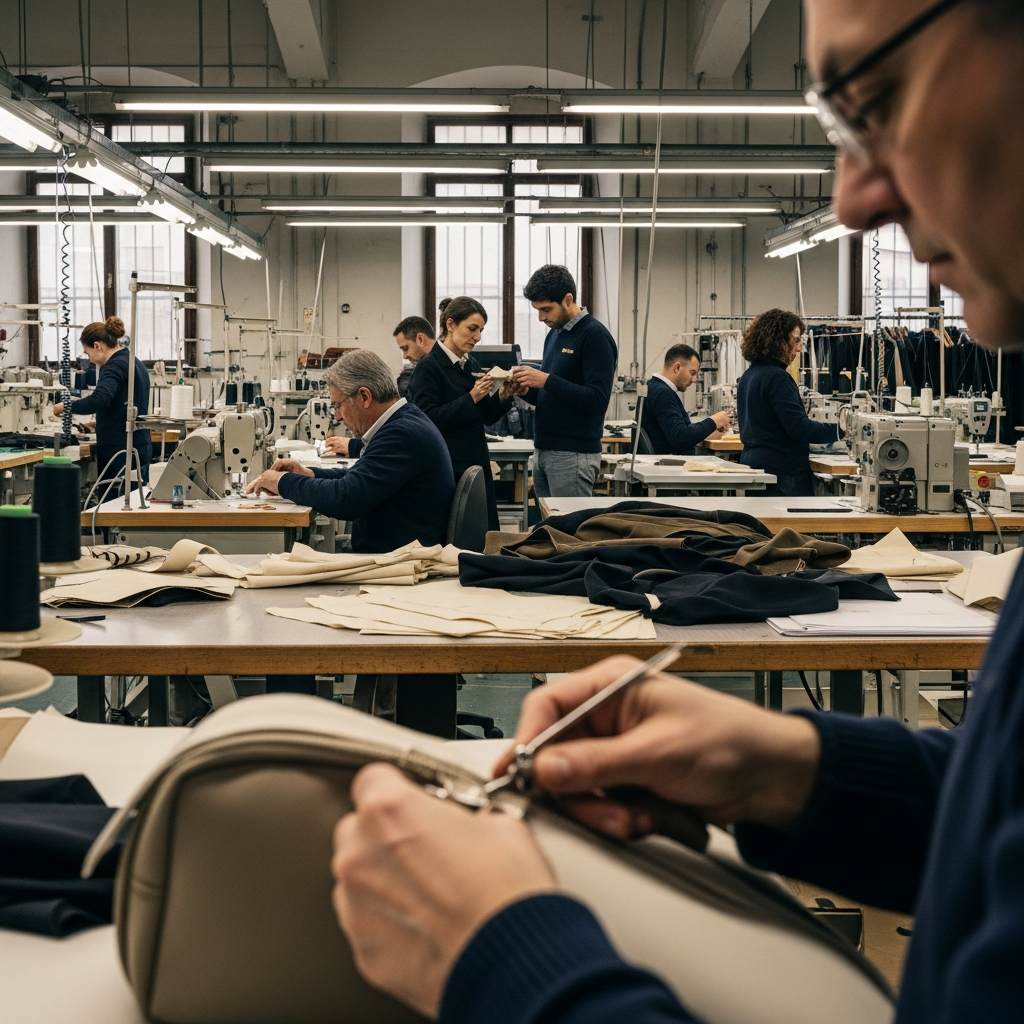
Here, the narrative shifts from the designer’s sketchpad to the pattern-cutter’s table. The retrospective highlights fifty years of material innovation, complex tailoring, and the meticulous problem-solving required to translate abstract concepts into wearable art. It is a powerful visual argument that true luxury is not born in a boardroom; it is forged by the calloused hands of master artisans who understand the exact tension required to stitch a perfect lapel.
Renzo Rosso’s Mandate for “Made in Italy”
While the exhibition honors the ghosts of fashion past, Renzo Rosso’s focus remains fiercely fixed on the horizon. In a landscape increasingly dominated by automated supply chains and the relentless churn of fast fashion, the OTB chairman understands that Italy’s reign as the capital of luxury manufacturing faces an existential threat: the aging out of its master craftspeople.
Rosso has made it clear that celebrating history is futile if you do not actively protect its future. His recent remarks underscore a critical industry mandate: the absolute necessity of nurturing the next generation of artisans. The “Made in Italy” label is not merely a geographic indicator; it is a globally recognized promise of unparalleled quality. Without the human hands capable of fulfilling that promise, the cachet of Italian luxury evaporates.
The Antidote to a Dying Art: The Craftsmanship Program
This brings us to the most vital component of Staff International’s anniversary announcements: the significant expansion of its craftsmanship program. In an era where younger generations are routinely pushed toward digital and corporate careers, traditional artisanal trades have suffered a severe talent drought. Staff International is tackling this crisis head-on by transforming its factory floors into elite academies.
The expanded initiative is designed to bridge the widening chasm between retiring masters and aspiring apprentices. By offering comprehensive, hands-on training in pattern making, prototyping, and fine tailoring, the program does more than just teach a trade—it elevates the perception of manual labor back to its rightful status as a highly respected, lucrative art form. Students are immersed in the exact techniques that have defined Italian luxury for centuries, while also being trained on the cutting-edge technologies that will define its future.
Securing the Next Half-Century
What Staff International is doing at 50 is a blueprint that the rest of the luxury sector must urgently study. It is no longer enough for conglomerates to simply acquire heritage brands; they must actively invest in the localized ecosystems of talent that keep those brands breathing.
By opening its archives to the public and opening its doors to a new generation of makers, Staff International is proving that the ultimate luxury is longevity. As Renzo Rosso and his team look toward the next fifty years, their message to the industry is unequivocal: the survival of high fashion does not depend on the next viral runway moment, but on the quiet, steady hum of the sewing machine, and the young hands learning to guide it.
Original Reporting: wwd.com