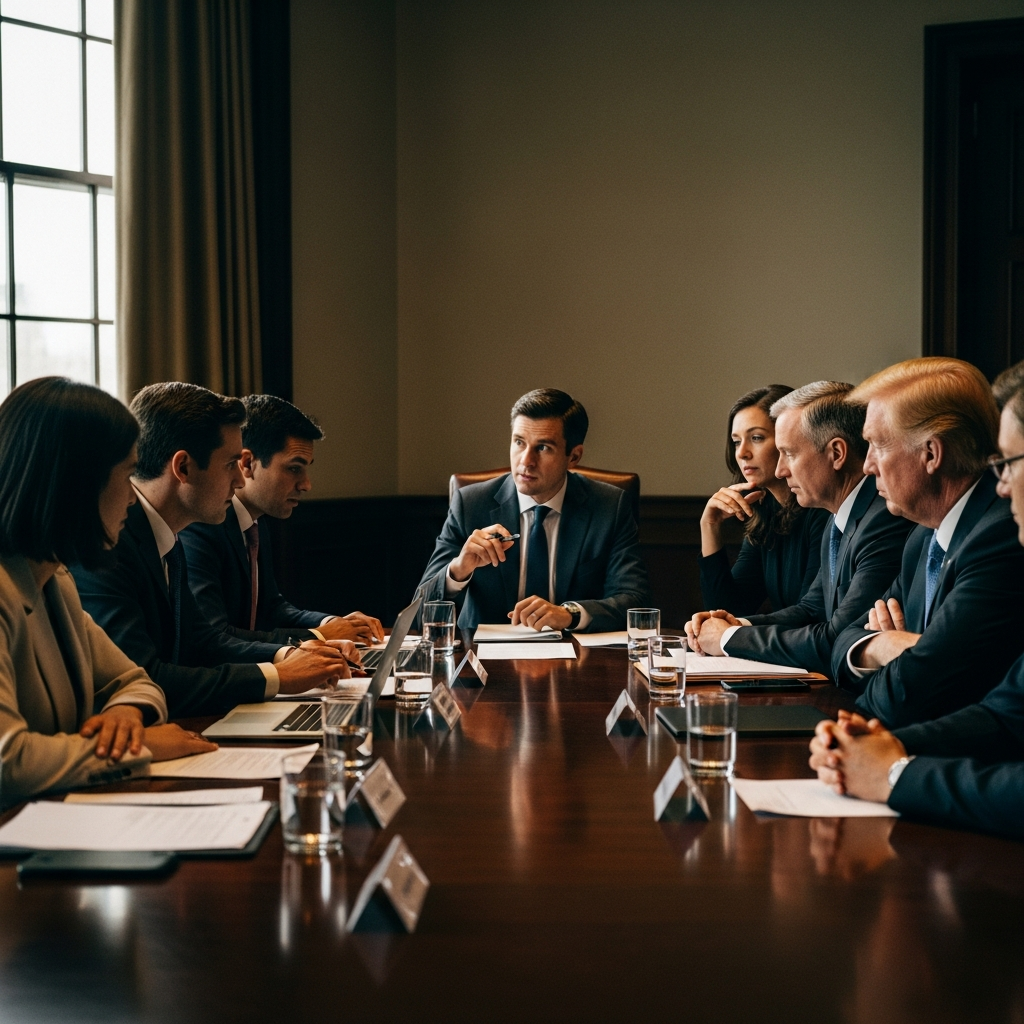
The fault line between Palo Alto and the Potomac just ruptured. In a stunning legal rebuke that has sent shockwaves through both the tech industry and the Pentagon, a federal judge has granted AI powerhouse Anthropic an injunction against the Trump administration. The ruling orders the immediate rescission of aggressive restrictions placed on the company by the Defense Department—a move that fundamentally alters the balance of power between Silicon Valley innovators and Washington’s defense establishment.
For months, the intersection of artificial intelligence and national security has felt less like a partnership and more like a hostage negotiation. The Trump administration’s attempt to place heavy-handed guardrails on Anthropic was billed as a necessary defense maneuver. Instead, it ignited a fierce legal battle over executive overreach, algorithmic sovereignty, and the future of American technological supremacy. Now, the courts have spoken, and the message is unequivocal: the government cannot arbitrarily throttle the architects of the AI revolution.
The Defense Department Saga Explained
To understand the gravity of this injunction, one must look at the escalating tensions that led to it. Anthropic, widely regarded as the industry’s conscience due to its foundational focus on “Constitutional AI” and safety, suddenly found itself in the regulatory crosshairs. The Defense Department, operating under directives from the Trump administration, imposed a series of stringent operational restrictions on the firm.
While the administration argued these mandates were vital for safeguarding national security and controlling the deployment of frontier models in defense contexts, the tech sector saw a darker motive. Industry insiders viewed the restrictions as a draconian attempt to force a leading AI lab into submission, bypassing standard legislative processes in favor of unilateral executive action. For a company that prides itself on transparent, safe AI development, the restrictions threatened not just their business model, but their foundational ethos.
Anthropic didn’t just issue a PR statement; they lawyered up and went on the offensive. Their argument was sharp and surgical: the administration’s restrictions were capricious, lacked due process, and ultimately threatened to stifle the very domestic innovation the government claims it wants to protect against foreign adversaries.
A Judicial Rebuke of Executive Overreach
The federal judge’s decision to grant the injunction is nothing short of a watershed moment. By ordering the Trump administration to rescind the restrictions, the judiciary has drawn a hard line in the sand regarding how far the executive branch can go in dictating the operational realities of private technology firms.
This ruling pierces the veil of the “national security” defense that administrations have historically used to strong-arm private enterprise. The court effectively declared that while the Defense Department has a mandate to protect the nation, it does not possess a blank check to handicap domestic tech companies without rigorous legal justification. For Anthropic, it is a massive vindication. For the Trump administration, it is a humiliating legal stumble that exposes the fragility of regulating cutting-edge technology through executive fiat rather than nuanced legislation.
What This Means for the AI Arms Race
The ripple effects of this injunction will be felt far beyond Anthropic’s San Francisco headquarters. Competitors like OpenAI, Google, and a myriad of defense-tech startups like Palantir and Anduril are watching this saga with bated breath. Up until now, there has been a lingering fear that the federal government could simply step in and commandeer or cripple an AI company’s roadmap under the guise of defense protocols.
This legal victory provides a critical layer of regulatory armor for the entire sector. Venture capitalists, who abhor uncertainty, will likely view this ruling as a stabilizing force in the market. It signals that the United States remains a jurisdiction where the rule of law protects innovation from sudden political whims. Furthermore, it forces the Defense Department to rethink its procurement and regulatory strategies. If the military wants access to the best AI in the world, it will have to collaborate with Silicon Valley as an equal partner, not dictate terms as an imperial overlord.
The Plumeo Verdict: A Precedent Set in Silicon
We are witnessing the awkward, often painful adolescence of AI regulation. The Trump administration’s clash with Anthropic highlights a fundamental misunderstanding in Washington: you cannot regulate exponential technologies using analog-era brute force. Artificial intelligence is not a traditional defense contractor; it is a fundamental shift in computing capability that requires an entirely new framework of governance.
Anthropic’s victory is a decisive win for the future of open, privately-driven technological advancement. However, this is merely the end of the first round. As AI models become exponentially more capable, the friction between national security imperatives and private enterprise will only intensify. For now, Anthropic has successfully defended its autonomy, proving that in the high-stakes game of algorithmic dominance, Silicon Valley still has the power to keep Washington in check.
Original Reporting: techcrunch.com