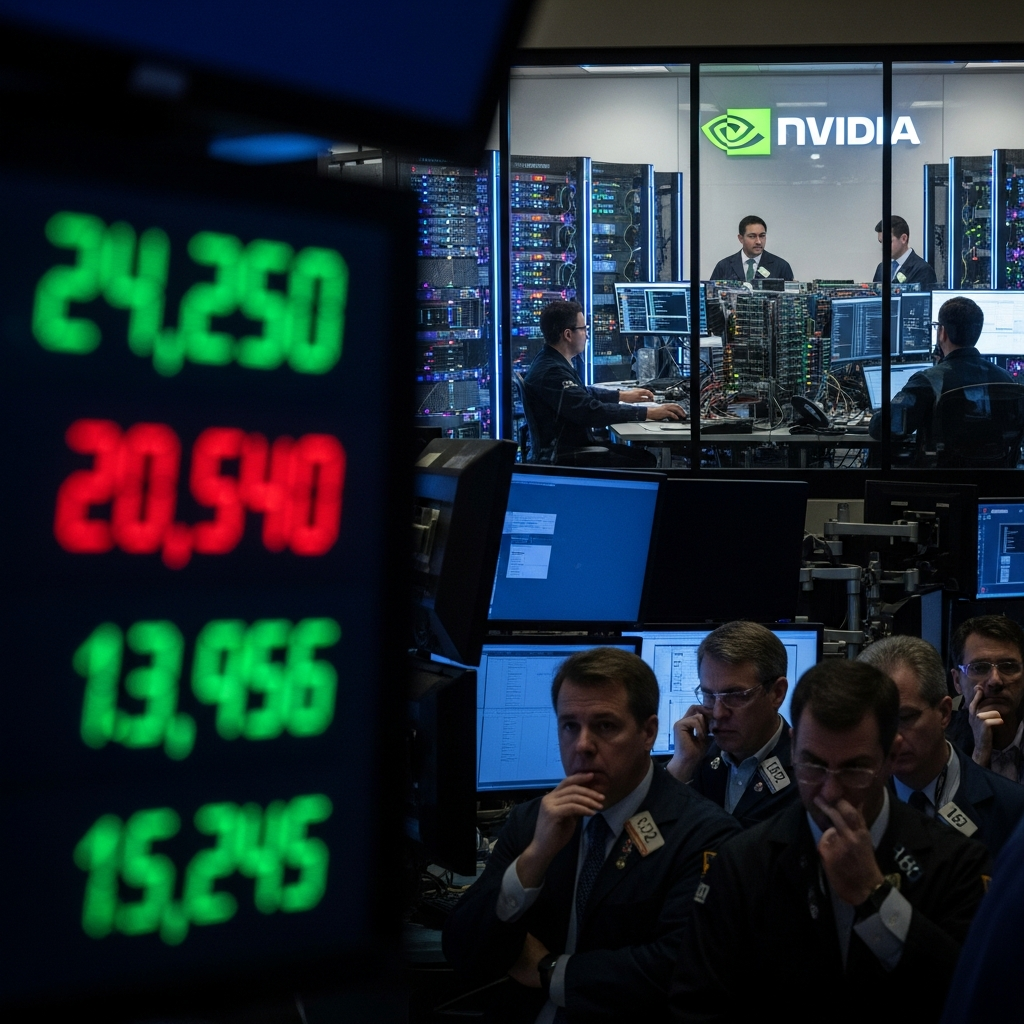
There was a palpable friction in the air following Nvidia’s latest blockbuster conference. On one side of the aisle sat the architects of the artificial intelligence revolution, mesmerized by the sheer computing horsepower being unveiled. On the other side sat Wall Street analysts, clutching their spreadsheets, quietly asking a question that threatens to derail the current market euphoria: Are we inside an AI bubble?
The financial sector’s lukewarm reaction to what should have been a triumphant victory lap for Nvidia reveals a fascinating schism. While the stock market demands immediate monetization and frets over capital expenditure, the actual tech industry remains completely unbothered. To understand why Wall Street yawned while Silicon Valley cheered, we have to look past the ticker tape and examine the foundational economics of the new internet.
The Wall Street Hangover: Chasing the Immediate ROI
Financial markets operate on a timeline of financial quarters, driven by an insatiable appetite for immediate return on investment. For the past year, investors have propelled Nvidia to unprecedented valuations, treating the semiconductor titan as the undisputed kingmaker of the AI boom. Yet, as the latest conference unfolded, the narrative on the trading floor began to shift from blind optimism to cautious skepticism.
Wall Street’s primary anxiety is rooted in the staggering capital expenditure required to sustain the AI ecosystem. Hyperscalers—the Googles, Metas, and Microsofts of the world—are pouring tens of billions of dollars into Nvidia’s hardware. Investors are looking at these towering costs and demanding to see the “killer app” that justifies a $40,000 microchip. Without a clear, immediate consumer revenue model that matches the scale of the infrastructure spend, the financial elite are drawing nervous parallels to the dot-com crash of 2000. They fear that if the software revenue doesn’t materialize fast enough, the hardware orders will eventually dry up, popping the so-called AI bubble.
The Silicon Valley Reality: Digital Real Estate
Pivot your gaze away from Manhattan and toward Silicon Valley, and the anxiety evaporates. Talk to the developers, the startup founders, and the enterprise engineers who actually attended the conference, and you will find zero panic. The tech industry views Wall Street’s bubble fears as a fundamental misunderstanding of what is actually happening.
To the tech ecosystem, buying Nvidia’s advanced processors isn’t a speculative gamble; it is the acquisition of digital real estate. You cannot build the high-rises of tomorrow if you do not own the bedrock today. The industry understands that artificial intelligence is not a singular product waiting to be monetized next quarter. It is a paradigm shift, akin to the rollout of broadband or the advent of mobile computing. The hyperscalers are not buying chips for immediate profit margins; they are buying them for existential survival. In the tech world, the only thing more expensive than overspending on AI infrastructure is being left behind entirely.
Jensen Huang’s Long Game
Nvidia CEO Jensen Huang’s keynote was a masterclass in long-term vision, entirely disconnected from the short-term anxieties of day traders. He didn’t pitch a quick financial fix; he pitched a new epoch of computing. By unveiling next-generation architecture and deeply integrated software ecosystems, Nvidia is cementing itself as the irreplaceable central nervous system of global tech.
The conference underscored that Nvidia is no longer just selling hardware. They are selling an entire proprietary ecosystem. The integration of their networking, software, and silicon creates a moat so deep that competitors will spend the next decade trying to swim across it. Wall Street may have wanted a quick stock pump, but Huang delivered a blueprint for decadal dominance. The industry insiders recognized this immediately, noting that the barrier to entry for viable AI competitors just became astronomically higher.
The Verdict: Betting Against the Architects
The disconnect between Wall Street and the tech sector is not a sign of impending doom; it is a classic clash of timelines. Financial analysts are paid to manage risk over the next twelve months. Technologists are paid to invent the next twelve years.
While the threat of a market correction is always a reality in high-growth sectors, labeling the current AI infrastructure build-out as a mere “bubble” deeply underestimates the utility of the technology being deployed. The chips being shipped today are actively training the models that will run global logistics, healthcare, and enterprise software tomorrow.
Wall Street may remain unconvinced, paralyzed by the ghosts of market crashes past. But as Nvidia’s conference proved, the people actually writing the code and building the platforms are not looking back. They are accelerating. And historically speaking, betting against the architects of a new computing era is the riskiest investment strategy of all.
Original Reporting: techcrunch.com