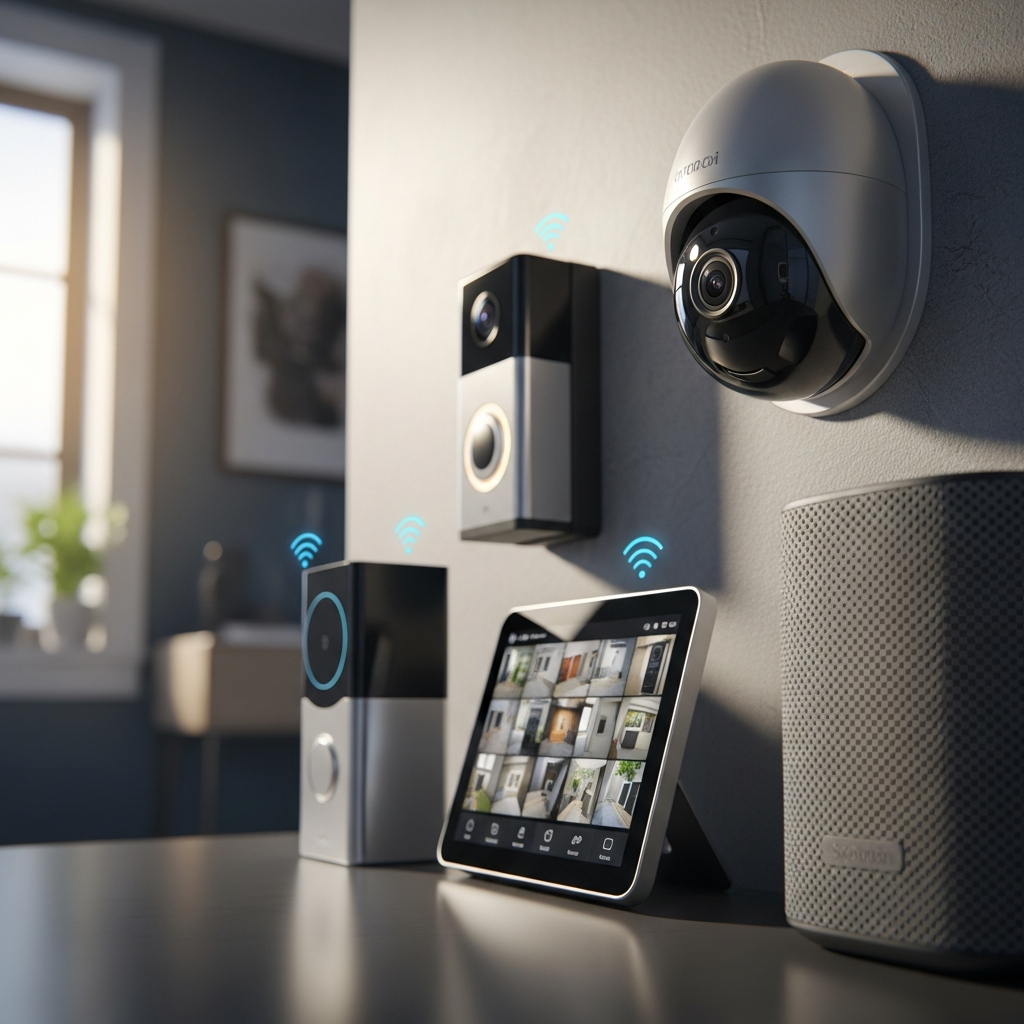
There is a glaring contradiction in modern home design: we spend months curating the perfect aesthetic, only to clutter our digital lives with a chaotic, fragmented mess of smart home applications. You might have a Nest doorbell greeting your guests, an Arlo camera monitoring the driveway, and an Eve cam keeping a watchful eye on the nursery. Until now, getting these premium devices to communicate was an exercise in futility, requiring a patchwork of third-party bridges or an uneasy reliance on a single, restrictive tech ecosystem.
That era of digital friction is effectively over. The architects behind Matter—the universal smart home standard—have just rolled out a transformative update specifically targeting camera interoperability. By completely overhauling how video streaming is handled across different platforms, Matter is tearing down the walled gardens of Apple, Google, and Amazon. For the discerning homeowner, this is the master key to a truly unified, uncompromising security ecosystem. Here is how to navigate this update and transform your fragmented cameras into a singular, seamless network.
The Death of the Walled Garden
To understand the gravity of this update, you have to understand the artificial limitations tech giants placed on your hardware. Historically, choosing a smart home camera meant choosing a side. If you bought into Apple HomeKit, you were locked out of some of the best hardware available exclusively on Google Home. If you wanted to view a live feed on your Amazon Echo Show, you had to ensure your camera brand had signed a specific, proprietary agreement with Amazon.
This forced consumers to compromise, often sacrificing hardware quality just to maintain software compatibility. The new Matter update eradicates this compromise. By standardizing the streaming protocols, Matter ensures that a camera’s video feed can be interpreted and displayed natively by any certified platform. The update drastically reduces latency, improves resolution handoffs, and ensures that a camera stream remains stable whether it is being pulled up on an iPad, an Android smartphone, or a smart television.
How to Prepare Your Ecosystem for the Matter Upgrade
Taking advantage of this universal standard requires a brief but essential audit of your current smart home infrastructure. You do not need to replace your entire security array, but you do need to align your hardware to the new Matter specifications. Here is how to execute the transition flawlessly.
First, update your border routers. Matter relies heavily on Thread, a low-power mesh networking technology. Your Apple TV 4K, HomePod mini, Google Nest Hub, or Amazon Echo acts as the brain—the border router—of this operation. Navigate into the native settings of these hub devices and force a firmware update. The new camera streaming protocols require the latest software architecture to decode the universal video signals properly.
Second, audit your camera firmware. Manufacturers are currently rolling out over-the-air updates to make their existing hardware Matter-compliant. Open your individual camera applications—whether that is Ring, Wyze, or Logitech—and check for firmware pushes. In some cases, manufacturers are offering an opt-in beta for Matter integration. Enable it. This firmware translates your camera’s proprietary video feed into the universal language Matter uses.
How to Maximize Cross-Device Streaming
Once your firmware is aligned, the true power of the Matter update reveals itself in your daily routines. The immediate benefit is unified dashboarding. You can now pull every camera feed into a single application of your choosing. If you prefer the clean, minimalist interface of Apple Home, you can now populate it with Google Nest feeds without relying on complex, developer-level workarounds like Homebridge or Scrypted.
Beyond the dashboard, you must rethink your screen real estate. The Matter update allows for frictionless casting. Imagine sitting in your living room watching a film on an Apple TV. A motion sensor triggers on your driveway camera—a device manufactured by a completely different brand. Because both devices now speak Matter, the camera feed can instantly overlay onto your television screen via Apple HomeKit in real-time, with zero buffering delays.
Furthermore, this update unlocks advanced cross-platform automations. You can now use the motion sensor embedded in your previously isolated camera to trigger actions across your entire home. A person walking up to your third-party doorbell can now automatically turn on your Philips Hue porch lights and announce the visitor through your Sonos speakers, all orchestrated seamlessly through a single Matter-enabled routine.
The Plumeo Verdict: A Frictionless Future
True luxury is the absence of friction. For years, the smart home industry promised a futuristic, automated lifestyle but delivered a frustrating, fragmented reality. The latest Matter update is the course correction we have been waiting for. By forcing hardware manufacturers to play by a universal set of rules, the power is finally handed back to the homeowner. You are no longer restricted by brand loyalty or software compatibility. You are free to choose the absolute best cameras on the market, knowing they will integrate perfectly into your curated digital life.
Original Reporting: www.makeuseof.com