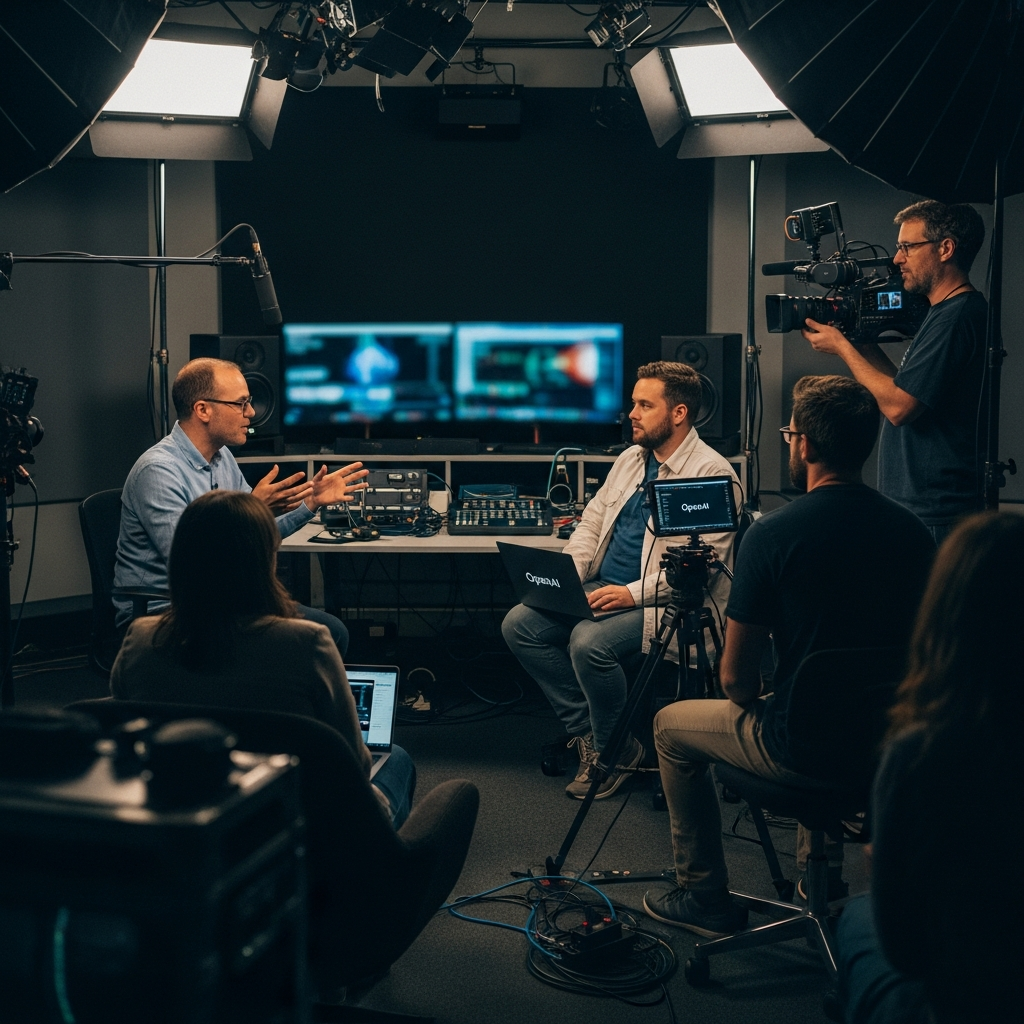
Sam Altman has never been one for small bets, but OpenAI’s latest acquisition proves the artificial intelligence juggernaut is playing a game far more complex than simply scaling language models. In a move that has left Silicon Valley insiders both baffled and intrigued, OpenAI has acquired the popular tech-focused talk show TBPN. The company casually framed the buyout as a “side quest,” assuring the public that the program will remain anchored in Los Angeles and operate with strict editorial independence.
Do not let the self-deprecating corporate rhetoric fool you. In the high-stakes arms race of the twenty-first century, a tech monopoly buying a media property is never just a side quest. It is a calculated deployment of soft power.
The Soft Power of the Algorithm
To understand the TBPN acquisition, we have to look past the code and examine the narrative. OpenAI is no longer just a research lab; it is a sprawling consumer brand whose products dictate the future of global labor, copyright law, and digital reality. Naturally, a company wielding that much societal influence needs a megaphone that feels organic, authoritative, and deeply embedded in the tech culture zeitgeist.
TBPN offers exactly that. As a recognized tech talk show, it commands an audience of early adopters, venture capitalists, and developers—the exact demographic OpenAI needs to keep in its corner as competitors like Anthropic and Google nip at its heels. By bringing a beloved media property under its umbrella, OpenAI secures a direct pipeline to the public consciousness. They are not just building the tools of tomorrow; they are buying the stage where tomorrow is debated.
The Myth of Editorial Independence
OpenAI was quick to issue the standard media-acquisition disclaimer: TBPN will remain editorially independent. We have heard this tune before. Jeff Bezos promised it when he bought The Washington Post; Marc Benioff echoed it when he purchased Time magazine. While outright censorship is rarely the strategy in these high-profile buyouts, the subtle gravity of ownership always alters the orbit of the coverage.
How aggressively will a talk show owned by OpenAI critique the ethical blind spots of generative AI? Will TBPN hosts feel empowered to grill Sam Altman on copyright infringement or the looming threat of artificial general intelligence (AGI)? True editorial independence is a beautiful concept, but human nature and corporate payrolls often complicate the execution. Even if OpenAI completely distances itself from the writers’ room, the mere optics of the acquisition will leave audiences scrutinizing every favorable segment for hidden bias.
The Los Angeles Equation
The geographic detail of this acquisition is perhaps its most telling feature. OpenAI explicitly stated that TBPN will stay in Los Angeles. This is not just a logistical concession to the show’s current staff; it is a strategic bridge into Hollywood.
With the recent unveiling of Sora, OpenAI’s hyper-realistic text-to-video model, the company has effectively put the entire entertainment industry on notice. Filmmakers, animators, and studio executives are terrified of what generative AI means for their livelihoods. By maintaining a physical and cultural footprint in LA through TBPN, OpenAI establishes a diplomatic outpost in the heart of the entertainment capital. It allows them to rub shoulders with the creative class, hosting conversations and shaping the narrative around AI integration in film and media, rather than being viewed solely as a hostile Silicon Valley invader.
Data, Distribution, and the Ultimate Moat
Beyond public relations, there is a colder, more technical utility to owning a talk show. High-quality, human-generated conversational data is the lifeblood of advanced language models. While an isolated talk show won’t train GPT-5 on its own, owning a multimedia production house gives OpenAI proprietary access to pristine audio, video, and transcript data. Furthermore, it offers a sandbox for live product integration. Imagine TBPN hosts utilizing real-time AI translation, interacting with sentient-sounding AI co-hosts, or generating live video assets mid-interview. The show becomes a high-end, weekly commercial for OpenAI’s enterprise capabilities.
Dismissing the TBPN acquisition as a “side quest” is a massive underestimation of OpenAI’s ambitions. We are witnessing the early stages of a tech conglomerate building a closed-loop ecosystem. They own the infrastructure, they own the intelligence, and now, they are starting to own the conversation. For the rest of the tech media landscape, the message is loud and clear: the AI giants are no longer just the subject of the news. They are the publishers.
Original Reporting: arstechnica.com