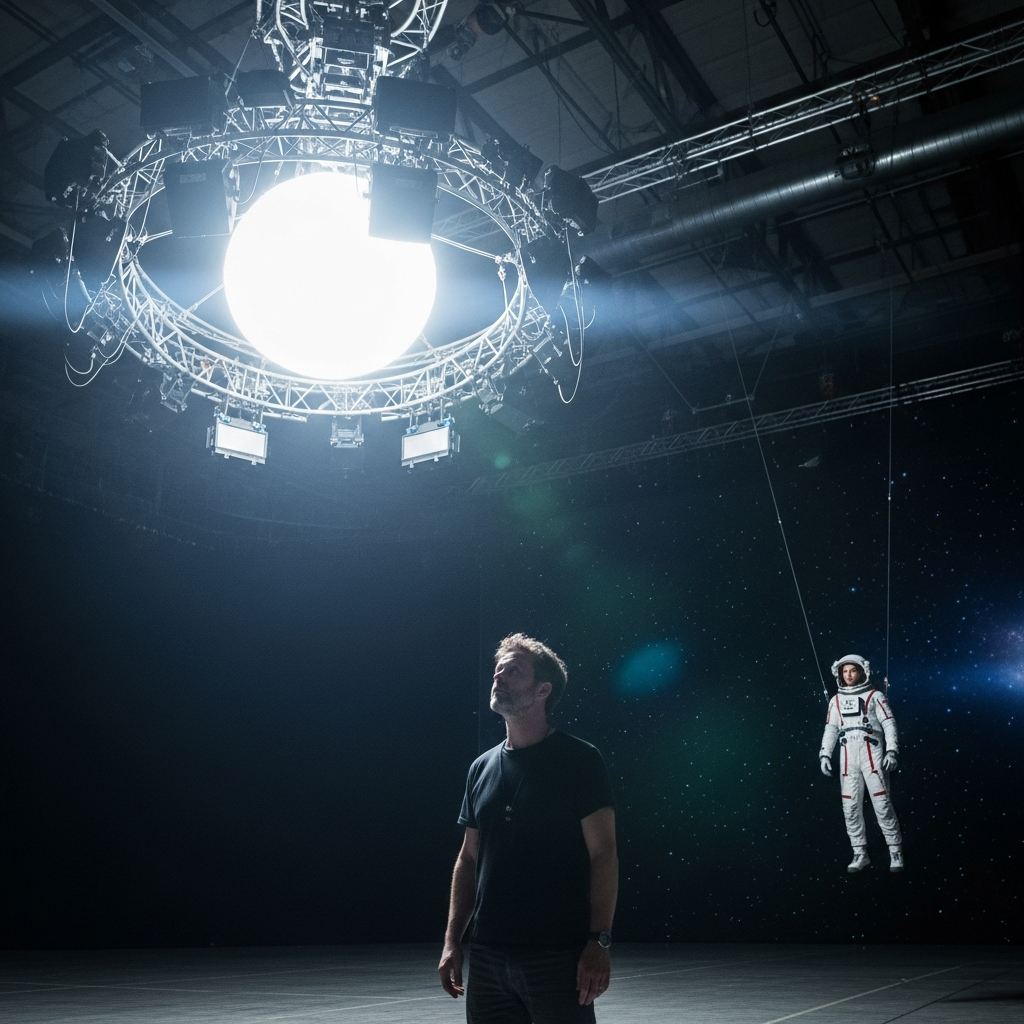
When a cinematographer whose resume boasts the brooding, rain-slicked shadows of The Batman, the sprawling, sun-scorched deserts of Dune, and the gritty rebellion of Rogue One declares a new project to be his ultimate trial, the industry stops to listen. Greig Fraser is not a man prone to hyperbole. Yet, the Oscar-winning maestro of modern lighting has officially labeled his latest endeavor, Project Hail Mary, as the “most challenging film I’ve ever done, by far.”
Based on the best-selling novel by Andy Weir, directed by the visionary duo Phil Lord and Chris Miller, and starring Ryan Gosling, Project Hail Mary is shaping up to be a cinematic monolith. But behind the A-list marquee lies a labyrinth of technical hurdles that are pushing the boundaries of contemporary filmmaking. At the center of this visual crucible? A breathtakingly complex sequence involving a tunnel, a lone astronaut, and the terrifying, unfiltered brilliance of a star.
The Gravity of the Challenge: Moving Beyond Arrakis and Gotham
To understand the weight of Fraser’s admission, one must look at his pedigree. Fraser has built a career on mastering the extremes of light and dark. He revolutionized the use of LED volume technology in The Mandalorian and painted Gotham City with a mesmerizing, bruised chiaroscuro. But Project Hail Mary demands a different kind of visual alchemy.
Andy Weir’s brand of science fiction—previously brought to the screen in Ridley Scott’s The Martian—is notoriously rooted in hard physics. There is no room for the fantastical, ambient lighting of a space opera. In Weir’s universe, space is an unforgiving void, and the light sources are harsh, directional, and scientifically precise. For Fraser, translating this rigorous scientific accuracy into a compelling visual language for the silver screen is a monumental task. The isolation of Ryan Gosling’s character, Ryland Grace, requires a camera that acts as both an objective observer and an intimate confidant, all while navigating the sterile, claustrophobic confines of a deep-space vessel.
Engineering a Star: The “Sun Effect” and the Tunnel Scene
The crux of Fraser’s recent revelation centers on a highly specific, grueling technical feat: creating a “Sun Effect” to light a critical tunnel scene. In the context of deep space, sunlight does not diffuse as it does through Earth’s atmosphere. It is a piercing, blindingly harsh beam of radiation that creates pitch-black shadows and blinding highlights.
Lighting a tunnel—a naturally enclosed, restrictive geometric space—with the simulated power of a star requires a profound disruption of traditional cinematography. Fraser could not rely on standard diffusion or softboxes to make the scene palatable. Instead, he had to engineer a lighting rig capable of mimicking the raw, unmitigated intensity of a celestial body, blasting it down a corridor while ensuring the exposure didn’t entirely blow out Gosling’s performance.
This “Sun Effect” is more than just a technical parlor trick; it is a narrative device. The harshness of the light serves as a constant, glaring reminder of the protagonist’s proximity to total annihilation and the vast, deadly scale of the cosmos outside his ship. By conquering the tunnel scene, Fraser is effectively weaponizing light, turning the sun itself into an active, imposing character within the film.
The Gosling Factor and the Lord-Miller Pivot
The visual demands of Project Hail Mary are further complicated by the unique creative cocktail of its team. Directors Phil Lord and Chris Miller are celebrated for their subversive, kinetic energy in films like Spider-Man: Into the Spider-Verse and The Lego Movie. Transitioning into the realm of hard, survivalist sci-fi is a massive pivot for the duo. By bringing Fraser on board, they have anchored their vibrant directorial instincts with a cinematographer known for intense, atmospheric realism.
Then there is Ryan Gosling. Fresh off a run of highly stylized, colorful performances, Gosling returns to the quiet, introspective isolation he perfected in First Man. Fraser’s lens must capture the micro-expressions of a man tasked with saving humanity, illuminated by the very stars he is trying to navigate. The synergy between Gosling’s nuanced acting and Fraser’s unforgiving, high-contrast lighting will likely dictate the emotional resonance of the entire film.
A New Benchmark for Sci-Fi Cinema
When a master of the craft is pushed to his absolute limits, the results are rarely anything short of spectacular. Fraser’s struggle with the “Sun Effect” and the claustrophobic vastness of Project Hail Mary signals that we are not just getting another space movie. We are about to witness an evolution in how deep space is rendered on film.
If Fraser has indeed solved the riddle of bringing the terrifying, blinding reality of a star into the confines of a soundstage tunnel, Project Hail Mary will not merely be an adaptation of a beloved book. It will stand as a masterclass in visual storytelling, cementing Greig Fraser’s status as the most daring cinematographer working in Hollywood today.
Original Reporting: variety.com