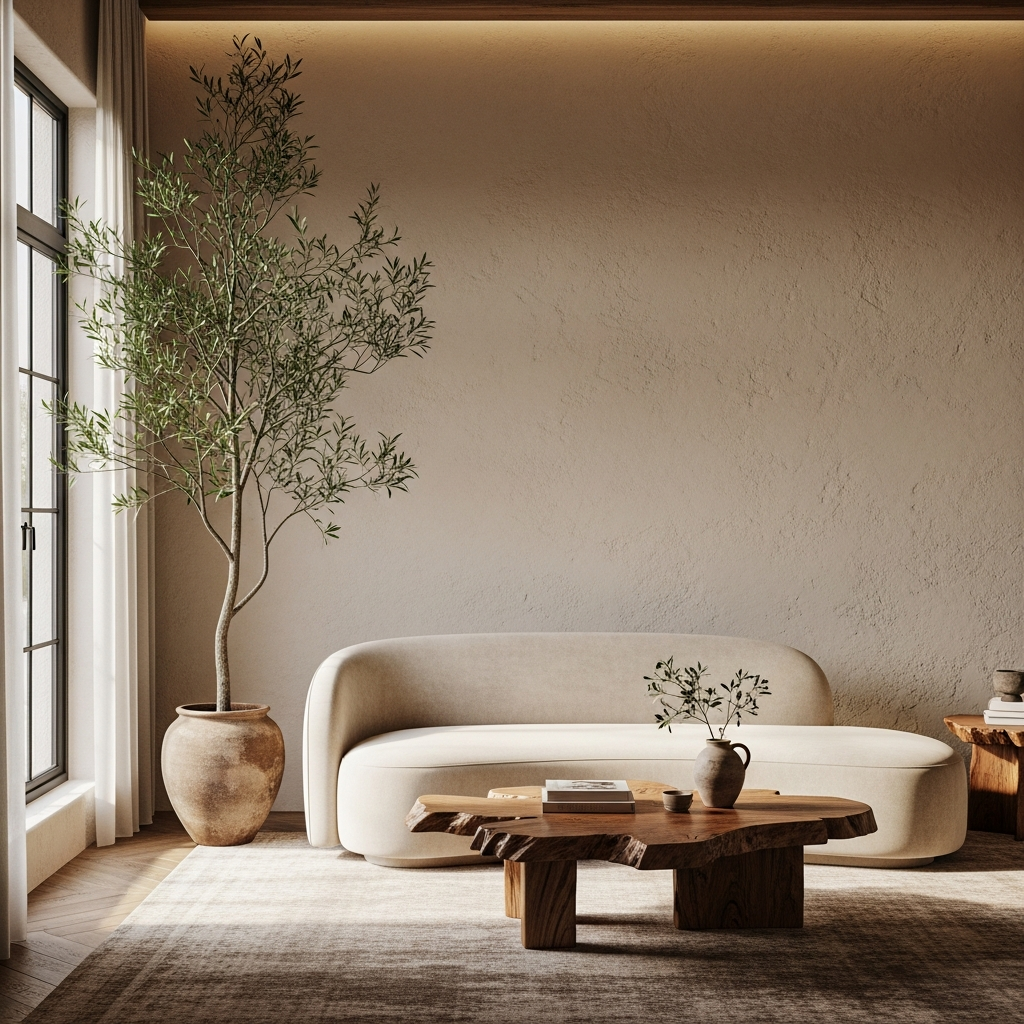
The Wabi-Sabi aesthetic—finding beauty in imperfection—is completely dominating high-end interior design this year. It firmly rejects the sterile, clinical look of 2010s modernism in favor of organic shapes, raw textures, and an undeniable sense of grounded warmth. This isn’t just a design trend; it is a philosophy that transforms a standard living room into a sanctuary of calm.
Key Elements of the Wabi-Sabi Space:
1. Texture Over Flat Color
The foundation of this look requires ditching standard flat-matte paint. Instead, high-end designers are exclusively utilizing Roman clay, limewash, or microcement treatments. These finishes bounce natural light unevenly across the room, creating a subtle, moody depth that changes as the sun moves throughout the day.
2. Organic, Asymmetrical Shapes
Sharp, aggressive 90-degree angles are out. The Wabi-Sabi aesthetic demands curved, low-profile cream sofas that invite conversation rather than rigid posture. Complement these pieces with asymmetrical raw wood coffee tables or heavily textured stone plinths that look carved directly from the earth.
3. Bringing Nature Indoors
A true Wabi-Sabi space is never complete without a living element. Large, sculptural indoor trees—specifically older Olive trees with gnarled trunks or towering Ficus Audreys—are the ultimate status symbol. They must be planted in raw, unglazed terracotta or weathered ceramic pots to maintain the earthy integrity of the room.
Curated by the Plumeo Editorial Team. Explore more aesthetic inspiration in our Pinterest hub.