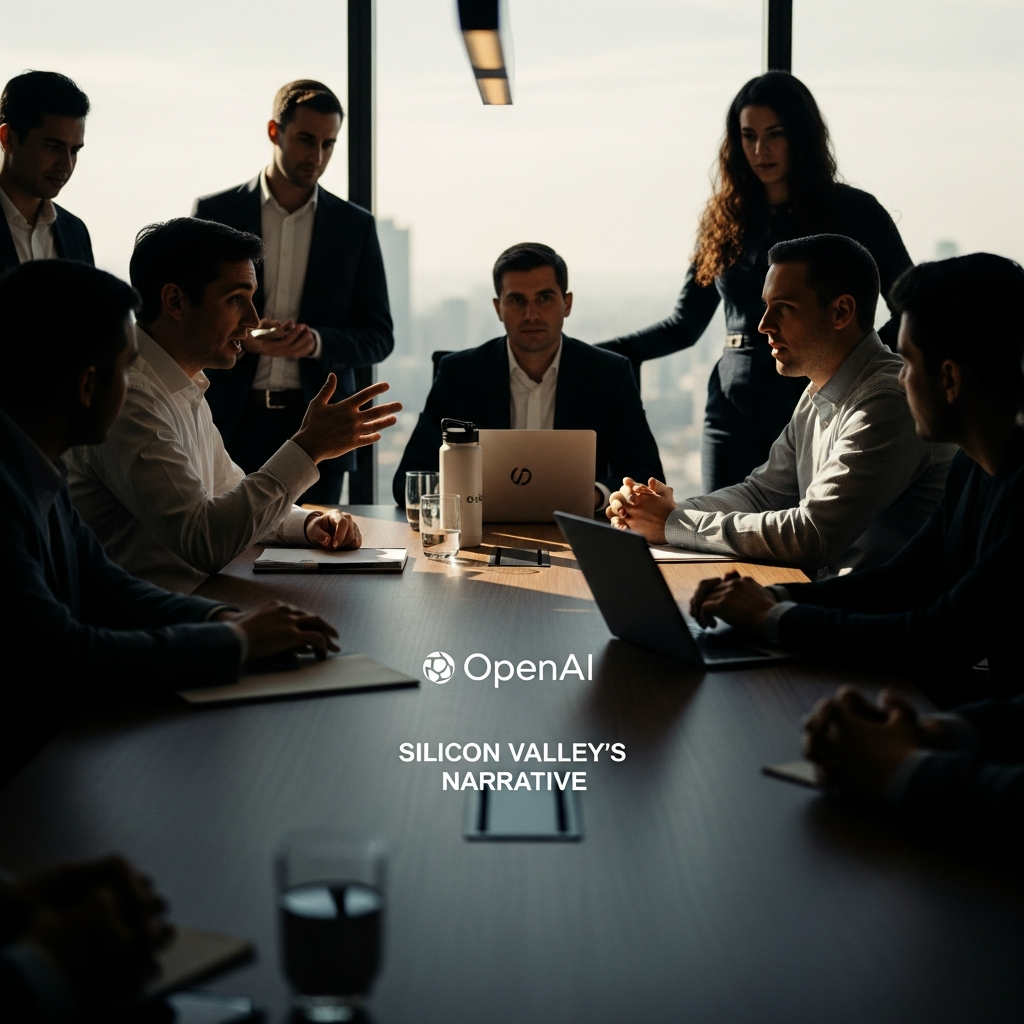
Silicon Valley has a new favorite currency, and it isn’t code, compute, or even capital. It is the narrative. In a move that has sent quiet shockwaves through both the tech and media establishments, OpenAI has officially acquired TBPN, the buzzy, founder-led business talk show that has quietly become the definitive watering hole for the tech elite. But if you think the world’s most powerful artificial intelligence company is simply looking to get into the podcasting business, you are missing the forest for the trees.
This is not a media acquisition. It is a masterclass in modern lobbying, soft power, and narrative architecture.
The Illusion of Independence
According to the official corporate line, TBPN will continue to operate independently. It will maintain the raw, unfiltered, founder-to-founder ethos that transformed it from a niche audio experiment into a cult-favorite juggernaut. Listeners tune in precisely because TBPN bypasses the traditional tech press, offering a sanctuary where builders can pontificate on market dynamics, venture capital, and technological accelerationism without the friction of adversarial journalism.
OpenAI understands that the value of TBPN lies entirely in its authenticity. To strip the show of its idiosyncratic voice would be to destroy the very asset they just purchased. However, true editorial independence is a fragile concept when your parent company is the architect of the next industrial revolution. By bringing TBPN in-house, OpenAI isn’t looking to dictate the daily talking points. Instead, they are securing the perimeter. They are ensuring that the most influential megaphone in Silicon Valley is fundamentally aligned with the techno-optimist worldview that OpenAI requires to survive the coming regulatory winter.
The Chris Lehane Factor: Politics Disguised as Podcasting
The smoking gun of this acquisition isn’t the price tag or the press release—it is the oversight structure. TBPN will report directly to Chris Lehane, OpenAI’s chief political operative. For the uninitiated, Lehane is not a media executive. He is a hardened political strategist, famously dubbed the “Master of Disaster” during his tenure in the Clinton White House, who later architected Airbnb’s bare-knuckle regulatory playbook.
Why is a heavyweight political fixer overseeing a business talk show? Because in the era of artificial intelligence, media and politics are entirely indistinguishable.
OpenAI is currently navigating an unprecedented labyrinth of global scrutiny. The FTC is circling, the European Union is drafting draconian AI acts, and copyright lawsuits from legacy publishers are piling up by the hour. Lehane knows better than anyone that you do not win regulatory battles in courtrooms alone; you win them in the court of public opinion. At Airbnb, Lehane mobilized hosts into a formidable political constituency. At OpenAI, he is poised to use TBPN to mobilize the tech ecosystem—founders, developers, and venture capitalists—into a unified front that views any restriction on AI as an assault on American innovation.
The New Big Tech Playbook: Own the Printing Press
We are witnessing the final death throes of the traditional tech PR strategy. For decades, Silicon Valley relied on pitching stories to legacy publications, hoping for favorable coverage. Today, the strategy is much simpler: buy the printing press.
We saw the genesis of this trend when Andreessen Horowitz launched its own media properties to bypass journalists. We saw it reach its zenith when Elon Musk purchased Twitter to control the global town square. Now, Sam Altman and OpenAI are executing a highly targeted variation of this playbook. By acquiring TBPN, OpenAI captures the exact demographic that matters most to their bottom line. They aren’t trying to reach the average consumer; they are speaking directly to the capital allocators and enterprise architects who will ultimately integrate OpenAI’s models into the fabric of the global economy.
The Post-Media Reality
As we move deeper into the AI era, the battle lines are being redrawn. The acquisition of TBPN proves that OpenAI recognizes its greatest existential threat isn’t a rival language model from Google or Anthropic. Its greatest threat is a hostile public narrative that forces the hand of lawmakers.
By bringing Silicon Valley’s favorite echo chamber under the umbrella of its chief political operative, OpenAI has executed a brilliant, defensive maneuver. They have secured a direct, unfiltered pipeline to the minds of the tech elite. TBPN may retain its original branding, its charismatic hosts, and its conversational flair, but make no mistake: the show is now a vital organ within OpenAI’s political apparatus. In the high-stakes arms race for artificial general intelligence, controlling the code is only half the battle. You also have to control the conversation.
Original Reporting: techcrunch.com