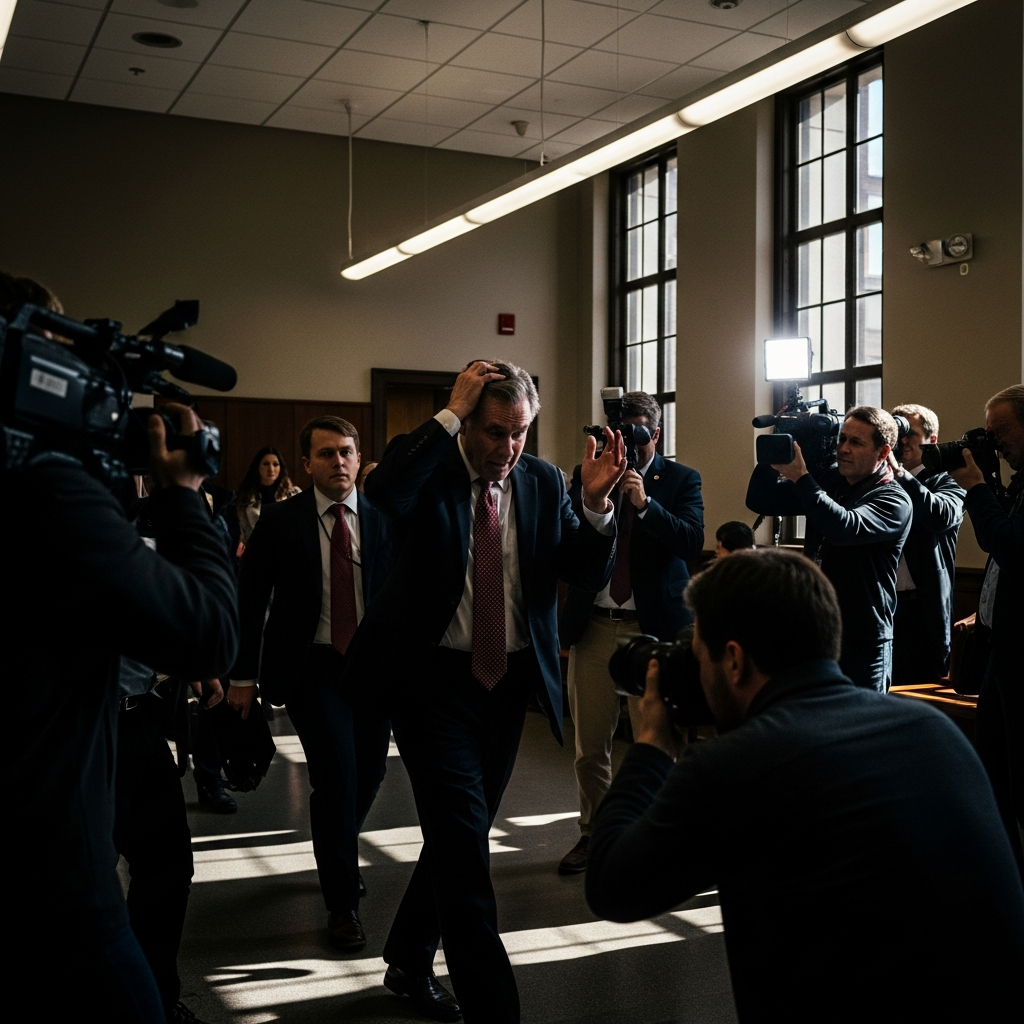
There are moments in federal courtrooms that immediately enter the annals of legal infamy. Usually, they involve a brilliant cross-examination or a stunning piece of newly unearthed evidence. But this week, the defining moment of the government’s attempt to blacklist one of the world’s most critical artificial intelligence companies came down to three staggering words uttered by the defense establishment: “I don’t know.”
When pressed by a federal judge to justify why the incoming administration—specifically the Donald Trump and Pete Hegseth camp—attempted to unilaterally blacklist Anthropic, the so-called Department of War had absolutely no substantive answer. The judge’s ruling was swift, brutal, and unequivocal: neither Trump nor Hegseth possessed the executive or statutory authority to ban the AI darling by fiat.
For Silicon Valley, the ruling is a massive sigh of relief. For the political operatives attempting to flex their muscles over the tech sector, it is a humiliating reality check. But for those of us watching the intersection of national security and artificial intelligence, it is a glaring red flag about the chaotic state of America’s tech policy.
A Solution in Search of a Problem
To understand the sheer absurdity of this attempted blacklist, one must look at the target. Anthropic is not a rogue state-backed hacker syndicate. It is a San Francisco-based heavyweight, founded by former OpenAI researchers, that has built its entire brand on “Constitutional AI” and safety-first development. Their flagship model, Claude, is widely regarded as one of the most secure, capable, and ethically constrained large language models on the market.
Yet, the Trump-Hegseth faction seemingly threw a dart at the Silicon Valley board and decided Anthropic was a national security threat. Why? The government’s lawyers couldn’t say. The failure of the defense apparatus to provide even a classified justification reveals a deeply unsettling truth: this wasn’t a calculated national security maneuver. It was political theater.
Blacklisting a domestic technology vanguard without citing a single breach of protocol, data leak, or espionage tie isn’t just arbitrary; it is actively detrimental to American interests. In a geopolitical climate where AI supremacy is the new nuclear arms race, kneecapping your own most responsible players is an exercise in spectacular self-sabotage.
The Limits of Executive Fiat
The judge’s ruling serves as a vital constitutional boundary line. The tech industry has grown increasingly anxious about the weaponization of the federal government against private enterprise. The premise that a defense secretary nominee or an incoming president could simply draw up an enemies list and choke off a multibillion-dollar enterprise from federal contracts and public use is a chilling prospect.
By declaring that the administration had “no authority” to order the blacklisting, the court effectively dismantled the idea that the Department of Defense can operate as a shadow regulator of the tech industry. National security is a vital imperative, but it is not a blank check to bypass due process. If the government wants to regulate artificial intelligence, it must do so through legislation, clear compliance frameworks, and transparent oversight—not through capricious bans dictated from a podium.
Silicon Valley Exhales, But For How Long?
While the boardroom at Anthropic is likely celebrating a massive legal victory, the broader tech ecosystem remains on high alert. This lawsuit was a stress test for the incoming administration’s relationship with Big Tech, and the results are volatile.
Founders and venture capitalists are now forced to factor arbitrary political retaliation into their risk models. If a company that literally champions AI safety can be targeted for a blacklist without a shred of evidence, who is safe? OpenAI? Google DeepMind? The open-source community?
The “I don’t know” defense offered by the government is emblematic of a broader intellectual void in Washington regarding emerging technologies. We are witnessing a political class that desperately wants to control the narrative around artificial intelligence, yet fundamentally misunderstands the architecture of the industry it seeks to dominate.
The Real AI Cold War
America cannot afford to treat its leading innovators as adversaries. The true threats to national security are not residing in the corporate offices of Anthropic; they are being trained in state-sponsored server farms in Beijing and Moscow. If the United States wants to maintain its tenuous grip on global AI dominance, the defense establishment must partner with Silicon Valley, not wage a baseless war against it.
The collapse of the Anthropic blacklist is a victory for the rule of law and a triumph for technological progress. But it also serves as a stark warning. The next time the government tries to shut down an American innovator, they had better come to court with a lot more than “I don’t know.”
Original Reporting: arstechnica.com