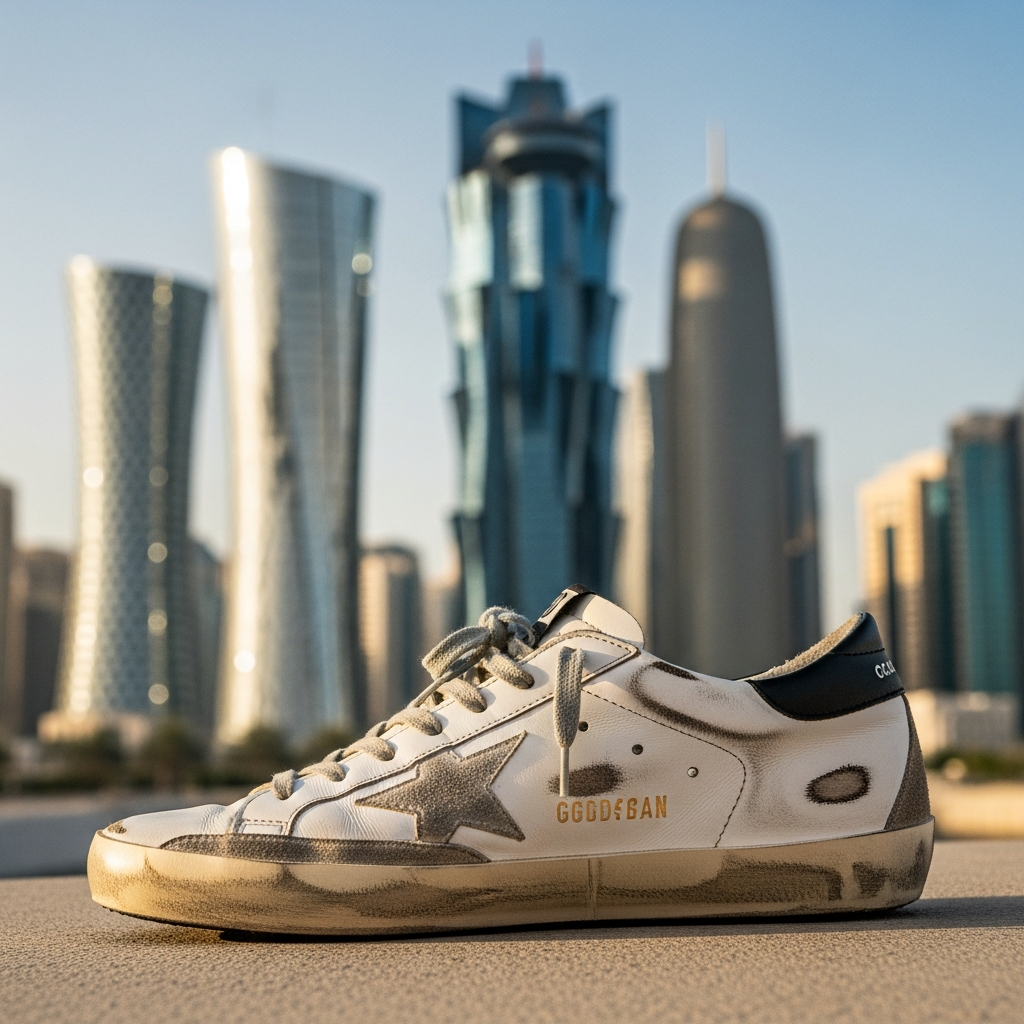
There is a distinct, almost poetic irony in the fact that a pair of sneakers—meticulously engineered to look like they’ve survived a grueling season on the pavement—is currently at the center of a high-stakes financial negotiation with one of the wealthiest sovereign funds on the planet. According to recent reports, Italian luxury brand Golden Goose is in advanced talks to sell a 10 percent minority stake to the Qatar Investment Authority (QIA).
For the uninitiated, Golden Goose is the purveyor of the ubiquitous, star-emblazoned leather sneakers that dominate the sidewalks of SoHo, Le Marais, and Milan. But for those of us watching the business of fashion, this potential acquisition is about far more than premium footwear. It is a calculated power play that underscores the shifting geography of luxury capital and the unyielding resilience of the high-end streetwear market.
The Gulf’s Growing Appetite for European Heritage
The Qatar Investment Authority is no stranger to the glitz of the European luxury sector. As a sovereign wealth fund tasked with diversifying Qatar’s economy away from fossil fuels, QIA has historically parked its capital in blue-chip real estate and legacy retail, most notably acquiring Harrods in 2010. However, their gaze has increasingly turned toward dynamic, high-margin fashion houses that command fierce brand loyalty.
Acquiring a 10 percent stake in Golden Goose is a highly strategic maneuver. It represents a minority position that allows QIA to dip its toes into the lucrative waters of modern, everyday luxury without assuming operational control. For the Gulf region, which is rapidly cementing itself as the fastest-growing luxury market in the world, bringing a brand like Golden Goose into the portfolio is a symbiotic win. It aligns QIA with a younger, wealthier demographic while granting Golden Goose an unparalleled strategic partner in the Middle East.
The Anatomy of a Pre-Distressed Cash Cow
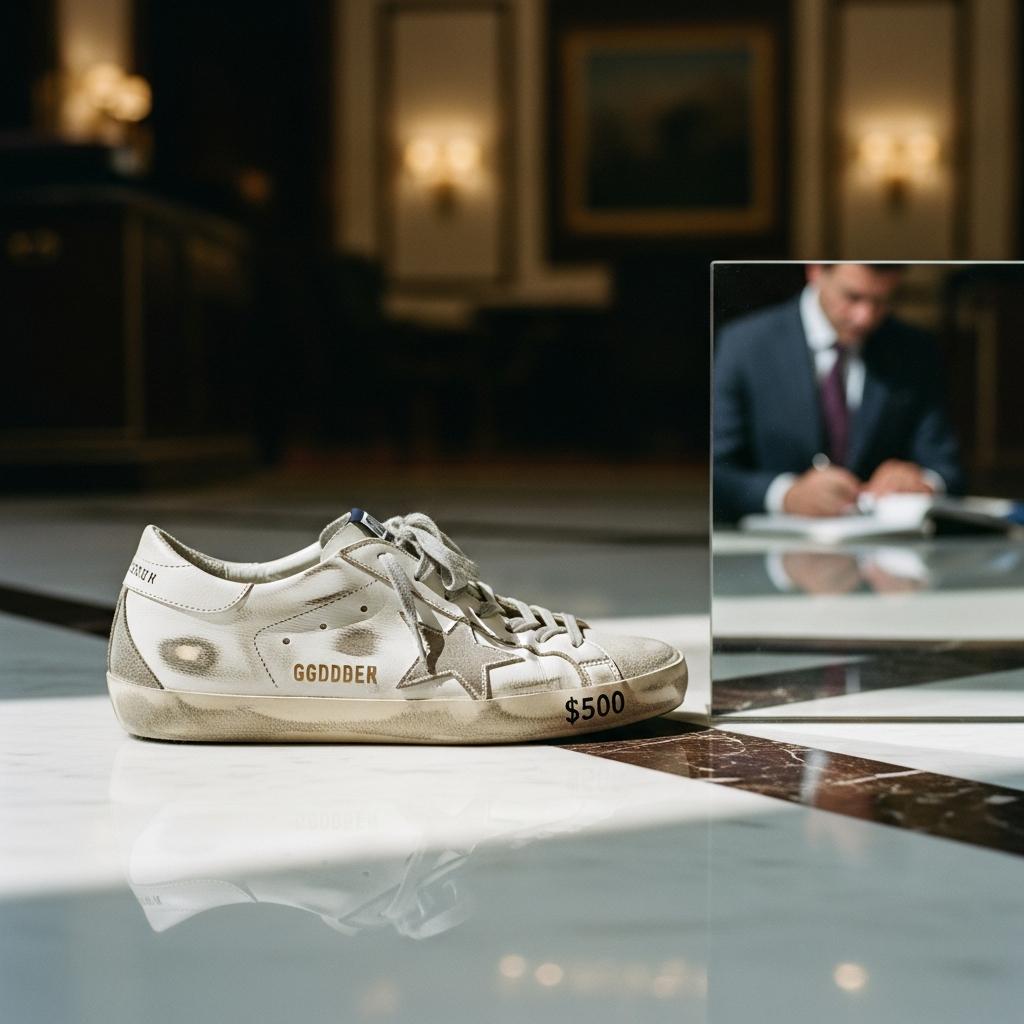
To understand why a sovereign wealth fund wants a piece of Golden Goose, one must understand the sheer brilliance of the brand’s business model. Founded in Venice in 2000, Golden Goose achieved the impossible: it gentrified the “worn-in” look and slapped a $500-plus price tag on it.
While traditional luxury houses rely on pristine presentation, Golden Goose sells an attitude. Each pair is hand-distressed by artisans, ensuring that no two shoes are exactly alike. This artisanal approach to streetwear effectively bridges the gap between casual comfort and stealth-wealth signaling. The margins on these sneakers are stratospheric, and the brand has successfully cultivated a cult-like following that transcends fleeting seasonal trends. They aren’t just selling shoes; they are selling a perfectly curated aura of effortless, globe-trotting nonchalance.
What a 10 Percent Stake Actually Means for the Boardroom
Behind the scenes, the timing of this negotiation is telling. The broader luxury sector is currently navigating a period of “normalization.” Aspirational shoppers are pulling back amid global economic headwinds, and several heritage brands are feeling the sting of a cooling market. Furthermore, Golden Goose recently postponed its highly anticipated Initial Public Offering (IPO) in Milan, citing market volatility and unfavorable macroeconomic conditions.
Enter the Qatar Investment Authority. By selling a 10 percent stake privately, Golden Goose secures an immediate injection of liquidity and establishes a formidable valuation floor without subjecting itself to the brutal, quarter-by-quarter scrutiny of the public markets. For Golden Goose’s current backers, bringing QIA onto the cap table is a masterstroke in risk mitigation. It provides the financial runway needed to aggressively expand their direct-to-consumer retail footprint, push further into apparel and accessories, and double down on their presence in Asia and the Middle East.
The Sneaker Bubble Hasn’t Burst—It Just Matured
For years, fashion purists have predicted the demise of the luxury sneaker. Yet, deals of this magnitude prove that the bubble hasn’t burst; it has simply matured. The consumer relationship with footwear has fundamentally changed. The modern luxury client expects versatility—pieces that can transition seamlessly from a first-class lounge to a boardroom to a gallery opening. Golden Goose owns this specific intersection of luxury and utility.
If the Qatar Investment Authority finalizes this acquisition, it will send a clear message to the rest of the industry: the future of luxury investments isn’t just in haute couture or centuries-old leather goods houses. It is in the brands that seamlessly integrate into the daily lives of the global elite. As it turns out, there is nothing more valuable than a pair of dirty shoes—provided, of course, they have the right star on the side.
Original Reporting: wwd.com
Related Topics: #GoldenGoose #QatarInvestmentAuthority #luxurysneakers #scuffedsneakers #fashioninvestment